
INtroduksi
Sianida - ngemot banyu limbah punika pinunjul lingkunganal concern due to its beracun banget nature. The three commonly known Highly beracunsianida, yaiku Sodium sianida (NaCN), Kaliumsianida (KCN), Lan asam hidrokyanat (HCN), pose a severe threat to both Kesehatan Manungsa and the envwesiment. The common denominator among these Sianida is their ability to readily dissociate and release the ion sianida (CN-).
Bahaya of sianida - containing Wastebanyu
toksisitasMEChanism to HuMAns
The lethal beracunology of sianida lies in the fact that the Ion sianida (CN-) has a strong affinity for wesi ions. Once in the human body, CN- binds easily with Iron ions, which mimpins to a decrease in the oxygen - carrying caPACity of iron - containing substances. This ultimately results in oxygen deficiency in central nervous system cells. As a consequence, the poisoned individuals often die from respiratory central paralysis. keracunan can occur through various routes, including skin contact, oral ingestion, inhalation, injection, and mucosal contact. Even a small amount of cyanidecahya can be life - threatening.
Dampak lingkungan
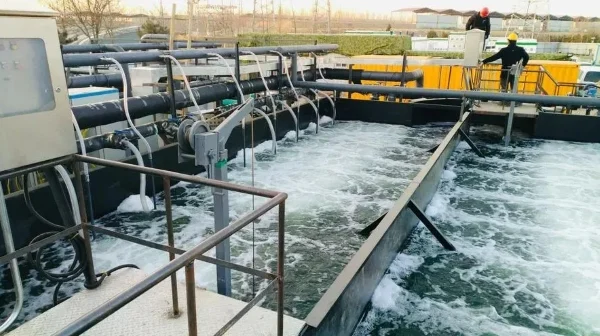
Cyanide - containing wastewater, if not properly treated and discharged into water bodies, can have a devastatimahg impact on aquatic life. Aquatic organisms are extremely sensitif to cyanide. Even at low concentrations, cyanide can disrUPt the normal physiological functions of fish, invertebrates, and other aquatic species, leading to reduced growth, reproductive problems, and ultimately death. This, in turn, can disrupt the entire aquatic ecosystem, affectimahg panganan chains and biodiversity.
perawatan pangolahan of Cyanide - containing Wastewater
High - Concentration Sianida - ngemot Pengolahan Limbah: Recovery saka sianida
For high - concentration cyanide - containing wastewater, the method of recovering Sianida is often employed. This approACH aims to extract and recycle valuable cyanides from the wastewater. One common technique is solvent extraction. In Solvent extraction, a suitable pelarut organik is used to selectively extract cyanide compounds from the aqueous wastewater phase. The cyanide - laden organic phase can then be further processed to recover pure cyanides. This method has the advantage of not only reducing the pengaruh lingkungan by removing cyanide from the wastewater but also recovering a potentially valuable chemical resource. However, it requires careful selection of Pelarut and strict control of operating conditions to ensure high - efficiency extraction and minimize solvent losses.
Low - Concentration Cyanide - containing Pangobatan limbah: Destruction of Cyanide
Metode oksidasis
UtamaCIPle: metode oksidasi kimia nggunakake Agen oksidasi kuwats to convert ion sianida into less toxic or non - toxic substances. For example, Klorin - Based oksidans kayata natrium hipoklorit (NaOCl) can react with Ion sianida. The reaksi first converts cyanide (CN-) to cyanate (CNO-), and further oksidasi can break down cyanate into Karbon dioxide (CO2), nitrogen (N2), and other harmless produk. The overall reaction can be represented as follows:
Ing langkah pisanan: (CN^ -+OCl^ -\rightarrow CNO^ -+Cl^)
Ing langkah kapindho: (2CNO^ -+3OCl^ -+H_2O\panah tengen 2CO_2 + N_2+3Cl^ -+2OH^ -)
Kaluwihan: Chemical oxidation is relatively simple to operate and can be effective in treating low - concentration cyanide - containing wastewater. It can be implemented in existing perawatan limbah plants with some modifications to the treatment process.
cacat: The use of large amounts of Agen Oksidasi can be costly. Moreover, if not properly controlled, the reaction may produce by - products that could also be harmful to the environment. For example, excessive chlorine use may lead to the formation of disinfeksi by - products such as trihalomethanes.
2. Oksidasi elektrolitik
Prinsip: In electrolytic oxidation, an electric current is passed through the cyanide - containing wastewater in an electrolytic cell. The anode of the cell acts as the site where oxidation occurs. Ion sianidas are oxidized at the anode surface. The general reaction at the anode can be written as (2CN^ -+4OH^ -\rightarrow 2CNO^ -+2H_2O + 2e^ -), and further oxidation of cyanate can occur to form carbon dioxide and nitrogen.
Kauntungan : Iki minangka metode pangolahan sing relatif resik amarga ora ngenalake zat kimia tambahan kajaba elektroda. Bisa diotomatisasi lan dikontrol kanthi tepat.
cacat: However, as mentioned, electrolytic oxidation is highly energy - consuming. The need for a continuous supply of electricity makes the treatment cost relatively high. Additionally, the electrodes may experience karat over time, which requires regular maintenance and replasemen.
Perawatan Biologi
Prinsip: Biological treatment of cyanide - containing wastewater relies on microorganisms that can metabolize cyanide as a carbon or nitrogen source. Some bacteria and fungi have the ability to break down cyanide through enzymatic reactions. For example, certain cyanide - SDRrading bacteria can convert cyanide into amonia and formate through a series of enzymatic steps. The ammonia can then be further nitrified by other microorganisms in the treatment system.
Kaluwihan: Biological treatment is generally more Lingkungan ramah as it does not involve the use of large amounts of kimia. It can be cost - effective for treating low - concentration cyanide - containing wastewater over the long term, especially in cases where there is a suitable microbial consortium established.
Kekurangane : Nanging, pangolahan biologis sensitif banget marang owah-owahan komposisi banyu limbah, suhu, lan pH. Owah-owahan dadakan ing parameter kasebut bisa nyegah tuwuhing lan aktivitas mikroorganisme sing ngrusak sianida, sing nyebabake efisiensi pangolahan sing mudhun. Iki uga mbutuhake wektu pangolahan sing relatif suwe dibandhingake karo sawetara metode kimia.
cyanide regenerasi lan Recovery cara
Prinsip: This method is similar to the recovery method for high - concentration wastewater but can also be applied to some low - concentration cases. It foculah on regenerating and recycling cyanide from the wastewater. One approach is to use ion - exchange damar. The cyanide ions in the wastewater can be adsorbed onto the resin surface. Then, by using a suitable eluent, the cyanide can be desorbed from the resin and recovered.
Kaluwihan: It can reduce the overall konsumsi of cyanide in proses industri by recycling the cyanide. This not only has Keuntungan Ekonomi nanging uga nyuda Pengaruh Lingkungan associated with the disposal of cyanide - containing wastewater.
cacat: The ion - exchange Resin need to be carefully selected and maintained. The regeneration process may require the use of additional chemicals, and there is a risk of resin fouling, which can decrease the efficiency of the pemulihan sianida proses.
kesimpulan
Cyanide - containing wastewater is a serious environmental and H.E.A.lth resiko. Pangerten ing Keracunan mechanisms and implementing appropriate treatment processes are crucial. Each treatment method, whether it is for high - or low - concentration wastewater, has its own set of advantages and disadvantages. The choice of treatment method depends on various factors such as the initial konsentrasi sianida, the required treatment efficiency, Biaya - efektifitas, Lan dampak lingkungant. In the future, more research and development are needed to improve existing treatment processes and develop new, more efficient, and cost - effective methods for treating cyanide - containing wastewater to ensure a cleaner and amanr environment.
- Konten Acak
- Konten panas
- Konten review panas
- Caustic soda Flakes NaOH 96%-99% Natrium hidroksida
- SERTIFIKAT SISTEM MANAJEMEN KESELAMATAN & KESELAMATAN KERJA
- Pandhuan Penting kanggo Sodium Sianida: Kasus Panggunaan lan Sumber
- Sodium Amil Xanthate (SAX) 90%, Kimia pertambangan, reagen flotasi pertambangan
- Kalium borohidrida
- Amonia anhidrat 99% Cairan
- Antimonium Tartrate Kalium
- 1Diskon Sodium Cyanide (CAS: 143-33-9) kanggo Pertambangan - Kualitas Tinggi & Rega Kompetitif
- 2Natrium Sianida 98.3% CAS 143-33-9 NaCN agen pembalut emas Penting kanggo Industri Kimia Pertambangan
- 3Peraturan Anyar China babagan Ekspor Sodium Sianida lan Pandhuan kanggo Pembeli Internasional
- 4Sodium Cyanide (CAS: 143-33-9) Sertifikat pangguna akhir (versi Cina lan Inggris)
- 5Kode Manajemen Sianida Internasional (Sodium sianida) - Standar Penerimaan Tambang Emas
- 6Pabrik China Asam Sulfat 98%
- 7Asam oksalat anhidrat 99.6% Kelas Industri
- 1Natrium Sianida 98.3% CAS 143-33-9 NaCN agen pembalut emas Penting kanggo Industri Kimia Pertambangan
- 2Kemurnian Tinggi · Kinerja Stabil · Pemulihan sing luwih dhuwur - sodium sianida kanggo leaching emas modern
- 3Suplemen Nutrisi Pangan Adiktif Sarcosine 99% min
- 4United ChemicalTim Riset Nduduhake Wewenang Liwat Wawasan sing Didorong Data
- 5Natrium Sianida Kinerja Tinggi AuCyan™ | Kemurnian 98.3% kanggo Pertambangan Emas Global
- 6Detonator Elektronik Digital (Waktu tundha 0 ~ 16000ms)
- 7Dhuwur-kekuwatan, Dhuwur-tliti Shock Tube Detonator





Konsultasi pesen online
Tambah komentar: