
1. MimiNuzalishaji
Kuchuja kwa cyanide is a widely used method in the Sekta ya madini for extracbatig valuable metals, especially dhahabu, from ores. sodiumsianidi plays a crucial role in this process as it reacts with the metals to form mumunyifu complexes, allowing for their kujitenga from the ore MAtrix. Among the various factors that can affect the ufanisi of Kuchuja kwa cyanide, the stirring rate is of significant importance. This article aims to explore in detail how the stirring rate imPACts ya Kiwango cha leaching of Sianidi ya sodiamu.
2. The Role of Stirring in Uvujaji wa Cyanide
2.1 Kuimarisha Uhamisho wa Misa
Ndani ya Mchakato wa Usafishaji wa Cyanide, mmenyuko kati ya Sianidi ya sodiamu and the metal in the ore occurs at the interface between the solid ore particles and the liquid suluhisho la sianidi. Stirring helps to improve the mass transfer of reactants (sianidi ya sodiamu and oxygen) to the surface of the ore particles and the removal of reaction bidhaa from the surface. When the stirring rate is increased, the fluid flow around the particles becomes more turbulent. This turbulence reduces the thickness of the boundary layer around the particles, which is the region where the concentration gradient of reactants and products exists. As a result, the diffusion rate of Sianidi ya sodiamu and oxygen to the particle surface increases, promobatig ya Kuvuja majibu.
2.2 Preventing Particle Vipindi
Another important function of stirring is to prevent the sedimentation of fine ore particles, especially in the case of ores with a high content of sLime, clay, or shale. These fine particles can settle during the mchakato wa leaching, reducing the contact area between the ore and the sianidi solution and thus decreasing the Ufanisi wa Leaching. By continuously stirring the punda (a mchanganyikoure of ore and solution), the particles are kept in suspension, ensuring uniform contact with the Sianidi solution throughout the Mchakato wa Leaching.
3. Masomo ya Majaribio juu ya Ushawishi wa Kiwango cha Kuchochea
3.1 Maabara - Majaribio ya Kiwango
Numerous laboratory - scale experiments have been conducted to investigate the relationship between stirring rate and the Kiwango cha leaching of Sianidi ya sodiamu. In a typical experiment, a sample of ore is ground to a specific particle size and then mixed with a cyanide solution in a reactor equipped with a stirrer. The stirring rate is varied, and the kiwango cha leaching is measured over a certain period. For example, in an experiment on a gold - bearing ore, when the stirring rate was increased from 200 rpm to 600 rpm, the leaching rate of gold (which is leAched na Sianidi ya sodiamu) increased significantly in the initial stages of leaching. However, beyond a certain stirring rate (around 800 rpm in this case), the increase in the leaching rate became less pronounced.
3.2 Uchunguzi wa Kiwandani
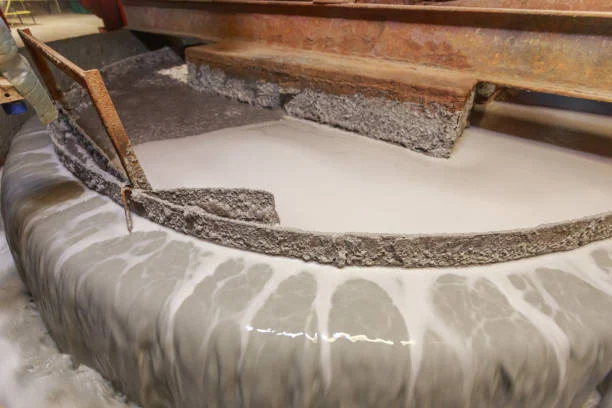
Industrial - scale shughuli also provide valuable insights into the impact of stirring rate. In large - scale uvujaji wa sianidi plants, the stirring rate of the mizinga ya leaching is carefully controlled. It has been observed that when the stirring rate is too low, there are regions in the tank where the ore particles are not well - mixed with the cyanide solution, kusababishaing to lower overall leaching rates. On the other hand, if the stirring rate is too high, it can cause excessive wear and TEAr on the equipment, increase energy matumizi, and may even lead to the formation of vortexes that can disrUPt Mchakato wa leaching. For instance, in a large - scale Gold Cyanidation Plant, increasing the stirring rate from the standard 400 rpm to 500 rpm led to a 5% increase in the Kiwango cha Uchujaji wa Dhahabu, but further increasing it to 600 rpm only resulted in a marginal 1% increase, while the energy consumption increased by 20%.
4. Uamuzi Bora wa Kiwango cha Kuchochea
4.1 Kuzingatia Sifa za Madini
The optimal stirring rate for cyanide leaching depends on several factors, with the characteristics of the ore being a primary consideration. For ores with large particle sizes, a higher stirring rate may be required to ensure that the cyanide solution can penetrate the pores and react with the inner parts of the particles. In contrast, for fine - grained ores, a lower stirring rate may be sufficient to keep the particles in suspension and promote mass transfer. Additionally, the mineralogy of the ore matters. If the ore contains madini that are easily oxidized or react with cyanide at a fast rate, a lower stirring rate may be used to control the reaction rate and prevent Matumizi mengi of sianidi ya sodiamu.
4.2 Kusawazisha Kiwango cha Uchujaji na Gharama
In addition to ore characteristics, the Gharama - ufanisi of the leaching process also plays a role in deterMadini the optimal stirring rate. A higher stirring rate generally requires more energy, which increases the operating cost of the plant. Therefore, a balance needs to be struck between achieving a high leaching rate and minimizing energy consumption. This often involves conducting economic analyses that take into account factors such as the value of the metal being extracted, the cost of sodium cyanide, and the energy cost associated with different stirring rates. For example, if the price of gold is high and the cost of energy is relatively low, a slightly higher stirring rate may be chosen to maximize the Uchimbaji wa dhahabu rate. However, if the cost of energy is a major concern, a lower stirring rate may be selected even if it results in a slightly lower leaching rate.
5. Changamoto Zinazohusishwa na Kurekebisha Kiwango cha Kuchochea
5.1 Mapungufu ya Vifaa
One of the challenges in adjusting the stirring rate is the limitations of the equipment. The design of the leaching tanks, the power of the motors driving the stirrers, and the MEChanical strength of the impellers all restrict the range of stirring rates that can be achieved. In some cases, upgrading the equipment to achieve a higher or more precise stirring rate may require significant capital investment. For example, if a plant wants to increase the stirring rate beyond the current maximum limit, it may need to replace the motors with more powerful ones and install stronger impellers, which can be a costly endeavor.
5.2 Process Inutulivu
Changing the stirring rate can also lead to process inUtulivu. A sudden increase or decrease in the stirring rate can disrupt the flow patterns in the leaching tank, causing uneven distribution of the ore particles and the cyanide solution. This can result in inconsistent leaching rates and may even lead to the formation of hotspots or coldspots in the tank, where the reaction rates are either too high or too low. For instance, if the stirring rate is decreased too rapidly, the ore particles may start to settle in some parts of the tank, leading to a decrease in the overall ufanisi wa leaching.
6. Hitimisho
The stirring rate has a significant impact on the leaching rate of sodium cyanide in the cyanide leaching process. By enhancing mass transfer and preventing particle sedimentation, an appropriate stirring rate can improve the efficiency of the leaching process. However, determadini the optimal stirring rate requires careful consideration of ore characteristics and cost - effectiveness. Additionally, challenges such as equipment limitations and process instability need to be addressed when adjusting the stirring rate. Further research in this area can focus on developing more efficient stirring technologies and optimizing the overall cyanide leaching process to improve the kupona of valuable metals while minimizing Athari za mazingiras and costs.
- Maudhui Nasibu
- Maudhui ya moto
- Maudhui motomoto ya ukaguzi
- Peroksidi ya sodiamu
- Asidi ya cyanoacetic 99% Poda
- Lisha Grade 98.0% Calcium Formate
- peroksidi hidrojeni
- 97% 2-Hydroxypropyl methacrylate
- Cupric Chloride 98%
- Di(ethilini Glycol) Vinyl Etha
- 1Sianidi ya Sodiamu iliyopunguzwa bei (CAS: 143-33-9) kwa Uchimbaji - Ubora wa Juu na Bei za Ushindani
- 2Sodiamu Sianidi 98.3% CAS 143-33-9 Kiambato cha dhahabu cha NaCN Muhimu kwa Viwanda vya Kemikali vya Madini
- 3Kanuni Mpya za China kuhusu Usafirishaji wa Sianidi ya Sodiamu na Mwongozo kwa Wanunuzi wa Kimataifa
- 4Sodium Cyanide (CAS: 143-33-9) Cheti cha mwisho cha mtumiaji (toleo la Kichina na Kiingereza)
- 5Sianidi ya Kimataifa(Sianidi ya Sodiamu) Msimbo wa Usimamizi - Viwango vya Kukubalika kwa Mgodi wa Dhahabu
- 6Kiwanda cha China Sulfuric Acid 98%
- 7Asidi ya Oxalic isiyo na maji 99.6% ya Daraja la Viwanda
- 1Sodiamu Sianidi 98.3% CAS 143-33-9 Kiambato cha dhahabu cha NaCN Muhimu kwa Viwanda vya Kemikali vya Madini
- 2Usafi wa Hali ya Juu · Utendaji Imara · Urejeshaji wa Juu — sianidi ya sodiamu kwa uchujaji wa dhahabu wa kisasa
- 3Virutubisho vya Lishe kwa Chakula Sarcosine Inayoongeza Dakika 99%.
- 4United ChemicalTimu ya Utafiti Inaonyesha Mamlaka Kupitia Maarifa Yanayoendeshwa na Data
- 5Sainidi ya Sodiamu ya Utendaji wa Juu ya AuCyan™ | Usafi wa 98.3% kwa Uchimbaji wa Dhahabu Duniani
- 6Kipumulio cha Kielektroniki cha Dijitali (Muda wa kuchelewa 0 ~ 16000ms)
- 7Kifafanulia cha Mirija ya Mshtuko chenye nguvu ya juu na kwa usahihi wa hali ya juu





Ushauri wa ujumbe mtandaoni
Ongeza maoni: