
Hard-Rock Ore Variability and the Case for Consistent Reagent Specifications
When the ore changes from block to block, the one thing that should not change is the reagent you are measuring it against.
AngloGold Ashanti plans to invest US$200–250 million at the Cuiabá gold operation in Brazil, adding roughly 75,000 ounces of annual production to a 2025 base of 194,000 ounces. It is a brownfield expansion on an existing hard-rock circuit. For a plant whose ore varies from block to block, the procurement priority is not a new reagent but a stable one: one assay, one mesh cut, one K/R specification and one documentation standard per lot, so any change in plant performance can be attributed to the ore rather than to the delivery.
الوجبات السريعة الرئيسية
- A brownfield increment, not a new plant. US$200–250 million adds about 75,000 oz/y on a 194,000 oz 2025 base.
- Hard-rock feed varies. Grind size, sulphide exposure and gold liberation change dissolution kinetics between blocks.
- Hold the reagent constant. A stable NaCN assay and a stable كربون specification make ore variability measurable instead of ambiguous.
- COA per lot is the control instrument. Batch COA, TDS and MSDS let operators separate ore effects from delivery effects.
- Carbon hardness ≥99% and attrition ≤1.5% keep loaded fines off the tailings stream when throughput rises.
- One qualification, one freight plan. FOB or CIF only, with 15 / 18 / 28 MT minimum order quantities per 1×20' FCL.
| العناصر | الرقم المعلن |
|---|---|
| Planned investment at Cuiabá | 200-250 مليون دولار أمريكي |
| Incremental production | ~75,000 oz/y |
| 2025 قاعدة | 194,000 اونصة |
| المدينة المنورة - بجوار المسجد النبوي | Brazil, within the wider brownfield programme |
Source: company expansion announcement, 5 November 2026. All figures above are disclosed project numbers; no consumption figures have been estimated by the publisher.
1. Why ore variability makes specification stability valuable
In a hard-rock circuit, the ore delivered to the leach is never identical from one block to the next. Grind size changes liberation; sulphide and arsenic content change side-reaction demand; clay changes pulp rheology and oxygen transfer. Every one of those moves the dissolution curve and the reagent demand per tonne.
If the ore and the reagent both vary, the operator cannot tell which caused a change in recovery or consumption. Holding the reagent specification constant removes one variable. A NaCN assay that stays at ≥98.3%, a carbon lot that stays at ≥99% hardness with ≤1.5% attrition, and a fixed 6×12 mesh cut turn the reagent into a measuring instrument for the ore.
That is the practical argument for a single qualified supplier on a brownfield expansion: comparability. One set of test conditions, one documentation standard and one freight plan make deviations diagnosable.
2. Four difficulties in a variable hard-rock feed
2.1 Grind and liberation drift
Finer grind exposes more gold but also more gangue surface. Coarser grind leaves gold locked. Both change the optimum dosing profile, so the plant needs a curve per grind target.
2.2 Sulphide and arsenic side reactions
Copper, iron and arsenic minerals consume reagent through cyanocomplex formation. A new block with higher sulphide content raises consumption without raising recovery, which looks like a reagent problem unless the ore is tested.
2.3 Carbon fines at higher throughput
More circulation and screening cycles generate more fines. Because those fines carry adsorbed gold, the loss appears as a recovery gap rather than a consumable expense. Hardness ≥99% and attrition ≤1.5% on AC50 are the control points.
2.4 Multi-supplier drift
Two suppliers with nominally equivalent products can differ in assay, particle size distribution or impurity profile. Small differences compound across a long campaign and make trend data useless.
3. Tutorial: six steps to hold batch consistency
- Qualify one specification per product. Fix the NaCN assay band, the carbon hardness / attrition / mesh / K·R parameters and the leaching-agent pH and dosage band in writing before the first order.
- Require batch COA, TDS and MSDS per lot. File them against the delivery number, not in a shared folder, so any plant deviation can be traced to one lot.
- Sample on arrival. Retain a representative sample of each lot and verify the key assay or particle size parameter against the COA before the lot enters the circuit.
- Define an acceptance band. State what happens when a measured value falls outside it — hold, re-test or adjust the dosing set-point — and who authorises the decision.
- Log plant performance per lot. Consumption kg/t, pH, free السيانيد or residual reagent, dissolved gold and recovery should all sit next to the lot number.
- Separate ore effects from delivery effects. When performance shifts, check the ore blend first (step 1 of the feed-change method), then the COA. Do not adjust the set-point until both are known.
This routine costs little and protects the most valuable thing a plant owns during an expansion: comparable data.
4. جدول استكشاف الأخطاء وإصلاحها
| عرض | سبب محتمل | الاختيار الأول |
|---|---|---|
| Consumption up, recovery flat | New sulphide / arsenic block | Ore mineralogy, bottle roll curve |
| Recovery down after finer grind | Gangue surface consuming reagent | Grind size distribution, dosing profile |
| Carbon make-up rising | Fines from higher circulation | Attrition ≤1.5%, screen aperture, tails assay |
| Trend data inconsistent | Two suppliers or two specs in use | Qualification record, COA per lot |
| Deviation cannot be traced | Lot number not linked to plant log | Delivery record, sampling and filing routine |
5. Three products under one qualification
| المرحلة | المنتج | المواصفات الثابتة |
|---|---|---|
| تحلل | سيانيد الصوديوم AuCyan™ NaCN (≥98.3%) | Assay band, low NaOH / Na₂CO₃ / insolubles; 18 MT MOQ |
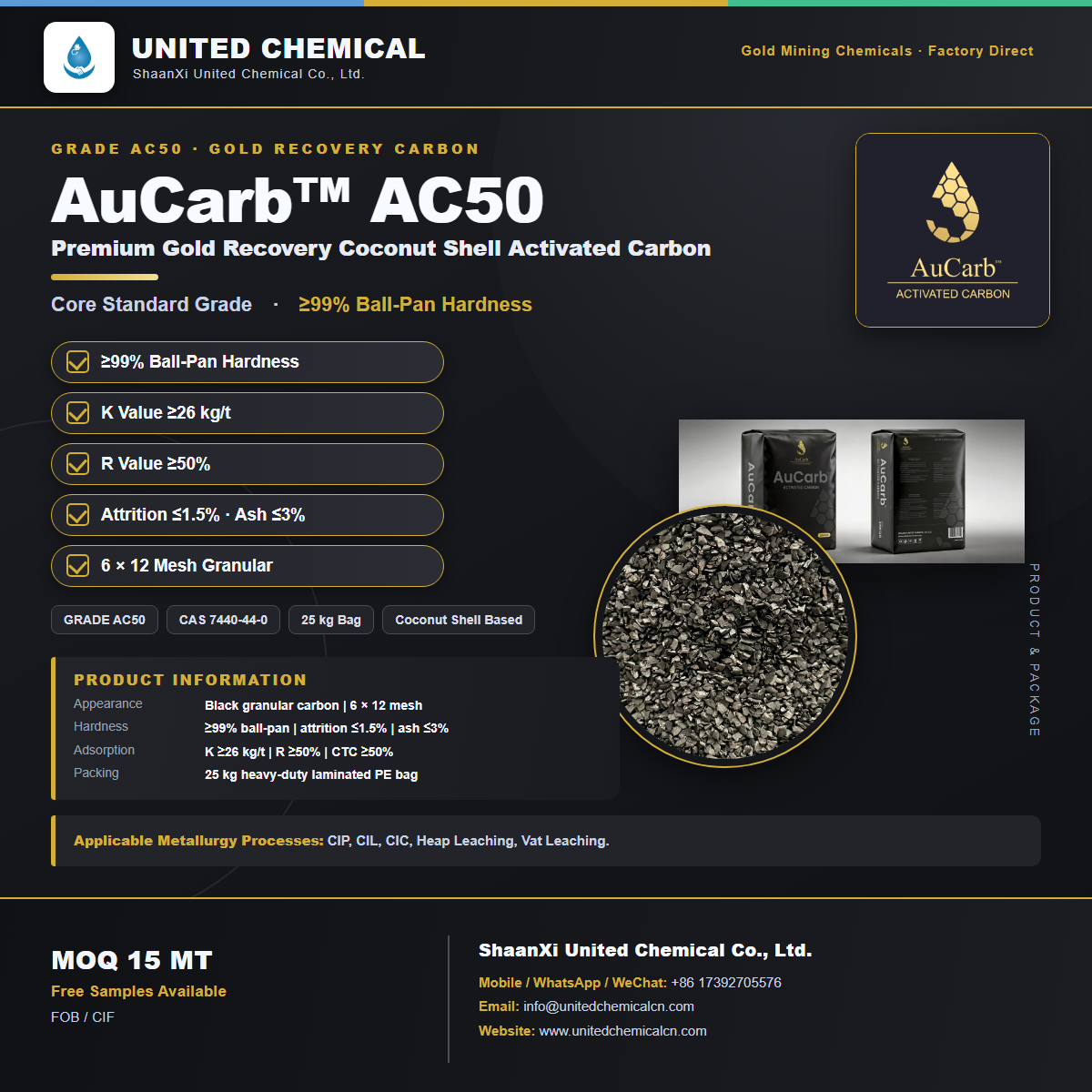
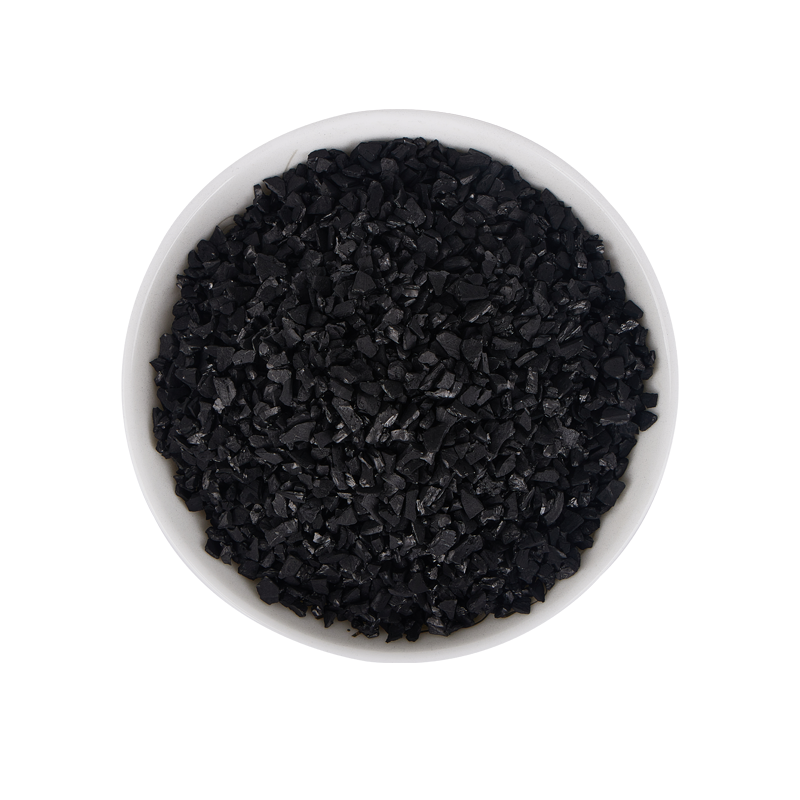
| الامتزاز | كربون جوز الهند المنشط AuCarb™ Gold Recovery (صلابة ≥99%) | 6×12 mesh, attrition ≤1.5%, K ≥26 kg/t / R ≥50% on AC50; 15 MT MOQ |
| طريق بديل | عامل استخلاص الذهب AuLeach™ (GDA) - غير ضار | pH 10.5–12, ore-validated dosage; 28 MT MOQ |
All three ship factory-direct under FOB or CIF terms with batch COA, TDS and MSDS; AuCarb™ is packed in 25 kg heavy-duty laminated PE bags. Free laboratory test samples are available for AuCarb™ and AuLeach™.
6. أسئلة مكررة
Q1. What is planned at Cuiabá?
US$200–250 million of investment, adding roughly 75,000 ounces of annual production to a 2025 base of 194,000 ounces.
Q2. When was this announced?
5 نوفمبر 2026، ضمن برنامج التوسع في الأراضي القائمة للشركة.
Q3. Why does hard-rock ore complicate reagent control?
Grind size, sulphide exposure, arsenic and clay content all change dissolution kinetics and side-reaction demand between blocks.
Q4. Why hold the reagent specification constant?
So any change in recovery or consumption can be attributed to the ore rather than to a varying delivery.
Q5. What documents should accompany each lot?
Batch COA, TDS and MSDS, filed against a delivery number so deviations are traceable.
Q6. What should be sampled on arrival?
A representative sample of each lot, verified against the COA for the key assay or particle size parameter before use.
Q7. Which carbon parameters matter most here?
Hardness ≥99%, attrition ≤1.5%, platelet ≤5.0%, a 6×12 mesh cut and the K/R pair on AC50.
س8. كيف يتم تعبئة AuCarb™؟
In 25 kg heavy-duty laminated PE bags at 15 MT MOQ per 1×20' FCL.
س9. ما هي المصطلحات التجارية الدولية (Incoterms) التي تنطبق؟
تُطبق شروط التسليم على ظهر السفينة (FOB) أو شروط التسليم والتأمين والشحن (CIF).
Q10. What is the operating window for AuLeach™?
pH 10.5–12 with a target around 11 ± 1, with dosage fixed by ore-specific testing.
Q11. Should the set-point be adjusted when performance shifts?
Only after the ore blend and the batch COA have both been checked, so the cause is known before the change is made.
Q12. Where are the product specifications published?
On the AuCyan™, AuCarb™ and AuLeach™ technical pages linked below.
7. المصادر والروابط الداخلية
دليل AuCyan™ · دليل AuCarb™ · AC50 · AC55 · AC60 · BC1100 · AuLeach™ GDA · المثلث الذهبي · نظرة عامة على ثلاثة منتجات · الأسئلة الشائعة حول المواد الكيميائية · أخبار الصناعة · اتصل بنا
ملاحظة المصدر: تم استخلاص أرقام المشروع من إعلان توسع الشركة بتاريخ 5 نوفمبر 2026. مواصفات الكواشف هي United Chemical بيانات المنتج.
اتصل بنا واتساب +86 173 9270 5576 info@unitedchemicalcn.com
- محتوى عشوائي
- محتوى ساخن
- محتوى المراجعة الساخن
- مصنع الصين حمض الكبريتيك 98٪
- زانثات إيزوبروبيل الصوديوم 90% SIPX
- كيف أختار المادة المتخثرة المناسبة؟
- كيف تؤثر المواد الكيميائية المستخدمة في التعدين على معدلات استرداد المعادن أثناء التعويم؟
- ترايبوليفوسفيت الصوديوم
- حمض السيانوريك
- ثنائي إيزوبوتيل ثنائي ثيوفوسفات/ثنائي ثيوفوسفات الصوديوم 49% - 53%
- 1سيانيد الصوديوم المخفض السعر (CAS: 143-33-9) للتعدين - جودة عالية وأسعار تنافسية
- 2سيانيد الصوديوم 98.3%، رقم CAS 143-33-9، عامل معالجة الذهب NaCN، ضروري للصناعات الكيميائية التعدينية
- 3اللوائح الصينية الجديدة بشأن صادرات سيانيد الصوديوم وإرشادات للمشترين الدوليين
- 4شهادة المستخدم النهائي لسيانيد الصوديوم (CAS: 143-33-9) (النسخة الصينية والإنجليزية)
- 5قانون إدارة السيانيد الدولي (سيانيد الصوديوم) - معايير قبول مناجم الذهب
- 6مصنع الصين حمض الكبريتيك 98٪
- 7حمض الأكساليك اللامائي 99.6% درجة صناعية
- 1سيانيد الصوديوم 98.3%، رقم CAS 143-33-9، عامل معالجة الذهب NaCN، ضروري للصناعات الكيميائية التعدينية
- 2نقاء عالي · أداء مستقر · استرداد أعلى - سيانيد الصوديوم لاستخلاص الذهب الحديث
- 3United Chemicalيُظهر فريق البحث في "" سلطته من خلال الرؤى القائمة على البيانات
- 4سيانيد الصوديوم عالي الأداء AuCyan™ | نقاء 98.3% لتعدين الذهب العالمي
- 5المفجر الإلكتروني الرقمي (وقت التأخير 0 ~ 16000 مللي ثانية)
- 6مفجر أنبوب الصدمة عالي القوة والدقة
- 7صناعة المفجر الكهربائي


استشارة الرسائل عبر الإنترنت
أضف تعليق: