
Geita to 600,000 oz/y by 2030: A Worked Calculation of Carbon and Reagent Consumption
The expansion raises throughput on an existing footprint. That makes Въглероден circulation and reagent consistency the variables that move.
AngloGold Ashanti has allocated US$480–580 million to expand the Geita gold mine in Tanzania, targeting annual production of about 600,000 ounces by 2030 against 492,000 ounces in 2025. It is the largest single item in the company's US$750–900 million brownfield programme announced on 5 November 2026. Q3 2026 output was 120,000 ounces, 4% lower year on year, as mined grades declined. Because the circuit already exists, the planning task is to convert an ounce increment into ore tonnage, reagent kilograms and container counts — using the plant's own measured inputs.
Ключови храни за вкъщи
- Existing footprint, higher throughput. The expansion does not replace the leaching and adsorption circuits; it loads them more heavily.
- Grade decline is the multiplier. Q3 2026 output fell 4% year on year as mined grades declined, so more tonnes are needed per ounce.
- Carbon circulation rises with throughput. Higher screening duty makes attrition ≤1.5% and a 6×12 mesh cut directly relevant to recovery.
- Calculate with your own inputs. Grade, recovery, kg/t consumption and carbon make-up must come from plant logs or a test programme — not from a headline figure.
- MOQs set the container rhythm: 15 MT for AuCarb™, 18 MT for AuCyan™, 28 MT for AuLeach™ per 1×20' FCL.
- Documentation precedes production. Къде Натриев цианид is used, permits and an End-User Certificate gate the factory slot.
| Точка | Disclosed figure |
|---|---|
| Allocation to Geita | 480-580 милиона щатски долара |
| Целево производство | ~600,000 oz/y by 2030 |
| 2025 основа | 492,000 унция |
| Q3 2026 output | 120,000 oz, 4% lower year on year |
| Контекст на програмата | Largest item in a US$750–900m brownfield programme |
Source: company Q3 2026 update and expansion announcement, 5 November 2026. The calculation below is a method; all inputs are plant-specific and are not estimated by the publisher.
1. Why this is a consumables question
A brownfield expansion inherits the flowsheet. Tanks, agitation, screens, pumps, carbon advance systems and the water balance are already designed and commissioned. The additional ounces have to pass through that installed equipment, typically by raising throughput, improving grade control or extending operating hours. Reagent demand therefore scales with treated tonnage rather than with the capital budget.
There is a second effect. When mined grade declines, the same ounce target requires more ore. Geita's Q3 2026 output of 120,000 oz, down 4% year on year as grades declined, is exactly that pattern. It means reagent consumption per ounce rises even if consumption per tonne of ore is unchanged — a distinction that matters when the margin is under pressure from a higher AISC.
2. Four difficulties in a brownfield consumables plan
2.1 Grade uncertainty across the ramp
A single grade assumption hides the two ends of the plan. Model at least a base and a lower-grade case, because the lower-grade case drives the highest tonnage and reagent demand.
2.2 Carbon inventory and screening duty
More throughput means more carbon movement and more screening cycles. Fines generated above the ≤1.5% attrition design limit leave the circuit loaded with gold, so the loss is a recovery gap rather than a visible consumable expense.
2.3 Water balance and reagent build-up
Recirculated process water concentrates dissolved salts and residual reagent over a longer campaign. Without routine measurement, apparent consumption drifts and operators compensate by over-dosing.
2.4 Multi-site documentation
Къде натриев цианид is used, the UN 1689 Class 6.1 permit chain and the End-User Certificate must be closed before production is scheduled, and dangerous-goods booking has to be sequenced to the ramp, not to the nameplate date.
3. Tutorial: a seven-step worked calculation
The steps below are deliberately written as formulas. Insert your own measured inputs; do not substitute published headline numbers for plant data.
- Define the ounce increment. ΔOz = target annual ounces − base-year ounces. Use the disclosed 600,000 oz/y target and 492,000 oz 2025 base as the boundary, then state the ramp year you are solving for.
- Convert ounces to treated ore. ΔT = ΔOz ÷ (recovered grade × metallurgical recovery). State both grade and recovery as measured plant values, and run a lower-grade case.
- Apply leaching reagent consumption. Reagent kg = ΔT × measured kg/t from plant logs or a bottle roll programme. Keep the figure tied to a specific ore blend.
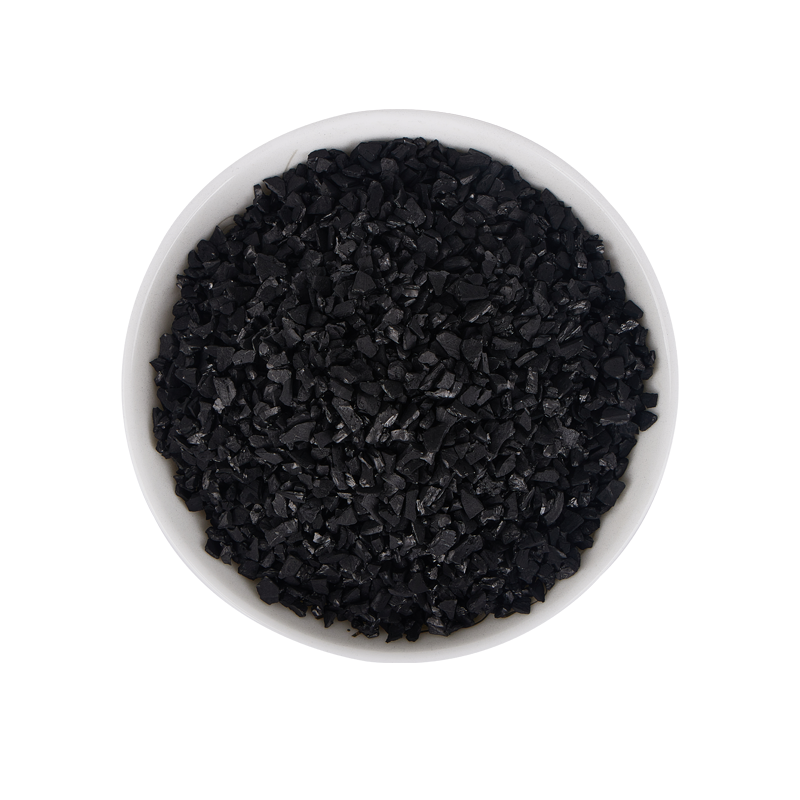
- Apply carbon make-up. Carbon kg = ΔT × measured carbon make-up rate (kg/t), cross-checked against the ≤1.5% attrition design figure and the plant's carbon inventory survey.
- Convert to FCL counts. Divide each reagent tonnage by its MOQ — 18 MT for AuCyan™ Sodium Cyanide NaCN (≥98.3%), 15 MT for AuCarb™ Gold Recovery Coconut Shell Activated Carbon (≥99% Hardness), 28 MT for AuLeach™ Gold Leaching Agent (GDA) – Non-Hazardous — and round up to whole containers.
- Build the delivery calendar against the ramp curve, then place the documentation gate (permit, EUC, dangerous-goods booking) ahead of the first production slot.
- Close the measurement loop. Log consumption, pH, free цианид or residual reagent, dissolved gold and recovery against each batch COA; update step 3 and step 4 inputs as the ore blend changes.
A useful sanity check: if step 2 tonnage rises but step 5 container count does not, the MOQ rounding is hiding a step change. Always show the unrounded figure next to the container count.
4. Troubleshooting table
| симптом | Вероятна причина | Първа проверка |
|---|---|---|
| Consumption per ounce rising | Grade decline, more tonnes per ounce | Recovered grade, recovery, ΔT calculation |
| Carbon make-up above design | Higher screening duty, attrition above ≤1.5% | Fines in tails, screen aperture, circulation rate |
| Apparent consumption drifting | Residual reagent in recirculated water | Solution balance, water quality, titration routine |
| Gold in final-stage solution | Adsorption rate-limited at higher throughput | Carbon concentration, residence time, R value |
| Shipment late against ramp | Documentation gate not sequenced | Permit status, EUC, dangerous-goods booking |
5. Three products in the expanded circuit
| Етап | Продукт | Expansion-sensitive variable |
|---|---|---|
| Разтваряне | AuCyan™ натриев цианид NaCN (≥98.3%) | kg/t at higher tonnage, free-cyanide control |
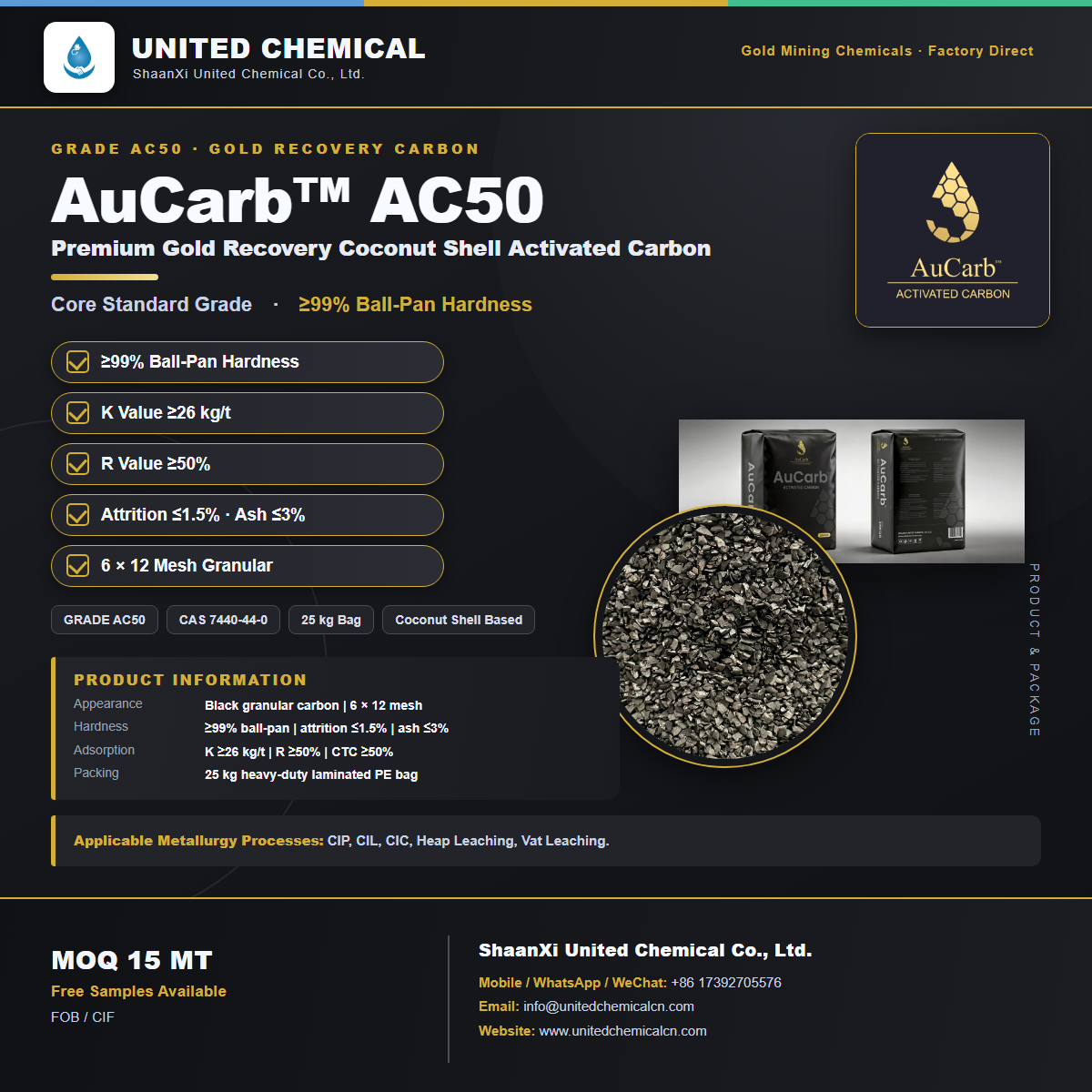
| адсорбция | AuCarb™ Активен въглен от кокосови черупки за възстановяване на злато (твърдост ≥99%) | Attrition ≤1.5%, 6×12 mesh, K ≥26 kg/t / R ≥50% on AC50 |
| Алтернативен маршрут | AuLeach™ Gold Leaching Agent (GDA) – Non-Hazardous | General-cargo scheduling, pH 10.5–12 validation |
Deliveries to East African operations are quoted FOB from major Chinese ports or CIF to the nominated destination, factory-direct at 15 / 18 / 28 MT minimum order quantities, with batch COA, TDS and MSDS. Free laboratory test samples are available for AuCarb™ and AuLeach™.
6. Често задавани въпроси
Q1. What is Geita's expansion allocation?
US$480–580 million, the largest single item in the US$750–900 million brownfield programme announced on 5 November 2026.
Q2. What production level is targeted?
About 600,000 ounces a year by 2030, against 492,000 ounces in 2025.
Q3. What happened to Q3 2026 output?
It was 120,000 ounces, 4% lower year on year, as mined grades declined.
Q4. Why is this a consumables question rather than a design one?
The leaching and adsorption circuits already exist; the extra ounces pass through installed equipment, so demand scales with treated tonnage.
Q5. How does grade decline change reagent demand?
More ore must be treated per ounce recovered, raising consumption per ounce even when consumption per tonne is unchanged.
Q6. How do you convert ounces into ore tonnage?
ΔT = ΔOz ÷ (recovered grade × metallurgical recovery), using measured plant values and a lower-grade sensitivity case.
Q7. Which carbon parameters become more important at higher throughput?
Attrition ≤1.5%, a 6×12 mesh cut, platelet ≤5.0% and the K ≥26 kg/t / R ≥50% pair on AC50.
Q8. What are the minimum order quantities?
15 MT for AuCarb™, 18 MT for AuCyan™, 28 MT for AuLeach™, each per 1×20' FCL.
Q9. Which Incoterms apply?
FOB or CIF terms apply.
Q10. Which documents gate the cyanide lane?
Verified import permits, an End-User Certificate and UN 1689 Class 6.1 dangerous-goods documentation ahead of the production slot.
Q11. Can the calculation use published project figures as inputs?
No. Grade, recovery, kg/t consumption and carbon make-up must come from plant logs or a test programme; the published figures only set the boundary.
Q12. Where can the specifications be reviewed?
On the AuCyan™, AuCarb™ and AuLeach™ technical pages linked below, with batch COA, TDS and MSDS per lot.
7. Sources and internal links
AuCarb™ guide · AC50 · AC55 · AC60 · BC1100 · AuCyan™ · AuLeach™ GDA · Златния триъгълник · Three-product overview · Химически често задавани въпроси · Industry News · Свържете се с нас
Source note: project figures are drawn from the company Q3 2026 update and expansion announcement dated 5 November 2026. Reagent figures are United Chemical product data. The calculation is a method using plant-supplied inputs; no demand result has been estimated by the publisher.
Свържете се с нас · WhatsApp +86 173 9270 5576 · info@unitedchemicalcn.com
- Случайно съдържание
- Горещо съдържание
- Горещо съдържание за прегледи
- Бустер(Детониращи нечувствителни експлозиви)
- Индустриална оцетна киселина 99.5% Безцветна течност Ледена оцетна киселина
- Как натриевият фероцианид помага в процеса на минерална флотация?
- Как мога да оптимизирам използването на химикали при обработката на руда?
- Калиев етилксантат 90% PEX
- Бензохидроксамова киселина
- Висококачествен етил тиокарбамат / натриев диетил дитиокарбамат 94%
- 1Натриев цианид с отстъпка (CAS: 143-33-9) за минно дело - високо качество и конкурентни цени
- 2Натриев цианид 98.3% CAS 143-33-9 NaCN златен апликатор, необходим за минно-химическата промишленост
- 3Нови разпоредби на Китай за износ на натриев цианид и насоки за международни купувачи
- 4Натриев цианид (CAS: 143-33-9) Сертификат за краен потребител (китайска и английска версия)
- 5Международен цианид(натриев цианид) Кодекс за управление - Стандарти за приемане на златни мини
- 6Китайска фабрика Сярна киселина 98%
- 7Безводна оксалова киселина 99.6% промишлен клас
- 1Натриев цианид 98.3% CAS 143-33-9 NaCN златен апликатор, необходим за минно-химическата промишленост
- 2Висока чистота · Стабилна производителност · По-висок добив — натриев цианид за съвременно излужване на злато
- 3United ChemicalИзследователският екип на [име на авторитет] демонстрира авторитет чрез анализи, базирани на данни
- 4AuCyan™ Високоефективен натриев цианид | 98.3% чистота за глобален златодобив
- 5Цифров електронен детонатор(време на забавяне 0~ 16000ms)
- 6Високоякостен, високопрецизен ударно-тръбен детонатор
- 7индустриален електрически детонатор


Онлайн консултация със съобщения
Добави коментар: