
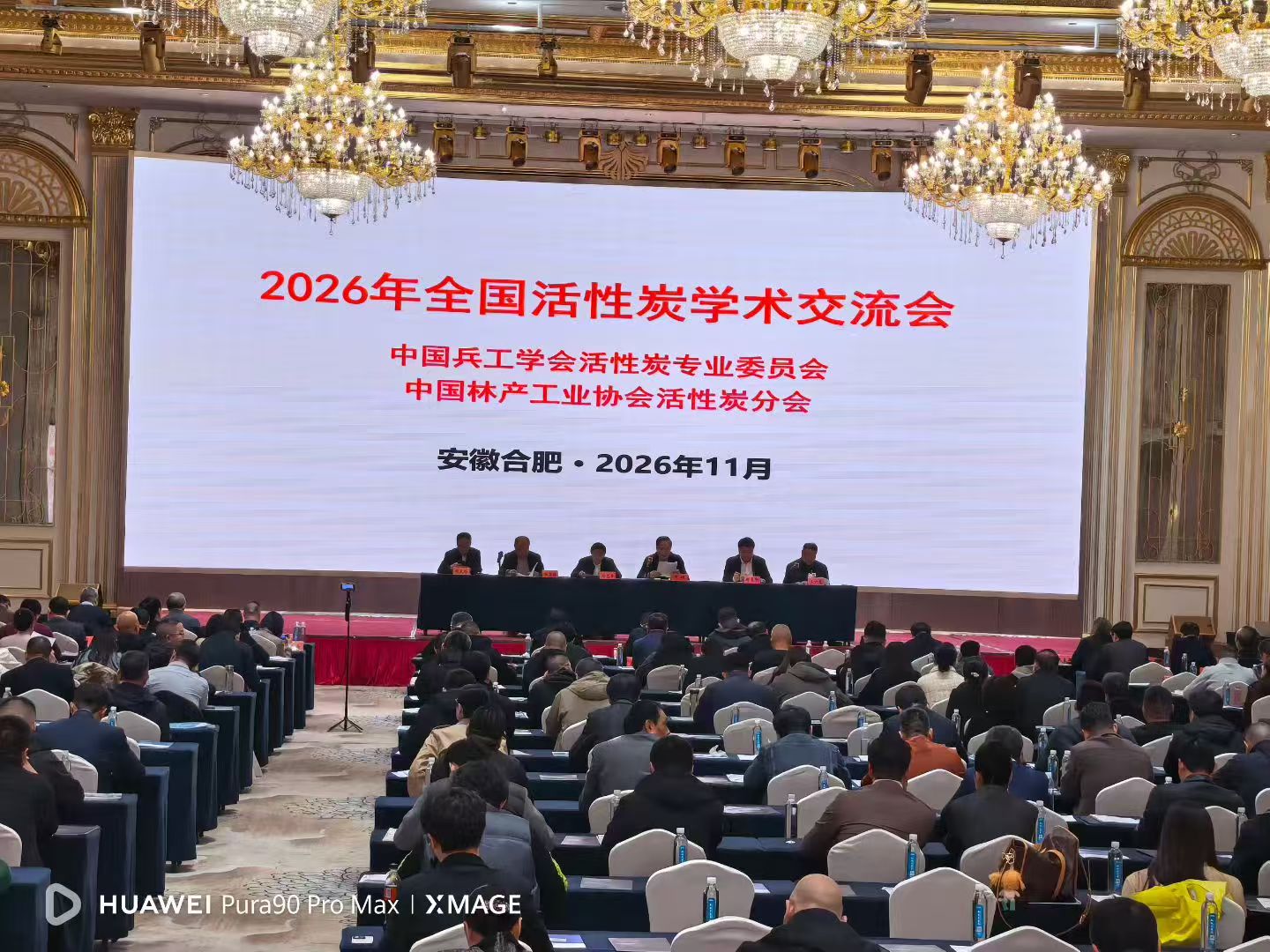
United Chemical Direktè Teknik la patisipe nan Konferans Nasyonal Echanj Akademik sou Chabon Aktive 2026 la nan Hefei
Pèspektiv teknik yon manifakti sou syans adsorpsyon, epi poukisa yon senpozyòm nasyonal sou chabon aktive enpòtan pou plant rekiperasyon lò k ap fonksyone ak sikwi CIP, CIL, CIC, lesivaj an pil ak lesivaj an kuiv.
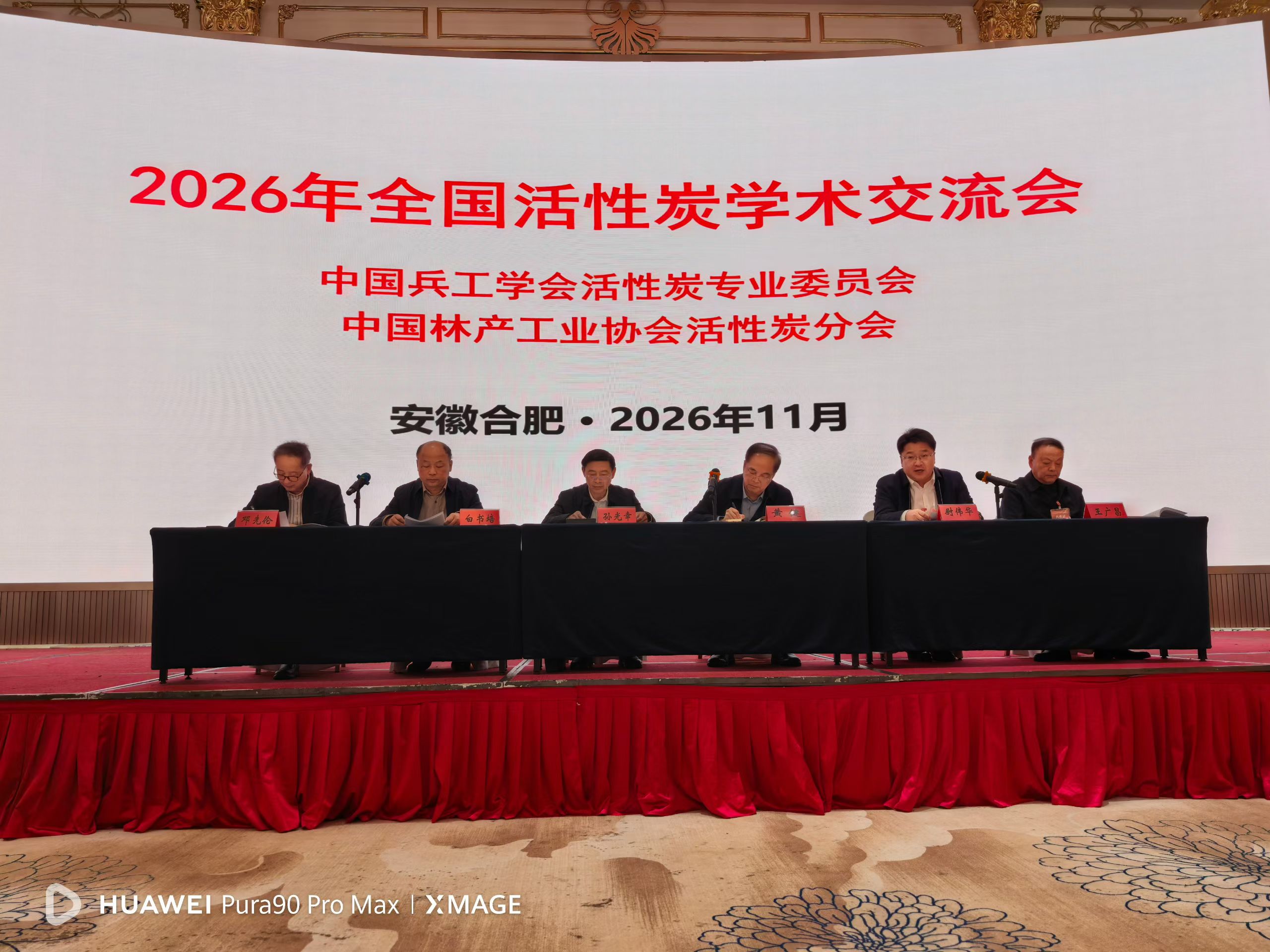
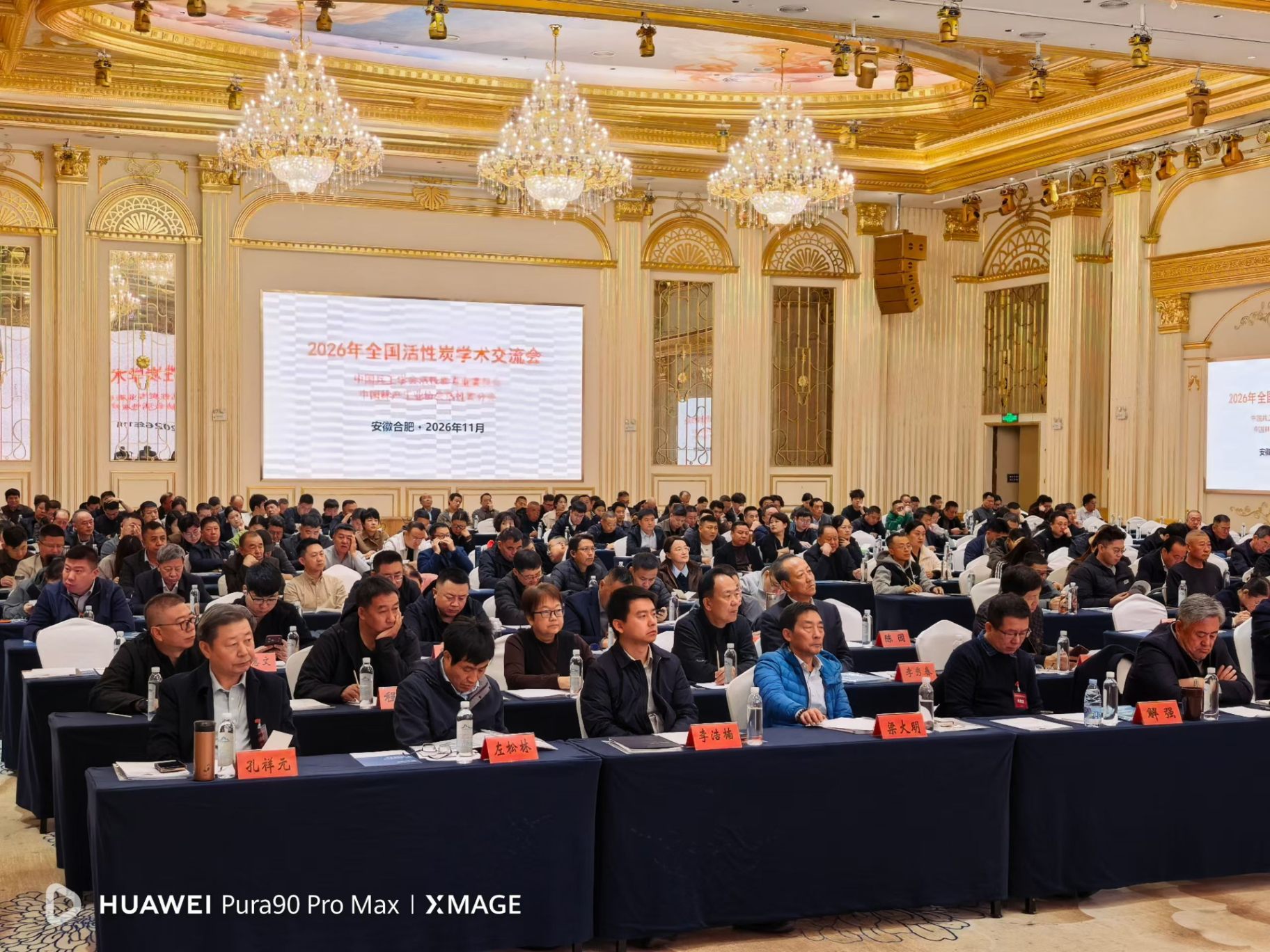
Direktè teknik la nan United Chemical attended the 2026 National Activated Carbon Academic Exchange Conference, held in Hefei, Anhui, in November 2026. The conference was organized by the Activated Carbon Specialized Committee of the China Ordnance Society and the Activated Carbon Branch of the China Forest Products Industry Association. For a manufacturer of gold recovery chemicals, the relevance is direct: Kabòn aktive se etap adsorpsyon an ki deside si lò ki fonn lan vrèman refè nan yon sikwi Kabòn-nan-Pulp (CIP), Kabòn-nan-Leach (CIL), Kabòn-nan-Kolòn (CIC), lesivaj nan pil oswa lesivaj nan kuiv.
The conference at a glance
| Atik | Enfòmasyon konfime |
|---|---|
| evènman | 2026 National Activated Carbon Academic Exchange Conference |
| Òganizatè | Komite Espesyalize sou Chabon Aktive nan Sosyete Atik Lachin nan; Branch Chabon Aktive nan Asosyasyon Endistri Pwodwi Forè Lachin nan |
| Kote yo ye | Hefei, pwovens Anhui, Lachin |
| Tan | Novanm 2026 |
| United Chemical patisipasyon | Direktè teknik konpayi an te patisipe nan echanj akademik la |
Scope note: the details above are the facts confirmed by the conference materials and photographs. No presentation title, named speaker or attendance figure is claimed here.
Key takeaways from a manufacturer's point of view
Adsorpsyon se yon operasyon inite, pa yon acha komodite. Kabòn ki chwazi pou yon sikwi lò detèmine rekiperasyon, konpòtman elisyon ak kantite sik reyaktivasyon yon plant ka fè.
Hardness and attrition protect gold. Fines that break away from the granule are already loaded; they leave the circuit as a recovery gap rather than a visible consumable cost.
Kapasite ak vitès se chif diferan. Valè K a dekri chaj lò ekilib la; valè R a dekri vitès kabòn nan rive la. Yon sikwi ki mezire sèlman sou K ka toujou gen lò ki rete nan solisyon an.
Feedstock matters. Kabòn kok kokoye konbine yon estrikti mikwoporeu ak fòs mekanik ki nesesè pou tès depistaj, ponpe ak elisyon repete.
Academic exchange and plant practice must meet. A national symposium on activated carbon is where material science and metallurgical duty are discussed in the same room — exactly the interface our technical team works on.
Why an activated carbon symposium matters to gold recovery
Gold leaching and gold recovery are two separate problems. Dissolution moves gold from the ore into solution; adsorption moves it out of solution onto a solid carrier that can be screened, eluted and refined. A cyanidation circuit may dissolve gold efficiently and still lose value at the adsorption stage if the carbon is wrong for the duty. This is why the science discussed at an activated carbon conference is directly relevant to a mining chemical manufacturer.
In an industrial plant, activated carbon is a circulating inventory rather than a one-pass additive. A single lot is transferred between adsorption tanks, air lifts, inter-stage screens, elution columns and the reactivation kiln many times. Every transfer is a mechanical stress event, and every reactivation cycle is a thermal one. Material that looks equivalent on a datasheet can behave very differently after a hundred such cycles.
Kesyon teknik ki enpòtan sou plas yo se kesyon pratik: ki vitès kabòn nan pran ero asyanid complex at the plant's actual pulp density, how much gold does it carry before elution, how many fines does it generate under the plant's impeller shear, and how does its performance change after regeneration. These are the questions that connect academic work on porous carbons to the operating results of a gold plant.
Technical teaching: what happens inside an adsorption tank
Gold in an alkaline cyanide circuit exists mainly as the aurocyanide complex Au(CN)₂⁻. Adsorption onto activated carbon proceeds in three steps: transport through the liquid film surrounding the granule, diffusion into the pore network, and adsorption on the internal surface. The slowest step sets the observed rate. In a well-agitated CIP or CIL tank the film is thin, so pore diffusion and surface loading dominate; in a lower-agitation CIC column, film transport can become the bottleneck.
Sa eksplike poukisa de kabòn ki gen nimewo tit menm jan an konpòte yo yon fason diferan nan sèvis. K valè states how much gold a tonne of carbon can hold at equilibrium, expressed in kg/t. The Valè R states how quickly the carbon approaches that equilibrium. A circuit designed only around K will show gold leaving the final adsorption stage when residence time is too short for the carbon to get close to its capacity.
Pore structure is the third variable. CTC and butane activity are the published indicators for the AuCarb™ engineering grades: they describe the micropore volume that is available for gold complex adsorption. For AC50, CTC is ≥50% and butane activity is ≥19.5%. These are the figures we publish in place of a single iodine number, because pore performance and mechanical durability have to be read together.
| Paramèt | Valè | Plant relevance |
|---|---|---|
| gwosè patikil | May 6 × 12 | Retansyon ekran ak zòn kontak |
| Dite boul-pan | ≥ 99% | Siviv anba tayisman enpèlè |
| Attrisyon (AARL) | ≤1.5% | Pèt kabòn chaje an amann |
| Platlèt | ≤5.0% | Tandans ekran an vin avèg |
| K valè | ≥26 kg/t | Equilibrium gold loading before elution |
| Valè R | ≥ 50% | Adsorption rate within the stage |
| CTC / Butane | ≥50% / ≥19.5% | Micropore development |
| Sann / Imidite | ≤3.0% / ≤5.0% | Pwòpte reyaktivasyon ak estabilite transpò |
| Dansite esansyèl | 0.48-0.55 g/ml | Inventory and column sizing |
CAS 7440-44-0 · HS 3802.10 · Packed in 25 kg heavy-duty laminated PE bags · Minimum order 15 MT per 1×20' FCL · FOB or CIF · Batch COA, TDS and MSDS supplied.
Grade ladder: matching carbon to circuit duty
| Klas | Devwa | Defini paramèt |
|---|---|---|
| BC1100 | Lesivaj an pil ak kolòn CIC | Dite ≥98.5%; kontak long, pi ba tayisman |
| AC50 | Plant CIP ak CIL estanda yo | K ≥26 kg/t, R ≥50%; engineering grade |
| AC55 | CIL ki gen pi gwo débit | K ≥28 kg/t, R ≥55% |
| AC60 | Devwa wo-tayman oswa wo-tenor | K ≥30 kg/t, R ≥60%; 8×16 or 6×12 mesh |
Nechèl la pa yon klasman kalite men yon kat jeyografik devwa. Yon kabòn ki ideyal pou yon kolòn pil ka yon move chwa nan yon bank CIL ki gen gwo tayisman, epi yon klas ki gen gwo kapasite pa ka konpanse pou yon tan rezidans ki twò kout.
Yon metòd seleksyon sèt etap pou ekip plant yo
Define the circuit. CIP, CIL, CIC, lesivaj nan pil oswa lesivaj nan kuiv detèmine nivo tayisman, tan kontak ak travay ekran an.
Karakterize solisyon an. Record gold tenor entering and leaving each stage, pH, and the concentration of competing ions such as copper and iron.
Run a bottle roll or column test. Measure dissolved gold at defined intervals so the rate curve is visible, not only the endpoint.
Matche K ak R ak tan rezidans lan. Check whether the carbon can reach useful loading within the time the circuit actually provides.
Verify mechanical durability. Compare the ball-pan hardness and A.A.R.L. attrition figures against the plant's screening and pumping intensity.
Planifye sik reyaktivasyon an. Log ash and R value after each kiln pass, and set replacement rules from measured decline rather than a fixed calendar.
Tie every lot to its documents. Batch COA, TDS and MSDS should sit next to the plant's consumption and recovery log so deviations can be traced to a delivery.
Common adsorption problems and the first check
| sentòm | Kòz posib | Premye tcheke |
|---|---|---|
| Lò nan solisyon etap final la | Rate-limited adsorption | Stage profile, residence time, R value |
| Makiyaj kabòn pi wo pase konsepsyon an | Atrityon pi wo pase figi konsepsyon an | Amann nan ke, vitès ponp, ouvèti ekran |
| Ekran yo vin avèg byen bonè | Platelet content or broken granules | Fòm patikil, kondisyon ekran |
| Loading falls after a reagent change | Anpwazònman òganik nan mikwopò yo | Rejim flotasyon, solisyon òganik, retès R |
| Capacity fades after kiln cycles | Akimilasyon sann nan porositë yo | Tandans sann, pwofil tanperati reyaktivasyon |
Where the three United Chemical pwodwi yo chita nan flowsheet la
| Etap | pwodwi | Varyab gouvènan |
|---|---|---|
| Lesivaj ak disolisyon | AuCyan™ Sodyòm Siyanid NaCN (≥98.3%) | Free cyanide control, low impurity load, UN 1689 documentation |
| Adsorption and recovery | AuCarb™ Chabon Aktive ak Kokoye pou Rekiperasyon Lò (≥99% Dite) | K/R values, attrition ≤1.5%, 6×12 mesh |
| Wout lesivaj altènatif | Ajan Lesivaj Lò AuLeach™ (GDA) – Pa Danjere | Common-chemical logistics, pH 10.5–12, ore-specific validation |
All three are supplied factory-direct under FOB or CIF terms with batch COA, TDS and MSDS, to mining operations in more than 77 countries. United Chemical is a manufacturer and technical solution provider, not a trading intermediary.
Pozisyon nou apre echanj la
Participation in a national academic exchange is part of how our technical team keeps plant practice connected to material science. The discussion around activated carbon — its pore structure, mechanical strength, adsorption kinetics and behaviour across repeated reactivation — maps directly onto the questions our customers ask when they select a consumable for a gold circuit.
We will continue to publish practical technical material on carbon selection, leaching control and circuit troubleshooting, and to supply the documentation that plant teams need to qualify a lot before it enters the circuit. For a manufacturer, technical exchange has value only when it reaches the operating plant.
Kesyon moun poze souvan
Q1. Which conference did United Chemical's Technical Director attend?
The 2026 National Activated Carbon Academic Exchange Conference, held in Hefei, Anhui, in November 2026.
Q2. Who organized the conference?
Komite Espesyalize Chabon Aktive nan Sosyete Òdonans Lachin nan ak Branch Chabon Aktive nan Asosyasyon Endistri Pwodwi Forè Lachin nan.
Q3. Did United Chemical prezante yon dokiman nan konferans lan?
The confirmed information is that the Company's Technical Director attended the academic exchange. No presentation title or speaking role is claimed in this article.
Q4. Why does a carbon conference matter to a gold mining customer?
Paske chabon aktive se mwayen adsorption nan sikui CIP, CIL, CIC, lesivaj an pil ak lesivaj an kuv. Vitès li, kapasite li ak rezistans li detèmine konbyen lò ki fonn ki aktyèlman rekipere.
K5. Ki diferans ki genyen ant valè K a ak valè R a?
K is the equilibrium gold loading in kg of gold per tonne of carbon; R is the rate at which that loading is approached. Both are needed to size an adsorption circuit.
K6. Poukisa pou presize dite ≥99% ak attrisyon ≤1.5%?
Because carbon fines generated in the circuit are already loaded with gold. Attrition is a recovery loss, not merely a consumable expense.
Q7. Which grade suits a standard CIP or CIL plant?
AC50, klas jeni an ak K ≥26 kg/t ak R ≥50%. Travay ki gen pi gwo débit chanje pou AC55 oswa AC60; travay nan pil ak kolòn chanje pou BC1100.
Q8. Which pore indicators are published for AC50?
CTC ≥50% and butane activity ≥19.5%. A single iodine figure is not published for this grade.
Q9. How is AuCarb™ packed and shipped?
In 25 kg heavy-duty laminated PE bags, at 15 MT MOQ per 1×20' FCL, under FOB or CIF terms.
Q10. Which products cover the other stages of the circuit?
AuCyan™ Sodyòm Siyanid NaCN (≥98.3%) pou disolisyon ak AuLeach™ Ajan Lesivaj Lò (GDA) – Pa Danjere pou yon wout lesivaj chimik komen.
Q11. What documents accompany each lot?
Batch COA, TDS and MSDS, so a plant can tie performance to a specific delivery and a specific ore blend.
Q12. How can a plant arrange technical support?
Atravè ekip teknik la nan United Chemical, with a manufacturer's perspective on leaching and adsorption duty rather than a trading-company quotation.
Lekti teknik ak lyen entèn yo
Nouvèl konpayi ·Apèsi sou Triyang an lò ·Apèsi teknik sou twa pwodwi ·Gid kabòn AuCarb™ ·AC50 ·AC55 ·AC60 ·BC1100 ·AuCyan™ ·AuLeach™ GDA ·Chimik FAQ ·Kontakte nou
Mande yon sitasyon, TDS oswa COA pakèt, oswa diskite sou seleksyon kabòn pou sikwi ou a: Kontakte nou · WhatsApp +86 173 9270 5576 · info@unitedchemicalcn.com
- Kontni o aza
- Kontni cho
- Kontni revizyon cho
- Copper(II) sulfat pentahydrate 98% Klas
- Ferrous Sulfat Endistriyèl Klas 90%
- Nitrite sodyòm endistriyèl 98.5%
- Kouman pou mwen chwazi bon reyaktif flotasyon an?
- Kouman mwen ka optimize itilizasyon pwodwi chimik yo nan pwosesis minrè?
- Acrylamid
- Sodyòm tiosulfat pentaidrat
- 1Rabè Sodyòm Cyanide (CAS: 143-33-9) pou Mining - Segondè Kalite & Pri konpetitif
- 2Sodyòm Cyanide 98.3% CAS 143-33-9 NaCN ajan abiye lò Esansyèl pou Endistri Chimik Min
- 3Nouvo Règleman Lachin nan sou ekspòtasyon siyanid sodyòm ak konsèy pou achtè entènasyonal yo
- 4Sodyòm Cyanide (CAS: 143-33-9) Sètifika itilizatè fen (vèsyon Chinwa ak angle)
- 5Entènasyonal Cyanide(Syanid Sodyòm) Kòd Jesyon - Nòm Akseptasyon Gold Mine
- 6Lachin faktori asid silfirik 98%
- 7Asid anidrid oksalik 99.6% Endistriyèl Klas
- 1Sodyòm Cyanide 98.3% CAS 143-33-9 NaCN ajan abiye lò Esansyèl pou Endistri Chimik Min
- 2Segondè Pite · Pèfòmans ki Stab · Pi gwo Rekiperasyon — siyanid sodyòm pou lesivaj lò modèn
- 3United ChemicalEkip rechèch la demontre otorite li atravè enfòmasyon ki baze sou done.
- 4AuCyan™ Siyanid Sodyòm Pèfòmans Segondè | 98.3% Pite pou Min Lò Mondyal
- 5Detonatè elektwonik dijital (tan reta 0 ~ 16000ms)
- 6Segondè fòs, segondè-presizyon Detonatè Tib chòk
- 7endistri elektrik Detonatè




Konsiltasyon mesaj sou entènèt
Ajoute kòmantè: