


Gold Extraction Chemicals for Azerbaijan: Reagents for Lesser Caucasus CIL, Heap Leach & Polymetallic Circuits
High-Purity NaCN (≥98.3%), High-Hardness Coconut Carbon (≥99% Hardness) & Non-Hazardous GDA for Dashkasan, Gedabek, Goygol & Kalbajar
Azerbaijan's gold sector is rapidly expanding from oxide heap leaching into sulfide-phase CIL plants, underground copper-gold mines, and new Lesser Caucasus developments. ShaanXi United Chemical Co., Ltd. forniture AuCyan™ Cianuro di sodio NaCN (≥98.3%) for permitted agitation and heap leach circuits, AuCarb™ Gold Recovery Carbone attivo da guscio di cocco (durezza ≥99%) for low-attrition recovery across 48-hour CIL trains, and AuLeach™ Agente di lisciviazione dell'oro (GDA) – Non pericoloso for operators seeking streamlined Black Sea-to-Caucasus common-chemical logistics.
Azerbaijan Gold Mining Overview: Sulfide CIL Expansion, Polymetallic Copper-Gold Feeds & Caucasus Corridors
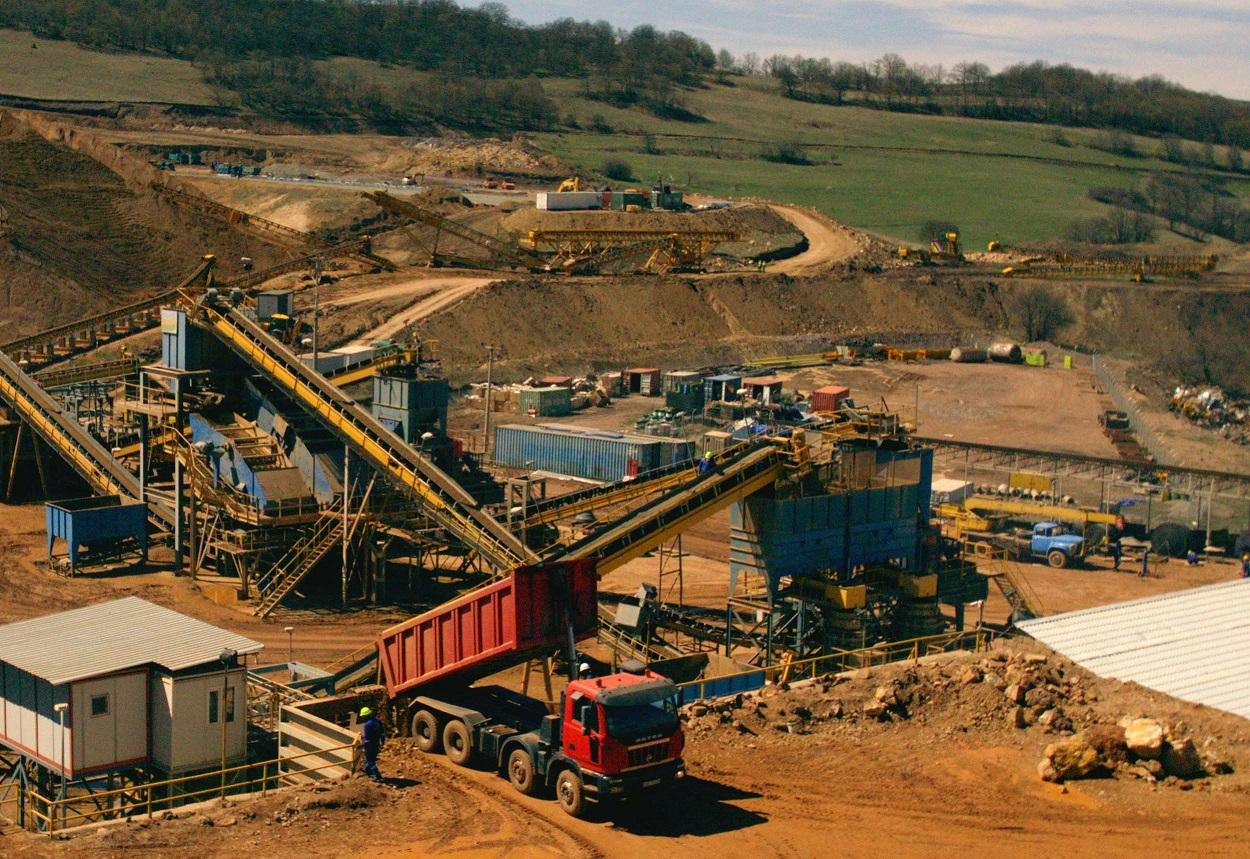
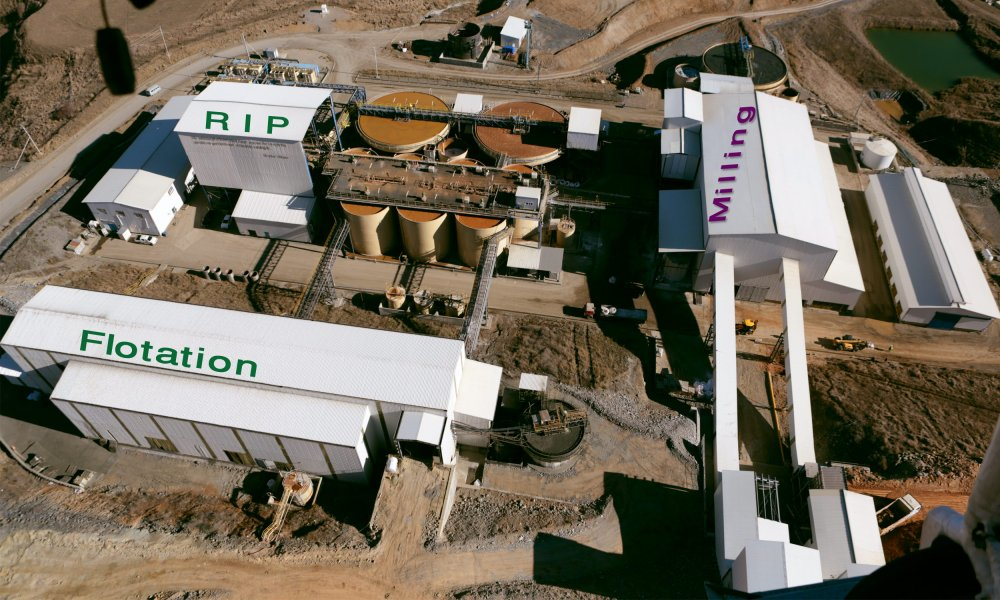
Azerbaijan sits along the Lesser Caucasus segment of the Tethyan Metallogenic Belt and operates two modern industrial gold processing hubs alongside a major new pipeline of regional deposits. At the state-owned Chovdar Integrated Regional Processing Area (CIRPA) in Dashkasan, AzerGold CJSC runs both a 1.4 Mt/yr Heap Leach Pad (HPL) and a 1.1 Mt/yr Carbon-in-Leach (CIL) plant commissioned in 2024 to treat sulfide-phase Chovdar ore alongside satellite deposits including Aghyokhush-2 (scheduled to begin mining in Q4 2026), arrabbiatoe Tulallar. Al Gedabek Contract Area, Anglo Asian Mining operates an integrated agitation leaching (CIL), crushed and run-of-mine heap leaching, flotation, and SART recovery complex—now fed by high-grade copper-gold ore from the new Gillare underground mine (which entered production in May 2025). Further west in Kalbajar, AzerGold initiated drilling and blasting at the Soyudlu (Zod) gold deposit in September 2026, entering a multi-year 2026–2029 development phase.
Reagent engineering in Azerbaijan revolves around four local realities. First, copper-bearing polymetallic ores such as Gilar (~0.88% Cu, ~1.30 g/t Au) consume free cianuro through copper complexation and demand high-purity, low-impurity leaching chemistry that integrates cleanly with SART cyanide-regeneration loops. Second, sulfide-phase CIL circuits operating on tight 48-hour residence times require fast-kinetics, high-hardness Guscio di noce di cocco attivato Carbonio (≥99% ball-pan hardness) that resists abrasion from sulfide-quartz slurries. Third, Lesser Caucasus mine sites face freezing highland winters (slowing leaching kinetics below 10 °C) and dry summers requiring closed-loop reverse-osmosis water recycling. Fourth, because Azerbaijan borders the landlocked Caspian Sea, ocean container shipments from China route through Black Sea ports in Georgia (Poti or Batumi) before overland road carriage into western Azerbaijan—making UN-certified factory-sealed packaging or Non-Hazardous common-chemical alternatives crucial to transit reliability.
United Chemical supplies mining plants across Paesi 77 + esclusivamente tramite trasporto container marittimo FOB (principali porti di carico cinesi) o CIF termini a Poti or Batumi (Georgia)—the primary maritime gateways for western Azerbaijan's Ganja, Dashkasan, Gedabek, and Kalbajar corridors. Factory MOQs are fixed plainly by product: AuCarb™ 15 MT, AuCyan™ 18 MTe AuLeach™ 28 MT, backed by factory-issued batch COA, TDS, and MSDS documentation.
1. Four Metallurgical & Transit Challenges Across Azerbaijan's Gold Belt
Western Azerbaijan's mining districts sit within a compact mountainous arc of the Lesser Caucasus—combining sulfide metallurgy, copper interference, seasonal temperature swings, and cross-border Black Sea transit.
Cyanicide Load & Solution Cleanliness
Copper-rich ores from Gilar and Gedabek consume free CN⁻ rapidly and feed into SART recovery circuits and reverse-osmosis water recycling. Low-impurity ≥98.3% NaCN with 0.02% insolubles protects SART heat exchangers, pumps, and dosing stability.
Fast Kinetics & Carbon Attrition
At Chovdar's 1.1 Mt/yr sulfide CIL plant and Gedabek's agitation tanks, continuous slurry shear grinds weak carbon into fines that carry gold to tails. ≥99% hardness and high K/R adsorption kinetics lock in recovery within tight residence times.
Black Sea Port to Lesser Caucasus
Ocean cargo discharges at Poti or Batumi (Georgia) before road transit into Azerbaijan. Class 6.1 Cianuro di sodio requires import permits, EUC, and cross-border dangerous-goods road authorization—making Non-Hazardous GDA a strong logistical alternative where applicable.
Sub-10 °C Cold & Closed-Loop Water
Mountain elevations across Dashkasan, Gedabek, and Kalbajar experience severe winter frost and seasonal fresh-water limits. Consistent reagent quality, controlled alkalinity, and low-ash carbon (≤3%) prevent compounding kinetic and scaling losses.
2. Named Azerbaijani Gold Projects & Circuit-Matched Reagent Strategy
Operating processing plants and active development deposits in Azerbaijan mapped to the reagent specifications relevant for commercial supply or metallurgical trials.
| Operation / Project | District / Operator | Percorso di elaborazione | Priorità metallurgica chiave | Adatto al reagente target |
|---|---|---|---|---|
| Chovdar (CIRPA) – CIL | Dashkasan · AzerGold | 1.1 Mt/yr Sulfide CIL (48-hr) | High-recovery (~90%) sulfide leaching, rapid adsorption & low carbon attrition | AuCyan™ (≥98.3%) + AuCarb™ AC55 / AC60 (durezza ≥99%) |
| Chovdar (CIRPA) – Heap | Dashkasan · AzerGold | 1.4 Mt/yr Heap Leach (90-day) | Clean drip irrigation, winter pad protection & steady column flow | AuCyan™ (0.02% insolubles) or AuLeach™ + AuCarb™ BC1100 / AC50 |
| Aghyokhush-2 / Tulallar / Marah | Goygol / Dashkasan · AzerGold | Satellite Oxide/Sulfide Feed to CIRPA | Q4 2026 ramp-up; blended ore variability requiring stable kinetics | AuCarb™ AC50 / AC55 + AuCyan™ or AuLeach™ lab trials |
| Gedabek & Gilar Underground | Gedabek · Anglo Asian Mining | Agitation CIL + Heap + Flotation + SART | Copper-gold ore (0.88% Cu, 1.30 g/t Au), SART & RO water recycle | AuCyan™ (≥98.3%, low Na₂CO₃) + AuCarb™ AC50 / AC55 |
| Soyudlu (Zod) Development | Kalbajar · AzerGold | New Build (2026–2029), Flotation First Stage | First blasting Sept 2026; concentrate leachability & flowsheet validation | Free AuCarb™ & AuLeach™ samples for lab testing |
| Tutkhun / Ortakand-Goydagh | Kalbajar / Nakhchivan · AzerGold | Exploration & Epithermal Evaluation | Remote mountain access & early metallurgical testwork | AuLeach™ GDA (Non-Hazardous) & AuCarb™ bench trials |
Project milestones are compiled from public operator disclosures (AzerGold CJSC and Anglo Asian Mining PLC). Final reagent selection and dosage must be confirmed by bottle-roll and column testing on site ore and process water.
3. The Golden Triangle: Core Reagents & Full Specifications for Azerbaijan
Each reagent addresses an independent operational stage—permitted cyanidation leaching, low-attrition gold adsorption, or a Non-Hazardous common-chemical leaching alternative—matched to your circuit and transit requirements.
01. AuCyan™ Cianuro di sodio NaCN (≥98.3%)
Merci pericolose di classe 6.1 (UN 1689 · MOQ 18 MT)AuCyan™ Sodium Cyanide ≥98.3% — The Purity Benchmark for Permitted Azerbaijani CIL & Heap Circuits
Posizionamento: Bricchetti solidi ad elevata purezza cianuro di sodio engineered for permitted industrial CIL, CIP, CIC, Heap leaching, and Vat leaching plants.
Punti di forza principali: Purezza elevata ≥98.3% | Insolubili ultra-bassi (0.02% tipico) | Confezione in bricchette sigillata in fabbrica con certificazione UN
AuCyan™ Sodium Cyanide NaCN (≥98.3%) è un reagente di lisciviazione in bricchette solide ad elevata purezza, prodotto per superare i parametri di riferimento di grado superiore GB/T 19306-2003 per i circuiti di cianurazione consolidati. Verified Azerbaijani hazardous-chemical import permits, End-User Certificates (EUC), and cross-border dangerous-goods transit authorizations are mandatory prerequisites before production is scheduled.
At polymetallic operations like Gedabek and Gilar—where copper-bearing ore feeds agitation leaching and SART cyanide-regeneration plants—and at Chovdar's 1.1 Mt/yr sulfide CIL plant, AuCyan™ sustains high free cyanide activity across tight 48-hour residence times. Tightly controlled NaOH (0.13% typical), low Na₂CO₃ (0.18% typical), and ultra-low insolubles (0.02% typical) help control alkalinity to inhibit scaling in SART exchangers, reverse-osmosis recycle lines, and heap leach drip emitters. UN-certified factory-sealed briquette packaging (50 kg steel drums or 1,000 kg reinforced wooden boxes) safeguards product stability through humid Black Sea discharge at Poti or Batumi and mountain highway transit into Dashkasan and Gedabek.
Standard di elevata purezza ≥98.3%: Maximizes active CN⁻ availability per tonne hauled across the Black Sea–Caucasus corridor, cutting freight cost per kilogram of active reagent.
Controllo dell'alcalinità e inibizione del calcare: Tightly managed NaOH and low carbonate/insoluble levels limit precipitation in closed-loop water systems, SART units, and drip nozzles.
Integrità certificata UN con sigillo di fabbrica: Supplied in factory-sealed UN-certified packaging under FOB China or CIF Poti/Batumi terms with factory-issued batch COA, TDS, and MSDS.
Specifiche tecniche: Standard di purezza del 98.3% (GB/T 19306-2003)
| Articolo di prova | Norma (GB/T 19306-2003) | AuCyan™ Tipico | Effetti operativi e di circuito |
|---|---|---|---|
| cianuro di sodio (NaCN) | ≥ 98.0% | 98.3% | Supports strong free cyanide activity and sulfide dissolution kinetics. |
| Idrossido di sodio (NaOH) | ≤ 0.5% | 0.13% | Regola l'alcalinità per inibire la formazione di incrostazioni e l'idrolisi prematura. |
| Carbonato di sodio (Na₂CO₃) | ≤ 0.5% | 0.18% | Limits carbonate scale buildup in recycled process water and SART loops. |
| Umidità (H₂O) | ≤ 0.9% | 0.5% | Preserves briquette stability across Black Sea transit and highland storage. |
| Sostanze insolubili | ≤ 0.05% | 0.02% | Protects slurry pumps, SART equipment, and heap leach drip emitters. |
Processi: Carbone in polpa (CIP), Carbone in lisciviazione (CIL), Carbone in colonna (CIC), Lisciviazione in cumulo, Lisciviazione in vasca. · Quantità minima d'ordine: 18 MT · Hub tecnico →
02. Carbone attivo di guscio di cocco AuCarb™ Gold Recovery (durezza ≥99%)
Merci generiche · Campione gratuito disponibile · Quantità minima d'ordine 15 tonnellateCarbone attivo AuCarb™ da guscio di cocco: adsorbimento di precisione e minima perdita per attrito.
Posizionamento: Quattro gusci di cocco appositamente costruiti Carboni Attivi grades covering heap leach ADR columns, CIC vessels, and high-shear sulfide CIP/CIL tanks.
Punti di forza principali: Durezza Ball-Pan ≥99% (ASTM D3802) | Cinetica di adsorbimento rapida (K ≥26–30 kg/t, R ≥50–60%) | Bassa usura (≤1.5% su AC50)
AuCarb™ è un carbone attivo di guscio di cocco ad alta durezza (≥99%), testato secondo gli standard americani ASTM (inclusi i metodi di durezza ASTM D3802 con piastra a sfera e ASTM D4607 con iodio) e gli standard metallurgici AARL. L'elevata durezza e la bassa usura mantengono le particelle fini di carbone caricate con oro all'interno del circuito, impedendone la dispersione attraverso i setacci intermedi e il conseguente passaggio negli scarti. Confezionato esclusivamente in sacchi in PE laminato ad alta resistenza da 25 kg.
Chovdar's 1.1 Mt/yr sulfide CIL plant runs a 48-hour processing cycle while Gedabek continuously agitates polymetallic quartz-sulfide pulps—both environments punish soft carbon with rapid attrition. AuCarb™ AC50, AC55, and AC60 deliver ≥99% hardness, ≤1.5% attrition (AC50), ≤5% platelets, and ≤3% total ash, preserving gold-loaded granules across repeated elution and thermal regeneration cycles. For Chovdar's 1.4 Mt/yr heap leach pad and Gedabek's heap circuits, tight 6×12 mesh BC1100 or AC50 keeps column hydraulics stable and barren solution gold values low.
Durezza e resistenza all'abrasione ultra elevate: speciali processi di tempra e depolverizzazione garantiscono una durezza ≥99% al test con sfera e un'abrasione ≤1.5% (AC50), riducendo al minimo la costosa perdita di particelle fini di carbonio.
Architettura dei pori ingegnerizzata (elevati valori di K e R): Balanced micro- and meso-pores promote fast diffusion and firm entrapment of gold complexes, supporting high eluted doré output.
Gamma completa dei gradi: Seleziona BC1100 per la lisciviazione in cumulo/CIC, AC50 or AC55 per CIP/CIL standard e AC60 for high-duty sulfide CIL plants.
Serie AuCarb™: Tabella comparativa completa dei parametri principali
| Parametro di prova | AuCarb™ BC1100 | AuCarb™ AC50 | AuCarb™ AC55 | AuCarb™ AC60 |
|---|---|---|---|---|
| Posizionamento del circuito | Lisciviazione in cumulo / CIC | CIP / CIL / CIC / Cumulo | CIP / CIL / CIC | CIP/CIL per impieghi gravosi |
| Densità apparente | 0.40 – 0.50 g/ml | 0.48 – 0.55 g/ml | 0.45 – 0.55 g/ml | 0.45 – 0.55 g/ml |
| Durezza a sfera e piastra (ASTM) | ≥ 98.5% | ≥ 99% | ≥ 99% | ≥ 99% |
| Contenuto piastrinico (AARL) | ≤ 5% | ≤ 5% | ≤ 5% | ≤ 5% |
| Abbandono (AARL) | ≤ 2% | ≤ 1.5% | ≤ 2% | ≤ 2% |
| Contenuto totale di cenere | ≤ 5% | ≤ 3% | ≤ 3% | ≤ 3% |
| Umidità (tal quale) | ≤ 10% | ≤ 5% | ≤ 5% | ≤ 5% |
| Capacità di adsorbimento (valore K) | - | ≥ 26 kg/t | ≥ 28 kg/t | ≥ 30 kg/t |
| Tasso di adsorbimento (valore R) | - | ≥ 50% | ≥ 55% | ≥ 60% |
| Numero di iodio (riferimento alla brochure) | ≥ 1100 mg/g | - | - | - |
| Attività del butano | - | ≥ 19.5% | ≥ 21% | ≥ 23% |
| Attività CTC | - | ≥ 50% | ≥ 55% | - |
Imballaggio e standard: Maglia standard 6×12 o maglia 8×16 in Sacchi in PE laminato per carichi pesanti da 25 kg; testato secondo i metodi ASTM e AARL.
Risorse:Categoria di carbonio del guscio di cocco · Guida alla selezione AuCarb™ · Confronta i voti → · MOQ: 15 tonnellate (campione gratuito disponibile).
03. AuLeach™ Agente di lisciviazione dell'oro (GDA) – Non pericoloso
Prodotto chimico comune non pericoloso · Campione gratuito disponibile · Quantità minima d'ordine 28 tonnellateAuLeach™ Agente di lisciviazione dell'oro (GDA) — Alternativa ai comuni prodotti chimici
Posizionamento: Un reagente di lisciviazione chimico comune e non pericoloso che funziona nei flussi CIP, CIL, CIC, di lisciviazione in cumulo e di lisciviazione in vasca esistenti senza modifiche alle apparecchiature.
Punti di forza principali: Carico generale, prodotti chimici comuni | Riprogettazione a circuito zero | Ampia applicabilità a ossidi, solfuri e residui di lavorazione
AuLeach™ Gold Leaching Agent (GDA) – Non-Hazardous is a drop-in alternative for plants where cross-border Class 6.1 dangerous-goods permits or mountain road restrictions are the critical schedule constraint. It ships and clears as a common chemical (confirm against batch MSDS and local Georgian/Azerbaijani customs requirements) and runs with standard lime or caustic soda alkalinity control.
Because Azerbaijan receives ocean container cargo via Georgia's Black Sea ports before crossing the border into Dashkasan, Gedabek, Kalbajar, or Nakhchivan, shipping a Non-Hazardous common chemical avoids dual-country Class 6.1 dangerous-goods transit approvals and specialized hazmat convoys. Applicable across oxide ores, primary ores, high-sulfur and high-arsenic gold ores, gold concentrates, and cyanide tailings at pH 10.5–12—validate recovery on site ore via bottle-roll testing and maintain pulp temperature above 10 °C during highland winters.
Nessun investimento iniziale per le apparecchiature: funziona direttamente in serbatoi di agitazione, piattaforme di stoccaggio e circuiti di adsorbimento a carbone esistenti con controllo standard dell'alcalinità a pH 10.5–12.
Streamlined Black Sea–Caucasus Logistics: Declared Non-Hazardous, easing vessel booking into Poti or Batumi and simplifying cross-border trucking into Azerbaijan compared to Class 6.1 dangerous goods.
Riutilizzo di soluzioni a ciclo chiuso: Both pregnant and lean solutions can be recycled in production, pairing seamlessly with AuCarb™ coconut-shell activated carbon downstream.
Informazioni tecniche e specifiche di AuLeach™
| Parametro | Specificazione | Nota operativa |
|---|---|---|
| Classificazione dei pericoli | Non pericoloso (sostanza chimica comune) | Confirm against batch MSDS and local Georgian/Azerbaijani customs rules before ordering. |
| Aspetto e densità | Polvere solida da bianca a bianco-grigiastra · 1.20–1.35 g/cm³ | Si dissolve in acqua alcalina a temperatura ambiente. |
| Concentrazione attiva e dosaggio | 30% di principio attivo · Valori indicativi 0.5–1.0 ‰ (500–1000 g/t) | Verifica il dosaggio esatto tramite test di rotolamento in bottiglia o in colonna sul tuo minerale. |
| pH e temperatura di esercizio | pH 10.5–12 (valore target 11 ± 1) · Conservare preferibilmente a temperatura superiore a 10 °C | Mantenere l'alcalinità con calce o soda caustica; riscaldare o prolungare il tempo di ritenzione in inverno. |
| Imballaggio e quantità minima d'ordine | Sacco in PE laminato per impieghi gravosi da 25 kg · Quantità minima d'ordine 28 tonnellate | È possibile richiedere un campione di laboratorio gratuito per una valutazione tecnica qualificata. |
Processi: Lisciviazione in cumulo, Lisciviazione in vasca, Carbone in polpa (CIP), Carbone in lisciviazione (CIL), Carbone in colonna (CIC). · Quantità minima d'ordine: 28 MT · Dettagli del reagente →
4. Selection Logic by Circuit Stage for Azerbaijani Operations
Reagents are selected independently according to circuit stage, ore mineralogy, and cross-border permitting status. Use this matrix when preparing technical evaluations or tenders.
| Fattore decisionale | AuCyan™ | AuCarb™ | AuLeach™ |
|---|---|---|---|
| Fase del processo | Conventional cyanidation & SART circuits | Gold adsorption (CIL / CIP / CIC / Heap) | Lisciviazione chimica alternativa |
| Quantità minima d'ordine di fabbrica | 18 MT | 15 MT | 28 MT |
| Classificazione | Class 6.1, UN 1689 (Dangerous Goods) | Carica generale | Sostanza chimica comune non pericolosa |
| Campione di laboratorio gratuito | Non fornito | Disponibile | Disponibile |
| Permits & Transit | Import permit, EUC & cross-border DG road permit | Standard commercial import via Poti / Batumi | Confirm common-chemical transit & import rules locally |
| Scegli quando | Permitted CIL / heap / SART plant with valid EUC | Carbon replenishment or new sulfide CIL commissioning | Avoiding dual-country Class 6.1 transit complexity |
Confronto completo nella panoramica del Triangolo d'Oro e nella soluzione a circuito combinato.
5. Maritime Gateways, Trade Terms & Export Documentation for Azerbaijan
Clear ocean-freight commercial terms engineered for landlocked Caspian buyers routing containerized reagents from China via Black Sea gateways.
| Articolo commerciale | Specifiche e politiche standard |
|---|---|
| Termini commerciali (Incoterms) | Strictly FOB from major Chinese loading ports (Shanghai, Qingdao, Ningbo-Zhoushan, Tianjin, Guangzhou), or CIF to the buyer's nominated Black Sea ocean seaport via container freight. |
| Primary Ocean Gateways | Porto di Poti and Porto di Batumi (Georgia) serve as the primary Black Sea discharge ports for Azerbaijan's western gold belt (Ganja, Dashkasan / Chovdar, Gedabek, Goygol, and Kalbajar). Final discharge port is confirmed on the quotation. |
| Quantità minima d'ordine di fabbrica | AuCarb™ 15 MT · AuCyan™ 18 MT · AuLeach™ 28 MT. Exact container stowage tonnage is stated separately in the quotation so per-tonne freight math is transparent. |
| Packaging | AuCarb™ e AuLeach™: Sacchi in PE laminato per carichi pesanti da 25 kgAuCyan™: Confezionamento in bricchette sigillate in fabbrica e certificate UN (fusti in acciaio da 50 kg o casse di legno rinforzate da 1,000 kg con rivestimento interno in PE termosaldato). |
| Import & Transit Prerequisites | AuCyan™ supply requires verified Azerbaijani hazardous-chemical import permits, an End-User Certificate (EUC) issued by the relevant authority, and compliance due diligence before production scheduling. Confirm Georgian/Azerbaijani cross-border dangerous-goods road transit permits with your clearing agent. |
| Tempi di consegna e pagamento | Production and packing typically take ~2 weeks, with indicative total delivery lead time of 4–6 weeks depending on Black Sea feeder schedule and discharge port. Payment via L/C, D/P, or T/T at buyer's cost, confirmed at quotation. |
| Documenti relativi alla qualità e all'esportazione | Certificato di analisi (COA) rilasciato dalla fabbrica, scheda tecnica (TDS), scheda di sicurezza (MSDS), distinta di imballaggio, fattura commerciale, polizza di carico e certificato di origine. |
| Campioni per analisi di laboratorio | Campioni di laboratorio gratuiti di carbone attivo AuCarb™ e AuLeach™ GDA per la validazione del minerale. AuCyan™ Cianuro di sodio Non vengono forniti campioni. |
Cross-border road carriage from Poti or Batumi into Azerbaijan (including licensed dangerous-goods highway transport where applicable) is arranged by the buyer's nominated local logistics agent.
Validate Recovery on Your Azerbaijani Ore Before Booking a Container
Running sulfide CIL or heap leach circuits in Dashkasan or Gedabek, or evaluating flowsheets in Kalbajar and Nakhchivan? Send us your ore assay, mesh requirement, and nominated Black Sea discharge port. We will return a batch COA, written FOB/CIF quotation, and free laboratory samples of AuCarb™ or AuLeach™ for independent metallurgical testing.
Politica relativa ai campioni di laboratorio e alle richieste di prelievo: I campioni di prova gratuiti vengono forniti esclusivamente per AuCarb™ Recupero dell'oro - Carbone attivo da guscio di cocco and AuLeach™ Agente di lisciviazione dell'oro (GDA) – Non pericolosoEsempi di AuCyan™ Cianuro di sodio NaCN (≥98.3%) non sono forniti.
* Commercial bulk orders start at factory MOQs of AuCarb™ 15 MT, AuCyan™ 18 MT, and AuLeach™ 28 MT under FOB China or CIF Poti / Batumi ocean freight terms.
Frequently Asked Questions — Azerbaijan Gold Extraction Reagents & Logistics
Direct metallurgical, regulatory, and shipping answers compiled for gold mining operations across Azerbaijan and the Lesser Caucasus.
1. Which ocean seaports serve containerized chemical deliveries from China to Azerbaijan?
Because Azerbaijan borders the landlocked Caspian Sea, ocean container freight from China discharges at Black Sea seaports—primarily Port of Poti or Port of Batumi in Georgia. From there, Azerbaijan's main western gold hubs (Dashkasan, Gedabek, Goygol, and Kalbajar) are reached by direct cross-border highway haulage arranged by the buyer's nominated local logistics agent.
2. Which AuCarb™ grade fits a 48-hour sulfide CIL plant like Chovdar CIRPA?
For sulfide-phase CIL plants operating on 48-hour retention times (such as Chovdar's 1.1 Mt/yr CIL train), we recommend AuCarb™ AC55 or AC60 in 6×12 mesh. Both combine ≥99% ball-pan hardness (ASTM D3802) with elevated adsorption kinetics (K ≥28–30 kg/t, R ≥55–60%) and ≤3% total ash, capturing dissolved gold quickly while resisting slurry shear.
3. How does AuCyan™ support copper-gold agitation leaching and SART circuits like Gedabek and Gilar?
Copper-gold ores such as Gilar (~0.88% Cu, ~1.30 g/t Au) consume free cyanide rapidly and rely on SART recovery and closed-loop water recycling. AuCyan™ (≥98.3% NaCN) delivers concentrated free CN⁻ with low NaOH (0.13% typical), low Na₂CO₃ (0.18% typical), and ultra-low insolubles (0.02% typical), helping prevent scale buildup in SART exchangers and reverse-osmosis recycle pipelines.
4. Which activated carbon works best for Chovdar's 1.4 Mt/yr heap leach pad or Gedabek's heap circuits?
For heap leaching feeding Carbon-in-Column (CIC) or ADR circuits, we typically start with AuCarb™ BC1100 or AC50 in 6×12 mesh. Tight particle-size grading and ≤5% platelet content keep column pressure drop predictable across high solution flows, while AC50's ≤1.5% attrition rating minimizes carbon loss during carbon transfer and acid washing.
5. How do your reagents apply to AzerGold's Soyudlu (Zod) project in Kalbajar?
Soyudlu entered initial drilling and blasting in September 2026 (2026–2029 build phase), with metallurgical studies indicating flotation as the required first processing stage. While gold leaching and carbon adsorption apply downstream once concentrate leaching or CIL flowsheets are fixed, we support early metallurgical evaluation with free laboratory samples of AuCarb™ and AuLeach™ GDA.
6. What permits are mandatory before importing AuCyan™ Sodium Cyanide into Azerbaijan?
AuCyan™ (UN 1689, IMDG Class 6.1) requires verified Azerbaijani hazardous-chemical import permits, an End-User Certificate (EUC) issued by the relevant authority, and compliance due diligence before production is scheduled. Buyers routing through Georgia must also secure valid cross-border dangerous-goods road transport permits with their logistics agent.
7. How does AuLeach™ GDA simplify cross-border Black Sea logistics into Azerbaijan?
L'agente di lisciviazione dell'oro AuLeach™ (GDA) è classificato come non pericoloso e viene spedito come un normale prodotto chimico anziché come merce pericolosa di classe 6.1. It drops into existing Heap leaching, Vat leaching, CIP, CIL, and CIC plants without equipment modification at pH 10.5–12, avoiding dual-country Class 6.1 dangerous-goods transit approvals subject to local customs verification.
8. How do Lesser Caucasus winters affect gold leaching performance in Dashkasan, Gedabek, and Kalbajar?
Gold leaching kinetics are strongest when pulp or solution temperatures remain above 10 °C and slow markedly during freezing mountain winters. Highland plants typically insulate or heat agitated CIL tanks and manage seasonal heap-pad irrigation schedules; consistent reagent purity ensures winter temperature is the only variable operators must manage.
9. Can AuLeach™ GDA be evaluated on sulfide ores, gold concentrates, or satellite deposits like Aghyokhush-2?
Sì, AuLeach™ GDA è applicabile a minerali ossidati, minerali primari, minerali auriferi ad alto contenuto di zolfo e arsenico, concentrati d'oro e scarti di cianuro. Because dissolution recovery depends on site mineralogy, we supply free laboratory test samples so your metallurgists can run side-by-side bottle-roll tests before committing a commercial order.
10. What are the factory Minimum Order Quantities (MOQ) and packaging formats for Azerbaijan?
I quantitativi minimi d'ordine (MOQ) di fabbrica sono fissi per prodotto: AuCarb™ 15 MT, AuCyan™ 18 MT e AuLeach™ 28 MT. AuCarb™ e AuLeach™ sono confezionati rigorosamente in Sacchi in PE laminato per carichi pesanti da 25 kg; AuCyan™ is packed in UN-certified factory-sealed 50 kg steel drums or 1,000 kg reinforced wooden boxes with heat-sealed PE inner liners.
11. Can Azerbaijani mining laboratories request free test samples prior to ordering?
Yes—free laboratory test samples are available for AuCarb™ Activated Carbon and AuLeach™ Gold Leaching Agent (GDA) – Non-Hazardous for qualified ore validation. Samples of AuCyan™ Sodium Cyanide are not provided; AuCyan™ supply begins at commercial orders (18 MT MOQ) under valid import permits and EUC.
12. What pH, dosage, and analytical monitoring method apply when testing AuLeach™ GDA?
Maintain alkaline conditions at pH 10.5–12 (target 11 ± 1 after ore addition) using lime or caustic soda, with an indicative dosage of 0.5–1.0 ‰ (500–1000 g/t ore) confirmed by bottle-roll trials. Plant labs track active reagent concentration via standard silver nitrate titration with a rhodanine indicator.
13. How do I choose between AuCarb™ BC1100, AC50, AC55, and AC60, and between 6×12 and 8×16 mesh?
Select BC1100 for heap leach/CIC columns, AC50 (≥99% hardness, K ≥26 kg/t, attrition ≤1.5%) for balanced CIP/CIL/heap duty, AC55 (K ≥28 kg/t, R ≥55%) for higher-throughput CIL, and AC60 (K ≥30 kg/t, R ≥60%) for demanding sulfide CIL trains. 6×12 mesh is the mainstream standard for CIL and high-flow CIC columns, whereas 8×16 mesh suits specialized fine-screen circuits seeking faster kinetics.
14. What quality documents, lead time, and payment terms apply to Azerbaijan shipments?
Every shipment includes factory-issued batch COA, TDS, MSDS, packing list, commercial invoice, Bill of Lading, and certificate of origin. Production typically takes ~2 weeks with an indicative total delivery lead time of 4–6 weeks depending on vessel feeder schedules to Poti or Batumi. Payment options include L/C, D/P, or T/T at buyer's cost, confirmed in the quotation.
15. Why are solid sodium cyanide briquettes safer and cleaner than powder for mountain mine sites?
Uniform solid briquettes drastically reduce airborne dust during tank charging, resist moisture caking across maritime and mountain transit (0.5% typical moisture), and dissolve at a steady, controllable rate. Factory-sealed UN-certified drums and 1,000 kg boxes ensure packaging integrity from loading port to the mine mixing bay.
Jinhui Global, distretto di Qujiang, Xi'an, provincia di Shaanxi, Cina
Cellulare / WhatsApp: +86 17392705576 · E-mail: info@unitedchemicalcn.com · Ragnatela: unitedchemicalcn.com
Specializzazione: Estrazione di oro e metalli preziosi · Al servizio di oltre 77 paesi
© 2026 ShaanXi United Chemical Co., Ltd. Tutti i diritti riservati. | Termini di Servizio | Contattaci
- Contenuto casuale
- Contenuti caldi
- Contenuto di recensioni hot
- Polietilenglicole PEG - 2000/4000/6000/8000 alcol etossilato tensioattivo
- CERTIFICATO DEL SISTEMA DI GESTIONE DELLA QUALITÀ
- Tubo d'urto ad alta resistenza (VOD≧2000 m/s)
- Sodiosolfito Grado Tecnico 96%-98%
- Quali sono le precauzioni per lo stoccaggio e la manipolazione dei prodotti chimici utilizzati nell'industria mineraria?
- 1Cianuro di sodio scontato (CAS: 143-33-9) per l'attività mineraria - Alta qualità e prezzi competitivi
- 2Cianuro di sodio 98.3% CAS 143-33-9 NaCN agente di rivestimento dell'oro essenziale per le industrie chimiche minerarie
- 3Nuove normative cinesi sulle esportazioni di cianuro di sodio e linee guida per gli acquirenti internazionali
- 4Cianuro di sodio (CAS: 143-33-9) Certificato per l'utente finale (versione cinese e inglese)
- 5Codice internazionale di gestione del cianuro (cianuro di sodio) - Standard di accettazione delle miniere d'oro
- 6Fabbrica cinese Acido solforico 98%
- 7Acido ossalico anidro 99.6% grado industriale
- 1Cianuro di sodio 98.3% CAS 143-33-9 NaCN agente di rivestimento dell'oro essenziale per le industrie chimiche minerarie
- 2Elevata purezza · Prestazioni stabili · Recupero più elevato: cianuro di sodio per la moderna lisciviazione dell'oro
- 3United ChemicalIl team di ricerca di dimostra autorevolezza attraverso approfondimenti basati sui dati
- 4Cianuro di sodio ad alte prestazioni AuCyan™ | Purezza del 98.3% per l'estrazione globale dell'oro
- 5Detonatore elettronico digitale (tempo di ritardo 0~ 16000ms)
- 6Detonatore a tubo d'urto ad alta resistenza e alta precisione
- 7industria Detonatore elettrico


Consultazione messaggi online
UnitedChemical Aggiungi un commento: