
Eng Vielfalt vun Extraktiounstechnike gi benotzt fir Gold aus zerquetschtem Réimerz ze befreien. Dës Prozesser maachen d'Gold fir d'Fräigabe an d' Zyanidléisung verfügbar.
Kuelestoff an der Kolonn
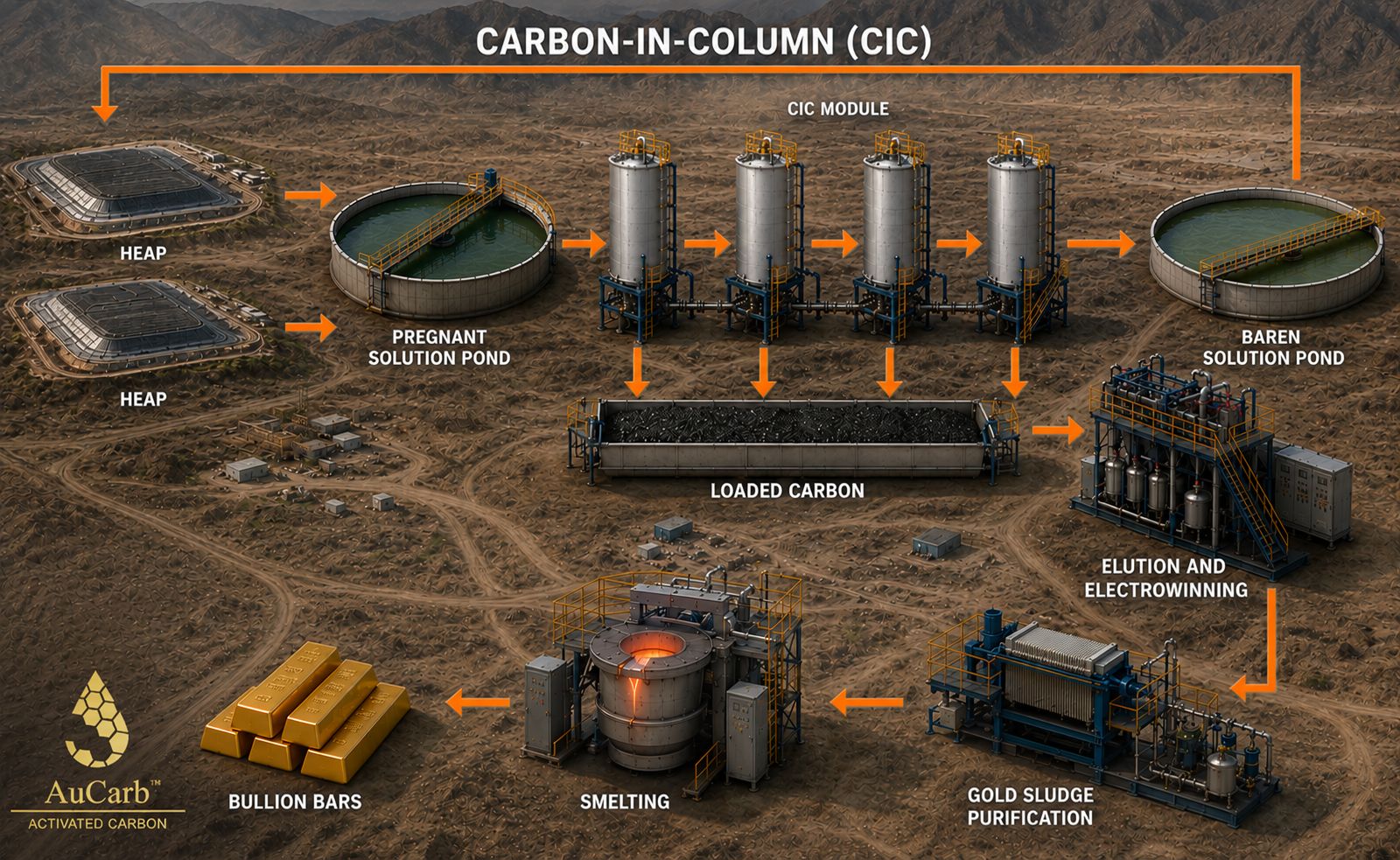
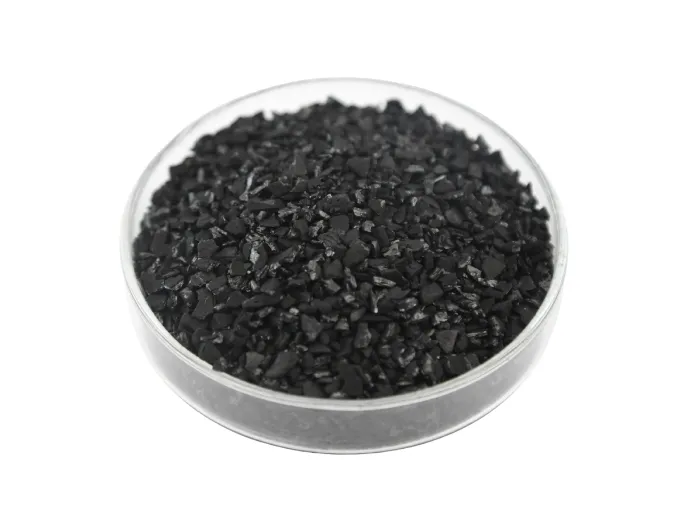
CIC gëtt am meeschten benotzt fir Gold aus Heap-Leaching-Operatiounen ze gewannen, Prozesser bei deenen eng Natriumzyanid- Léisung duerch en "Heap" aus zerquetschtem an agglomeréiertem Äerz perkoléiert, wouduerch d'Gold an d'Léisung ausgelaugt gëtt. Déi goldhalteg Léisung gëtt dann an eng Serie vun Adsorptiounssailen mat Aktivkuel gepompelt . Heap-Leaching gefollegt vu CIC-Kreeslafe ass eng bevorzugt Method fir d'Goldgewënnung aus Uewerflächenoflagerungen mat nidderegem Qualitéit a Gestengs wéinst hiren niddrege Kapital- a Betribskäschten.
Kuelestoff am Pulp
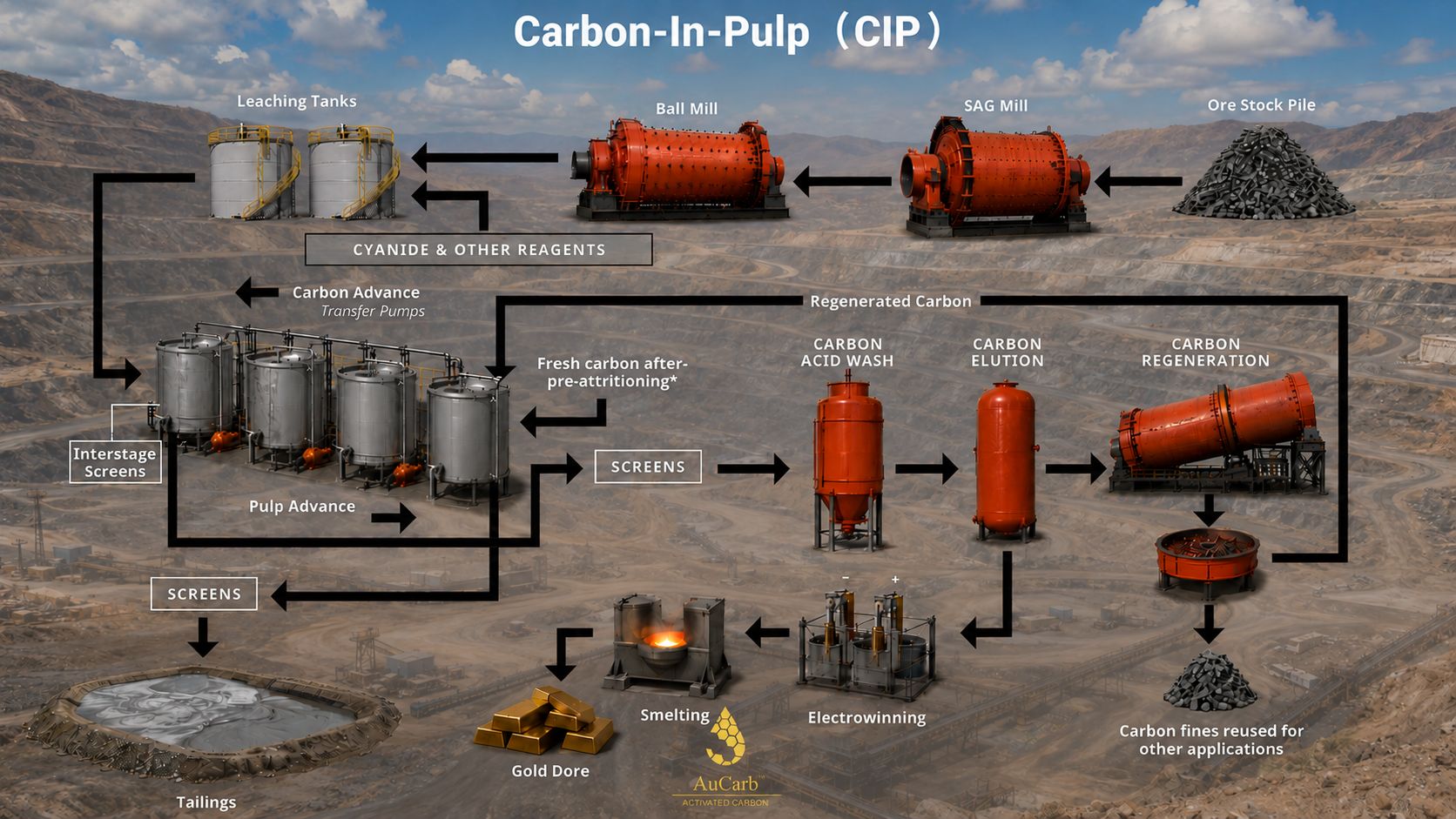
Bei CIP-Operatiounen gëtt den ofgebauten Äerz gemuel a mat Waasser a Verdickungsmëttel gemëscht, wouduerch eng Schlamm aus Äerz a Waasser entsteet, déi Pulp genannt gëtt. De Pulp gëtt dann a loftbewegung Auslaugbehälter gepompelt, wou d'Gold mat enger Natriumzyanidléisung aus dem Äerz ausgelaugt gëtt . De Pulp gëtt an eng Serie vun Adsorbertanks mat Aktivkuel transferéiert , déi sech mam ausgelaugte Pulp vermëscht a géint de Pulp an enger Serie vun Tanks fléisst. Den goldhaltegen Aktivkuel gëtt vum Pulp duerch e Sieb getrennt, deen de Kuelestoff verhënnert, duerchzefueren, während déi méi kleng Pulppartikel ewechgefiltert ginn.
Kuelestoff am Auslauge
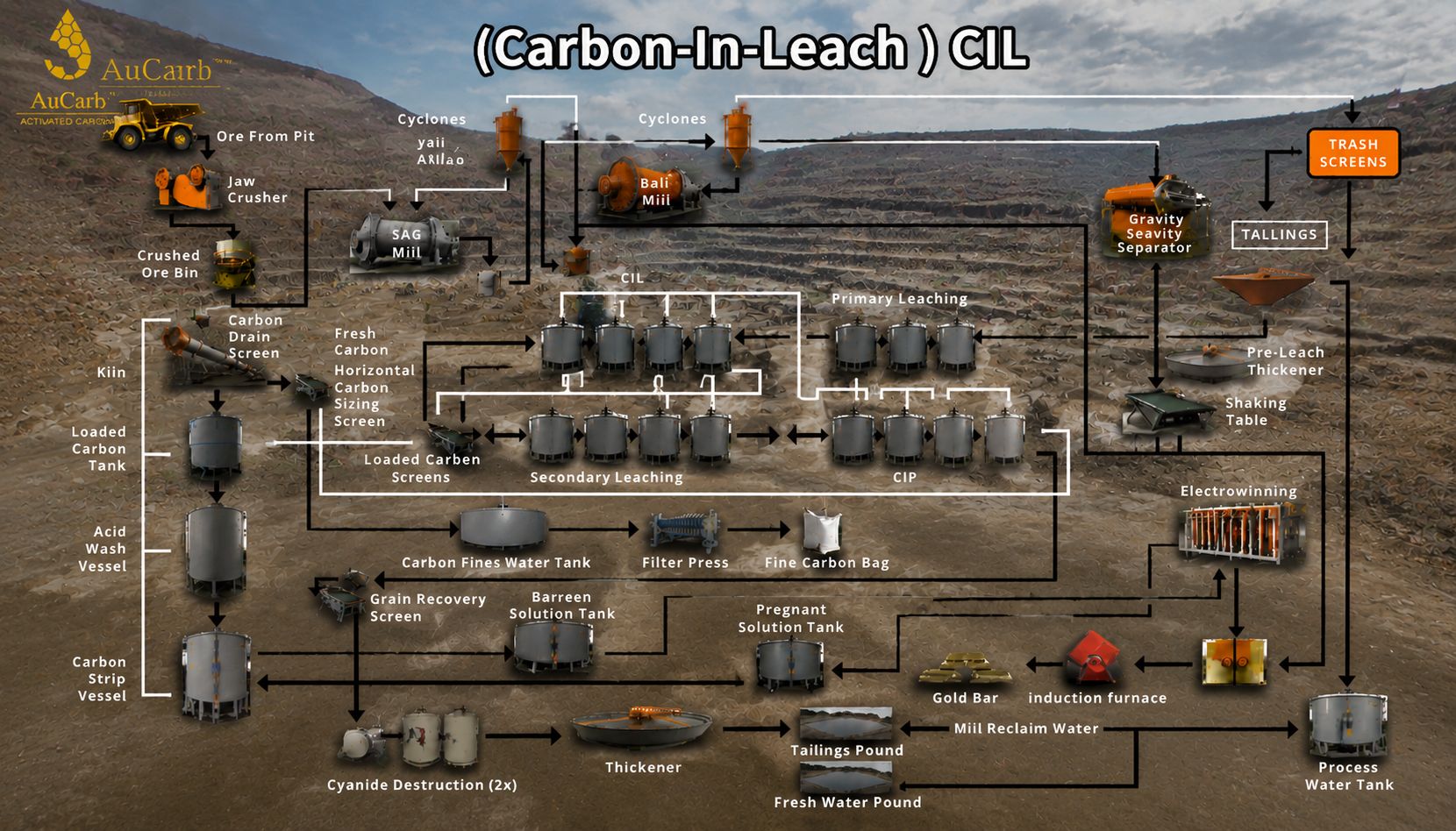
CIL-Operatioune si ganz ähnlech wéi CIP, awer Aktivkuel gëtt amplaz direkt an d'Gefässer bäigefüügt, an deenen d'Zyanidéierung stattfënnt. CIL ass eng besonnesch virdeelhaft Technik, wann den Äerz héich Konzentratioune vu kuelestoffhaltege Material enthält. Natierlech präsent Kuelestoff konkurréiert mam Aktivkuel beim Adsorptioun vu Gold an engem Prozess, deen "Preg Robbing" genannt gëtt, wat zu Goldverloschter féiert. Dofir gëtt de Zyanidéierungsprozess am CIL gläichzäiteg mat der Adsorptioun op Aktivkuel duerchgefouert, deen a direkten Kontakt mat der Pulp an der Zyanidléisung ass. De CIL-Prozess miniméiert d'Zäit, an där cyanidéiert Gold a Kontakt mat konkurréierende Kuelestoff ka sinn, deen natierlech am Äerz ass.
- Zoufälleg Inhalt
- Hot Inhalt
- Hot review Inhalt
- Collector BLK-301 / Composite Floating Active Matter ≥60%
- Thiourea 99% héich Aktivitéit Professionelle Produzent
- Wéi eng Roll spillen Miningchemikalien an der Miningindustrie?
- Wéi wielen ech de richtege Flotatiounsreagens?
- Natriumthiosulfat Pentahydrat
- Cyanursäure
- Héich Qualitéit Ethyl Thiocarbamate / Natrium Diethyl Dithiocarbamate 94%
- 1Discounted Sodium Cyanide (CAS: 143-33-9) fir Biergbau - Héich Qualitéit & Kompetitiv Präisser
- 2Natriumzyanid 98.3% CAS 143-33-9 NaCN Goldverpackungsmëttel essentiell fir d'Biergbauchemieindustrie
- 3China's Nei Reglementer iwwer Natriumcyanid Exporter a Leedung fir International Keefer
- 4Sodium Cyanide (CAS: 143-33-9) Endbenutzer Zertifikat (Chinesesch an Englesch Versioun)
- 5International Cyanide (Sodium Cyanide) Management Code - Gold Mine Akzeptanz Standarden
- 6China Fabréck Schwefelsäure 98%
- 7Waasserfräi Oxalsäure 99.6% Industriegrad
- 1Natriumzyanid 98.3% CAS 143-33-9 NaCN Goldverpackungsmëttel essentiell fir d'Biergbauchemieindustrie
- 2Héich Rengheet · Stabil Leeschtung · Méi héich Erhuelung — Natriumzyanid fir modern Goldaulaugung
- 3United ChemicalD'Fuerschungsteam weist Autoritéit duerch datenorientéiert Erkenntnesser
- 4AuCyan™ Héichleistungs-Natriumzyanid | 98.3% Rengheet fir de globale Goldofbau
- 5Digital Elektronesch Detonator (Verzögerungszäit 0 ~ 16000ms)
- 6Héichstäerkt, Héichpräzis Shock Tube Detonator
- 7Industrie elektresch Detonator


Online Message Consultatioun
Kommentar bäidroen: