
Hard-Rock Ore Variability and the Case for Consistent Reagent Specifications
When the ore changes from block to block, the one thing that should not change is the reagent you are measuring it against.
AngloGold Ashanti plans to invest US$200–250 million at the Cuiabá gold operation in Brazil, adding roughly 75,000 ounces of annual production to a 2025 base of 194,000 ounces. It is a brownfield expansion on an existing hard-rock circuit. For a plant whose ore varies from block to block, the procurement priority is not a new reagent but a stable one: one assay, one mesh cut, one K/R specification and one documentation standard per lot, so any change in plant performance can be attributed to the ore rather than to the delivery.
कुञ्जी टेकवेहरू
- A brownfield increment, not a new plant. US$200–250 million adds about 75,000 oz/y on a 194,000 oz 2025 base.
- Hard-rock feed varies. Grind size, sulphide exposure and gold liberation change dissolution kinetics between blocks.
- Hold the reagent constant. A stable NaCN assay and a stable कार्बन specification make ore variability measurable instead of ambiguous.
- COA per lot is the control instrument. Batch COA, TDS and MSDS let operators separate ore effects from delivery effects.
- Carbon hardness ≥99% and attrition ≤1.5% keep loaded fines off the tailings stream when throughput rises.
- One qualification, one freight plan. FOB or CIF only, with 15 / 18 / 28 MT minimum order quantities per 1×20' FCL.
| वस्तु | खुलासा गरिएको आकृति |
|---|---|
| Planned investment at Cuiabá | US $ 200-250 मिलियन |
| Incremental production | ~75,000 oz/y |
| १ आधार | 194,000 ओउंस |
| स्थान | Brazil, within the wider brownfield programme |
Source: company expansion announcement, 5 November 2026. All figures above are disclosed project numbers; no consumption figures have been estimated by the publisher.
1. Why ore variability makes specification stability valuable
In a hard-rock circuit, the ore delivered to the leach is never identical from one block to the next. Grind size changes liberation; sulphide and arsenic content change side-reaction demand; clay changes pulp rheology and oxygen transfer. Every one of those moves the dissolution curve and the reagent demand per tonne.
If the ore and the reagent both vary, the operator cannot tell which caused a change in recovery or consumption. Holding the reagent specification constant removes one variable. A NaCN assay that stays at ≥98.3%, a carbon lot that stays at ≥99% hardness with ≤1.5% attrition, and a fixed 6×12 mesh cut turn the reagent into a measuring instrument for the ore.
That is the practical argument for a single qualified supplier on a brownfield expansion: comparability. One set of test conditions, one documentation standard and one freight plan make deviations diagnosable.
2. Four difficulties in a variable hard-rock feed
2.1 Grind and liberation drift
Finer grind exposes more gold but also more gangue surface. Coarser grind leaves gold locked. Both change the optimum dosing profile, so the plant needs a curve per grind target.
2.2 Sulphide and arsenic side reactions
Copper, iron and arsenic minerals consume reagent through cyanocomplex formation. A new block with higher sulphide content raises consumption without raising recovery, which looks like a reagent problem unless the ore is tested.
2.3 Carbon fines at higher throughput
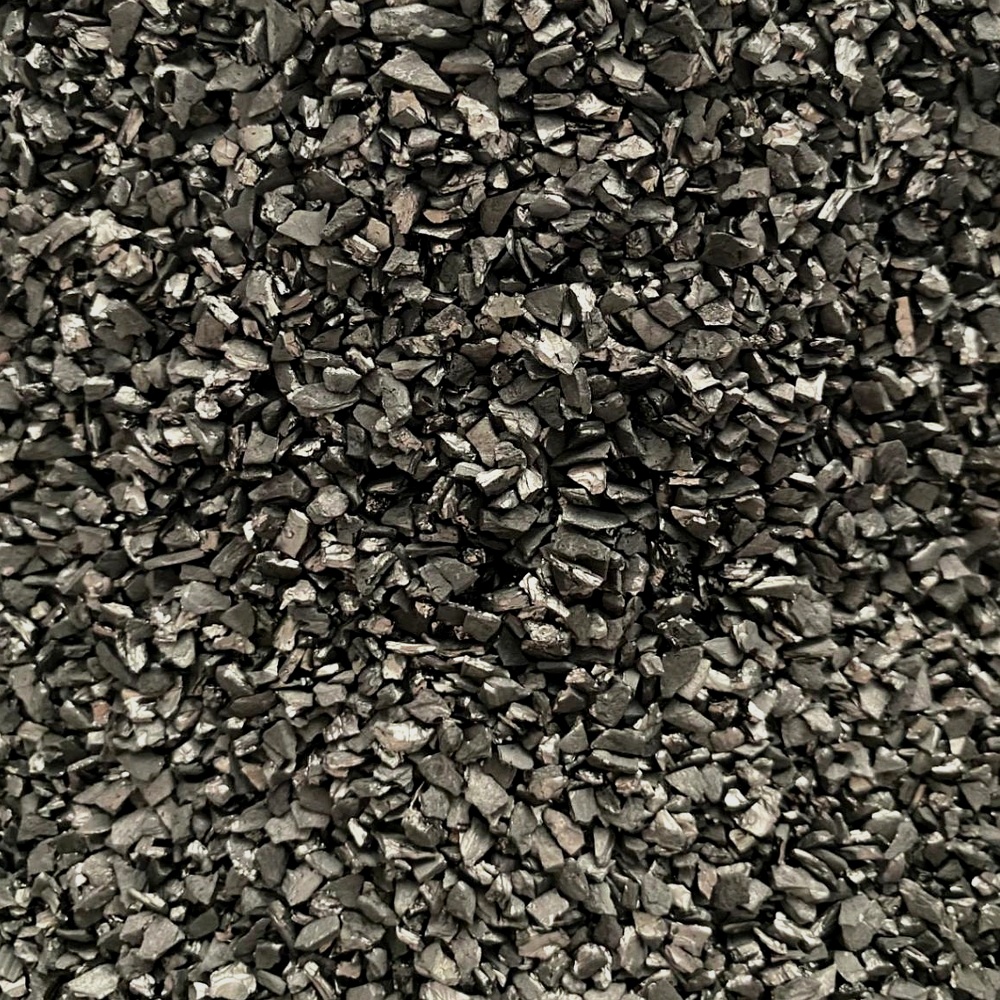
More circulation and screening cycles generate more fines. Because those fines carry adsorbed gold, the loss appears as a recovery gap rather than a consumable expense. Hardness ≥99% and attrition ≤1.5% on AC50 are the control points.
2.4 Multi-supplier drift
Two suppliers with nominally equivalent products can differ in assay, particle size distribution or impurity profile. Small differences compound across a long campaign and make trend data useless.
3. Tutorial: six steps to hold batch consistency
- Qualify one specification per product. Fix the NaCN assay band, the carbon hardness / attrition / mesh / K·R parameters and the leaching-agent pH and dosage band in writing before the first order.
- Require batch COA, TDS and MSDS per lot. File them against the delivery number, not in a shared folder, so any plant deviation can be traced to one lot.
- Sample on arrival. Retain a representative sample of each lot and verify the key assay or particle size parameter against the COA before the lot enters the circuit.
- Define an acceptance band. State what happens when a measured value falls outside it — hold, re-test or adjust the dosing set-point — and who authorises the decision.
- Log plant performance per lot. Consumption kg/t, pH, free साइनाइड or residual reagent, dissolved gold and recovery should all sit next to the lot number.
- Separate ore effects from delivery effects. When performance shifts, check the ore blend first (step 1 of the feed-change method), then the COA. Do not adjust the set-point until both are known.
This routine costs little and protects the most valuable thing a plant owns during an expansion: comparable data.
४. समस्या निवारण तालिका
| लक्षण | सम्भावित कारण | पहिलो जाँच |
|---|---|---|
| Consumption up, recovery flat | New sulphide / arsenic block | Ore mineralogy, bottle roll curve |
| Recovery down after finer grind | Gangue surface consuming reagent | Grind size distribution, dosing profile |
| Carbon make-up rising | Fines from higher circulation | Attrition ≤1.5%, screen aperture, tails assay |
| Trend data inconsistent | Two suppliers or two specs in use | Qualification record, COA per lot |
| Deviation cannot be traced | Lot number not linked to plant log | Delivery record, sampling and filing routine |
5. Three products under one qualification
| स्टेज | उत्पादन | Fixed specification |
|---|---|---|
| डिस्प्ले | AuCyan™ सोडियम साइनाइड NaCN (≥98.3%) | Assay band, low NaOH / Na₂CO₃ / insolubles; 18 MT MOQ |
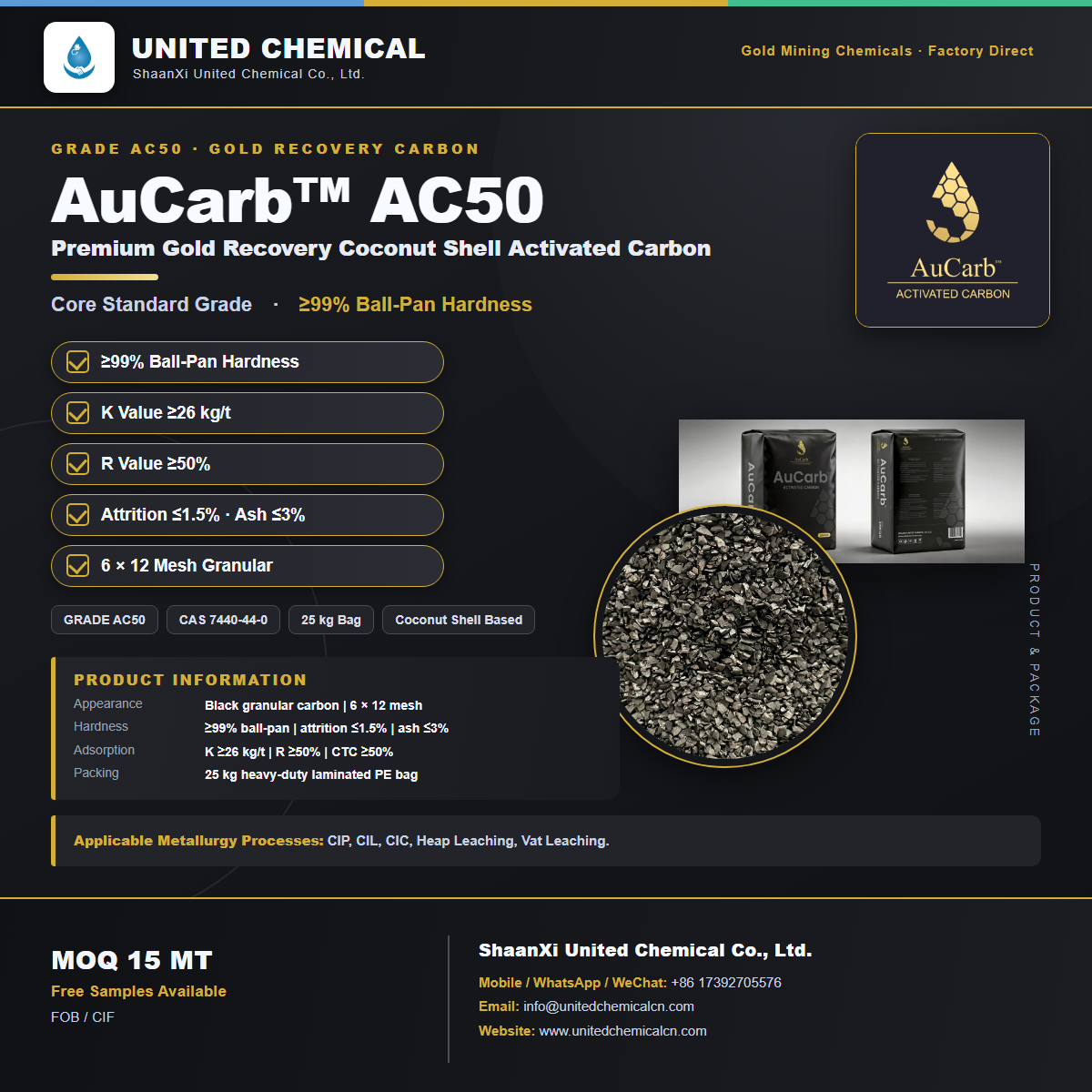
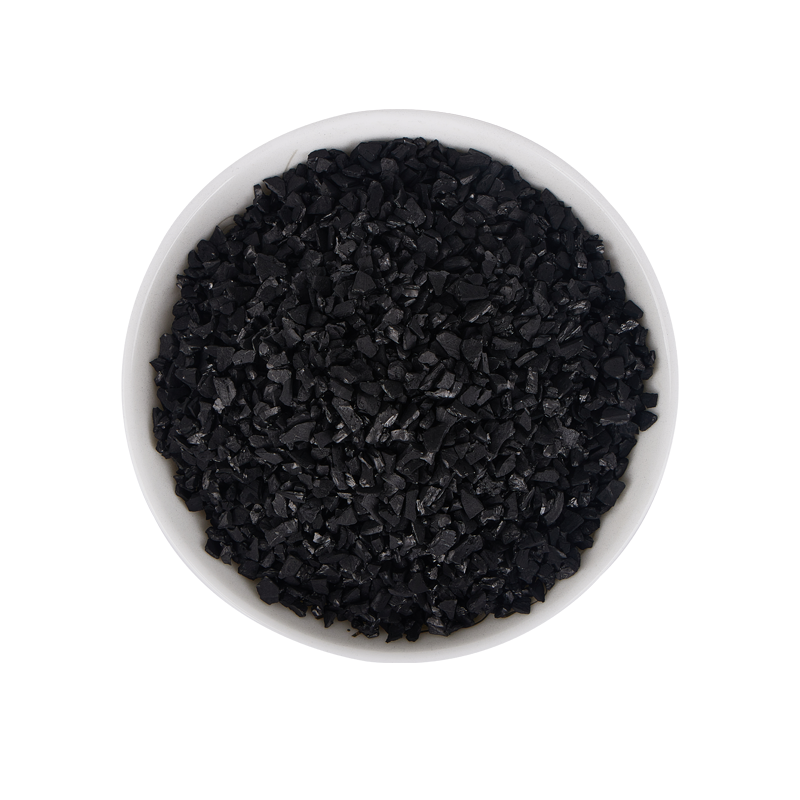
| सोखना | AuCarb™ गोल्ड रिकभरी नरिवलको खोल सक्रिय कार्बन (≥९९% कठोरता) | 6×12 mesh, attrition ≤1.5%, K ≥26 kg/t / R ≥50% on AC50; 15 MT MOQ |
| वैकल्पिक मार्ग | AuLeach™ गोल्ड लिचिङ एजेन्ट (GDA) - गैर-खतरनाक | pH 10.5–12, ore-validated dosage; 28 MT MOQ |
All three ship factory-direct under FOB or CIF terms with batch COA, TDS and MSDS; AuCarb™ is packed in 25 kg heavy-duty laminated PE bags. Free laboratory test samples are available for AuCarb™ and AuLeach™.
Frequently. प्राय: सोधिने प्रश्नहरू
Q1. What is planned at Cuiabá?
US$200–250 million of investment, adding roughly 75,000 ounces of annual production to a 2025 base of 194,000 ounces.
Q2. When was this announced?
५ नोभेम्बर २०२६, कम्पनीको ब्राउनफिल्ड विस्तार कार्यक्रम भित्र।
Q3. Why does hard-rock ore complicate reagent control?
Grind size, sulphide exposure, arsenic and clay content all change dissolution kinetics and side-reaction demand between blocks.
Q4. Why hold the reagent specification constant?
So any change in recovery or consumption can be attributed to the ore rather than to a varying delivery.
Q5. What documents should accompany each lot?
Batch COA, TDS and MSDS, filed against a delivery number so deviations are traceable.
Q6. What should be sampled on arrival?
A representative sample of each lot, verified against the COA for the key assay or particle size parameter before use.
Q7. Which carbon parameters matter most here?
Hardness ≥99%, attrition ≤1.5%, platelet ≤5.0%, a 6×12 mesh cut and the K/R pair on AC50.
प्रश्न १०. AuCarb™ कसरी प्याक गरिन्छ?
In 25 kg heavy-duty laminated PE bags at 15 MT MOQ per 1×20' FCL.
प्रश्न ९. कुन इन्कोटर्महरू लागू हुन्छन्?
FOB वा CIF सर्तहरू लागू हुन्छन्।
Q10. What is the operating window for AuLeach™?
pH 10.5–12 with a target around 11 ± 1, with dosage fixed by ore-specific testing.
Q11. Should the set-point be adjusted when performance shifts?
Only after the ore blend and the batch COA have both been checked, so the cause is known before the change is made.
प्रश्न १२। उत्पादन विशिष्टताहरू कहाँ प्रकाशित हुन्छन्?
On the AuCyan™, AuCarb™ and AuLeach™ technical pages linked below.
७. स्रोत र आन्तरिक लिङ्कहरू
AuCyan™ · AuCarb™ गाइड · AC50 · AC55 · AC60 · BC1100 · AuLeach™ GDA · गोल्डेन ट्राइएंगल · तीन-उत्पादन सिंहावलोकन · रासायनिक FAQs · उद्योग समाचार · हामीलाई सम्पर्क गर्नुहोस्
स्रोत नोट: परियोजना तथ्याङ्कहरू ५ नोभेम्बर २०२६ को कम्पनी विस्तार घोषणाबाट लिइएका हुन्। अभिकर्मक विशिष्टताहरू हुन् United Chemical उत्पादन डेटा।
सम्पर्क · व्हाट्सएप +८६ १७३ ९२७० ५५७६ · info@unitedchemicalcn.com
- अनियमित सामग्री
- तातो सामग्री
- तातो समीक्षा सामग्री
- चीन कारखाना सल्फ्यूरिक एसिड ९८%
- सोडियम आइसोप्रोपाइल जान्थेट ९०% SIPX
- म कसरी सही फ्लोकुलेन्ट छनौट गर्ने?
- फ्लोटेशनको समयमा खानी रसायनहरूले खनिज रिकभरी दरलाई कसरी असर गर्छ?
- सोडियम Tripolyphosphate
- साइनुरिक एसिड
- सोडियम डायसोब्युटाइल डायथियोफोस्फेट/डायथियोफोस्फेट ४९% - ५३%
- 1खानीको लागि छुटमा सोडियम साइनाइड (CAS: १४३-३३-९) - उच्च गुणस्तर र प्रतिस्पर्धी मूल्य निर्धारण
- 2सोडियम साइनाइड ९८.३% CAS १४३-३३-९ खानी रासायनिक उद्योगहरूको लागि आवश्यक NaCN सुनको ड्रेसिङ एजेन्ट
- 3सोडियम साइनाइड निर्यातमा चीनको नयाँ नियमन र अन्तर्राष्ट्रिय खरीददारहरूको लागि मार्गदर्शन
- 4सोडियम साइनाइड (CAS: १४३-३३-९) अन्तिम प्रयोगकर्ता प्रमाणपत्र (चिनियाँ र अंग्रेजी संस्करण)
- 5अन्तर्राष्ट्रिय साइनाइड(सोडियम साइनाइड) व्यवस्थापन संहिता - सुन खानी स्वीकृति मापदण्डहरू
- 6चीन कारखाना सल्फ्यूरिक एसिड ९८%
- 7निर्जल अक्सालिक एसिड ९९.६% औद्योगिक ग्रेड
- 1सोडियम साइनाइड ९८.३% CAS १४३-३३-९ खानी रासायनिक उद्योगहरूको लागि आवश्यक NaCN सुनको ड्रेसिङ एजेन्ट
- 2उच्च शुद्धता · स्थिर प्रदर्शन · उच्च पुन: प्राप्ति — आधुनिक सुन लिचिंगको लागि सोडियम साइनाइड
- 3United Chemicalको अनुसन्धान टोलीले डेटा-संचालित अन्तर्दृष्टि मार्फत अधिकार प्रदर्शन गर्दछ
- 4AuCyan™ उच्च-प्रदर्शन सोडियम साइनाइड | विश्वव्यापी सुन खानीको लागि ९८.३% शुद्धता
- 5डिजिटल इलेक्ट्रोनिक डेटोनेटर (ढिलाइ समय ० ~ १६००० मिलिसेकेन्ड)
- 6उच्च-शक्ति, उच्च-परिशुद्धता शक ट्यूब डेटोनेटर
- 7उद्योग इलेक्ट्रिक डेटोनेटर


अनलाइन सन्देश परामर्श
टिप्पणी थप्नुहोस्: