

UNITED CHEMICAL · پراڊڪٽ ٽيڪنالاجي · 27 نومبر 2026
هن ڪاربن you replace is not the carbon you lose
Fines carry gold out of the circuit, and they rarely appear on the purchase order.
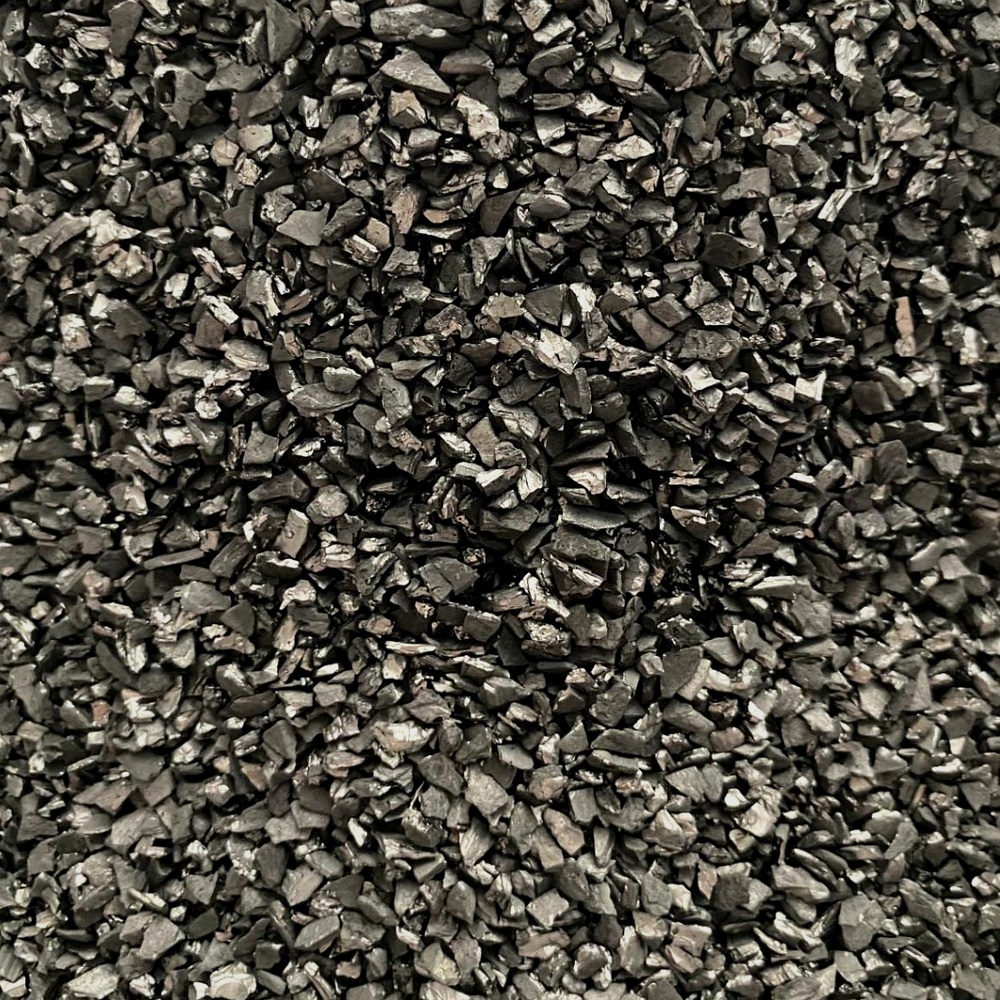
Activated carbon is consumed two ways. It leaves as loaded carbon after elution, and it grinds into fines that report to tailings carrying adsorbed gold. The second loss is rarely budgeted. Ball-pan hardness and AARL attrition predict it; mesh size and platelet count predict how fast it happens in a given circuit. This guide uses آو ڪارب ™ گولڊ ريڪوري ناريل شيل چالو ڪاربن (≥99٪ سختي) as the worked example.
1. Three steps from solution to loaded carbon
Film diffusion — the [Au(CN)₂]⁻ complex crosses the solution boundary layer around each granule. Agitation controls this step.
Pore diffusion — the complex travels into internal pores. Granule size and pore structure control this step.
Surface adsorption — the complex binds to active sites. Surface chemistry and total area control this step.
2. Why hardness is a recovery parameter
A granule that breaks in a stirred tank shortens diffusion paths but creates gold-bearing fines that escape the adsorption circuit. In an abrasive ore, moving from a marginal product to one at ball-pan hardness ≥99% with AARL attrition ≤1.5% cuts fines generation directly. The AC50 verified data set is: 6×12 mesh, ball-pan ≥99%, AARL attrition ≤1.5%, platelet ≤5.0%, K ≥26 kg/t, R ≥50%, CTC ≥50%, butane ≥19.5%, ash ≤3.0%, moisture ≤5.0%, bulk density 0.48–0.55 g/mL. Iodine value is deliberately omitted — published figures conflict, so CTC and butane activity are the auditable measures.
گولڊن ٽرائنگل - ٽي شيون، هڪ سپلائر
AuCyan™ سوڊيم سائانائيڊ NaCN (≥98.3%) · AuCarb™ گولڊ ريڪوري ڪوڪونٽ شيل ايڪٽيويٽڊ ڪاربن (≥99% سختي) · AuLeach™ گولڊ ليچنگ ايجنٽ (GDA) - غير خطرناڪ
3. Worked calculation: the cost of fines
A 2,000 t/day CIL plant carries 12 tonnes of carbon with a 30-day cycle. At 1.5% attrition per cycle it loses about 180 kg per cycle, or 2.2 tonnes a year. At 3.0% it loses roughly 4.3 tonnes — a difference of 2.1 tonnes of carbon. If those fines carry even 200 g/t of gold, the annual gold difference is about 420 g. At any reasonable gold price, the hardness premium paid for the better carbon is smaller than the gold saved.
1.5% attrition: ≈ 2.2 t/year make-up carbon
3.0% attrition: ≈ 4.3 t/year make-up carbon
4. K and R are not the same number
K value is the adsorption rate constant — how fast gold loads. R value is equilibrium capacity — how much it holds. A high K with modest R suits short contact time. A high R suits a circuit that runs carbon to heavy loading before elution. Buying on either alone is a common and expensive mistake. Run bottle-roll loading on your own ore, set the K/R target from your contact time, then buy the lowest grade that reaches it.
5. چار گريڊ، چار نوڪريون
| گريڊ | گهيرو | وضاحت جي وضاحت |
|---|---|---|
| BC1100 | ڍير جي ليچنگ / ڪالمن ۾ ڪاربن | گهٽ درجي جي حلن لاءِ اعليٰ سرگرمي |
| AC50 | Standard CIP/CIL | 6×12 mesh, K ≥26, R ≥50%, CTC ≥50% |
| AC55 | وڌيڪ لوڊ ٿيندڙ CIP/CIL | ڪ ≥28 ڪلوگرام/ٽي، ر ≥55٪ |
| AC60 | پريميئم سي آءِ پي/سي آءِ ايل | ڪ ≥30 ڪلوگرام/ٽي، ر ≥60٪، 8×16 يا 6×12 |
6. ٻيهر پيدا ٿيڻ ۽ چڪر جي زندگي
Loaded carbon is eluted and thermally regenerated before returning to the circuit. Every cycle imposes thermal and mechanical stress. Platelets and weak granules are preferentially lost in handling and regeneration. A carbon at ball-pan hardness ≥99% with platelet ≤5.0% typically sustains more cycles before make-up is required. Packing is 25 ڪلوگرام هيوي ڊيوٽي ليمينيٽڊ پي اي بيگز, with a batch ڪوئ, TDS ۽ MSDS. MOQ آهي 1×20' ايف سي ايل ≈ 15 ميٽرڪ ٽن هيٺ FOB / CIF terms; United Chemical 77 کان وڌيڪ ملڪن جي خدمت ڪري ٿو.
5b. Screening and fines recovery
Attrition control does not end at the carbon specification. Screen condition determines whether a broken granule is removed cleanly or ground further and carried forward. A worn screen with oversized apertures passes loaded fines into the tailings stream; a blinded screen holds carbon in the tank too long and increases grinding. The practical routine is to log screen aperture, inspect panels on a fixed schedule and sample the carbon size distribution in the circuit monthly. If the proportion of sub-millimetre material is rising while make-up carbon is on budget, the problem is mechanical rather than metallurgical. Equally, gold-bearing fines caught on a screen are not lost; they should be routed to the elution circuit where the recovery economics justify it. This is why hardness and attrition numbers belong in an operating dashboard, not only in the purchase order.
7. سوال
سوال 1 — عملي طور تي ≥99٪ سختي جو ڇا مطلب آهي؟
Ball-pan hardness ≥99% means the granule resists mechanical breakdown to a defined standard, reducing fines.
Q2 — Which mesh size?
6×12 for agitated CIP/CIL, 8×16 where finer loading is needed, BC1100 for columns and heap.
سوال 3 — ڇا توهان آئيوڊين جي قيمت شايع ڪندا آهيو؟
No — CTC and butane activity are the auditable pore measures because published iodine figures conflict.
سوال 4 — هر بيچ سان ڪهڙا جهاز موڪليا ويندا؟
25 ڪلوگرام جي هيوي ڊيوٽي ليمينيٽڊ پي اي بيگز ۾ بيچ COA، TDS ۽ MSDS.
سوال 5 — ايم ڪيو ايم ڇا آهي؟
1×20' FCL ≈ 15 MT، FOB يا CIF.
Q6 — Can I test before buying?
ها — آزاد ليبارٽري ٽيسٽنگ لاءِ AuCarb™ ۽ AuLeach™ جا مفت نمونا.
Measure your attrition loss
Tell us your circuit type, screen aperture and ore abrasiveness. We propose a grade, a K/R target and a test protocol.
اسان سان رابطو ڪريو · AC50 · AC55 · AC60 · گولڊن ٽرائنگل جو جائزو
واٽس ايپ +86 173 9270 5576 · info@unitedchemicalcn.com
- بي ترتيب مواد
- گرم مواد
- گرم جائزو مواد
- چين جو ڪارخانو سلفورڪ ايسڊ 98٪
- سلفورڪ ايسڊ 98٪ صنعتي گريڊ
- پلاسٽڪ شاک ٽيوب (VOD≧1600m/s)
- فيرس سلفيٽ صنعتي گريڊ 90٪
- ڇا فلوٽيشن ري ايجنٽس جا ماحولياتي اثر پون ٿا؟
- 1مائننگ لاءِ رعايتي سوڊيم سائينائيڊ (CAS: 143-33-9) - اعليٰ معيار ۽ مقابلي واري قيمت
- 2سوڊيم سائانائيڊ 98.3% CAS 143-33-9 NaCN گولڊ ڊريسنگ ايجنٽ مائننگ ڪيميڪل انڊسٽريز لاءِ ضروري
- 3سوڊيم سائينائيڊ جي برآمدات تي چين جا نوان ضابطا ۽ بين الاقوامي خريد ڪندڙن لاءِ هدايتون
- 4سوڊيم سائانائيڊ (CAS: 143-33-9) آخري استعمال ڪندڙ سرٽيفڪيٽ (چيني ۽ انگريزي ورزن)
- 5بين الاقوامي سائينائيڊ (سوڊيم سائينائيڊ) انتظامي ڪوڊ - سون جي کاڻ جي قبوليت جا معيار
- 6چين جو ڪارخانو سلفورڪ ايسڊ 98٪
- 7اينهائيڊروس آڪسالڪ ايسڊ 99.6٪ صنعتي گريڊ
- 1سوڊيم سائانائيڊ 98.3% CAS 143-33-9 NaCN گولڊ ڊريسنگ ايجنٽ مائننگ ڪيميڪل انڊسٽريز لاءِ ضروري
- 2اعليٰ پاڪائي · مستحڪم ڪارڪردگي · اعليٰ بحالي — جديد سون جي ليچنگ لاءِ سوڊيم سائانائيڊ
- 3United Chemicalجي ريسرچ ٽيم ڊيٽا تي ٻڌل بصيرت ذريعي اختيار جو مظاهرو ڪري ٿي
- 4AuCyan™ اعليٰ ڪارڪردگي وارو سوڊيم سائانائيڊ | عالمي سون جي مائننگ لاءِ 98.3٪ پاڪائي
- 5ڊجيٽل اليڪٽرانڪ ڊيٽونيٽر (دير جو وقت 0 ~ 16000ms)
- 6اعليٰ طاقت، اعليٰ صحت واري شاک ٽيوب ڊيٽونيٽر
- 7انڊسٽري اليڪٽرڪ ڊيٽونيٽر










آن لائن پيغام صلاح
تبصرو شامل ڪريو: