
UNITED CHEMICAL · PRODUCT TECHNOLOGY · 20 NOVEMBER 2026
وضاحت کریں کاربن by how it survives the circuit, not by one adsorption number
Gold-plant carbon is consumed two ways: it leaves with the loaded-carbon stream, and it grinds into fines that report to tailings. The second loss is rarely budgeted.
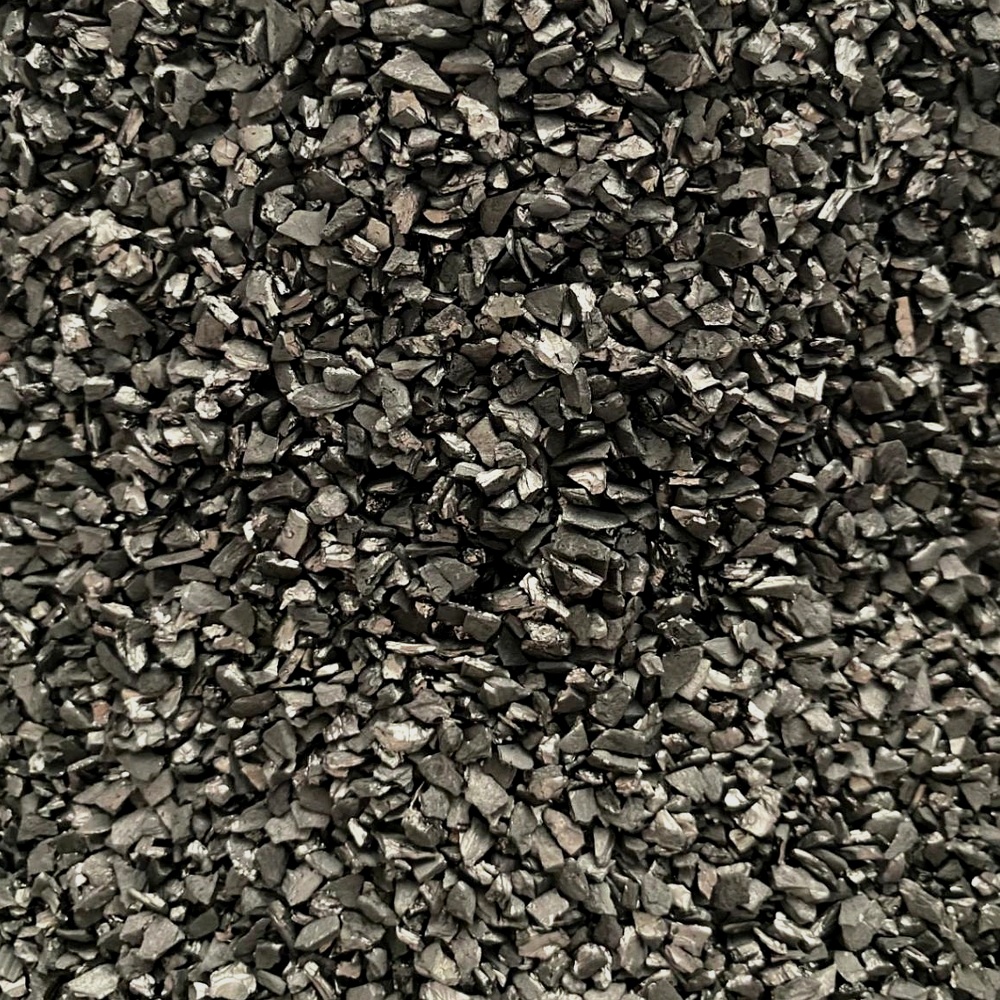
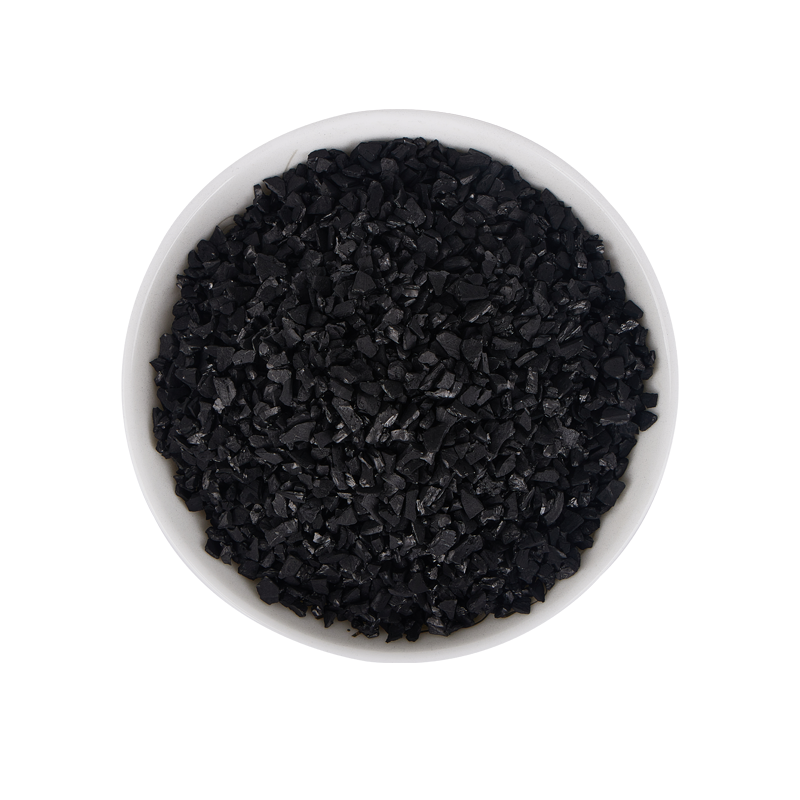
Activated carbon is the workhorse of modern gold recovery. In a کاربن ان پلپ (سی آئی پی) or کاربن ان لیچ (CIL) circuit, dissolved gold transfers from solution onto carbon granules, which are later screened, eluted and regenerated. In کاربن ان کالم (CIC) اور ہیپ لیچنگ applications, carbon columns capture gold from clarified solutions. The material must do three jobs at once: adsorb gold quickly, resist abrasion in a stirred tank, and survive repeated thermal regeneration without losing capacity. This guide uses AuCarb™ گولڈ ریکوری کوکونٹ شیل ایکٹیویٹڈ کاربن (≥99% سختی) as the worked example, and explains every parameter that matters.
1. The three-step adsorption mechanism
Step 1 — Film diffusion. The gold-سائینائڈ۔ complex [Au(CN)₂]⁻ migrates through the solution boundary layer surrounding each carbon granule. Agitation and solution grade control this step.
Step 2 — Pore diffusion. The complex travels into the internal pore structure. Pore size distribution and granule size determine how quickly the interior becomes available.
Step 3 — Surface adsorption. The complex binds to active sites on the internal surface. Chemistry of the surface and total active area determine capacity.
Because steps 1 and 2 are rate-controlling in most plants, mesh size and hardness matter as much as surface chemistry. A granule that breaks into fines shortens diffusion paths but creates gold-bearing fines that escape the adsorption circuit.
2. K value and R value — what they really mean
Buyers often confuse K and R. They measure different things and both are needed.
| پیرامیٹر | مطلب | Typical AC50 value |
|---|---|---|
| K قدر | Adsorption rate constant; how fast gold loads | ≥26 کلوگرام فی ٹی |
| R قدر | Loading capacity at equilibrium | ≥ 50٪ |
| CTC | Carbon tetrachloride activity, micropore indicator | ≥ 50٪ |
| بیوٹین کی سرگرمی | Working-capacity indicator for larger molecules | ≥ 19.5٪ |
A high K with modest R suits a circuit with short contact time. A high R suits a circuit that runs carbon to high loading before elution. Selecting on either alone is a common and expensive mistake.
The Golden Triangle — three products, one supplier
AuCyan™ Sodium Cyanide NaCN (≥98.3%) · AuCarb™ گولڈ ریکوری کوکونٹ شیل ایکٹیویٹڈ کاربن (≥99% سختی) · AuLeach™ گولڈ لیچنگ ایجنٹ (GDA) – غیر مؤثر
3. The AC50 verified specification block
For AC50-class carbon the verified data set is: 6×12 mesh, ball-pan hardness ≥99%, AARL attrition ≤1.5%, platelet ≤5.0%, K ≥26 kg/t, R ≥50%, CTC ≥50%, butane activity ≥19.5%, ash ≤3.0%, moisture ≤5.0%, bulk density 0.48–0.55 g/mL. In an abrasive ore, moving from a marginal to a ≥99% ball-pan product cuts fines generation, which means less gold lost to the carbon-on-fines route and fewer top-ups during the campaign. Note that iodine value is deliberately omitted from this block: published figures conflict across sources, so the specification uses CTC and butane activity as the auditable pore-structure measures.
4. What ≥99% hardness actually buys you
Ball-pan hardness measures resistance to mechanical degradation. AARL attrition measures mass lost as fines under standardised agitation. Together they predict how much carbon you will replace during a campaign. Consider a 2,000 t/day CIL plant carrying 12 tonnes of carbon with a 30-day carbon cycle. If attrition runs at 1.5% per cycle against 3.0% for a marginal product, the better carbon saves roughly 180 kg per cycle, or about 2.2 tonnes per year — before accounting for the gold trapped in those fines.
5. Four grades, four jobs
| گریڈ | Best-fit circuit | Defining spec |
|---|---|---|
| BC1100 | Heap leaching / Carbon-in-Column | High activity for lower-grade solutions |
| AC50 | Standard Carbon-in-Pulp / Carbon-in-Leach | 6×12 mesh, K ≥26 kg/t, R ≥50%, CTC ≥50% |
| AC55 | Higher-loading CIP/CIL | K ≥28 kg/t، R ≥55% |
| AC60 | Premium CIP/CIL, 8×16 or 6×12 mesh | K ≥30 kg/t، R ≥60% |
6. Seven-step selection method
مرحلہ 1 — Identify the circuit. Heap leaching and Carbon-in-Column favour BC1100; agitated CIP/CIL favours AC50 and above. مرحلہ 2 — Measure ore abrasiveness. مرحلہ 3 — Run bottle-roll loading on your own ore. مرحلہ 4 — Set the K/R target from contact time and loading strategy. مرحلہ 5 — Choose mesh size against screen apertures and solution clarity. مرحلہ 6 — Buy the lowest grade that reaches the target. مرحلہ 7 — Track fines in the loaded-carbon screen and in tailings; if attrition exceeds the ≤1.5% AARL expectation, revisit hardness before revisiting dosage.
7. Regeneration and cycle life
Loaded carbon is eluted and thermally regenerated before returning to the circuit. Each cycle imposes thermal and mechanical stress. Hardness and low platelet content matter here: platelets and weak granules are preferentially lost during handling and regeneration. A carbon specified at ball-pan hardness ≥99% with platelet ≤5.0% will typically sustain more cycles before make-up carbon is required.
8. Troubleshooting and FAQ
| علامات | ممکنہ وجہ | عمل |
|---|---|---|
| Gold on screen oversize | Carbon fines carrying gold | Check attrition, improve screen |
| سست لوڈنگ | Low K or coarse mesh | Verify K, consider finer grade |
| High make-up rate | Attrition above spec | Upgrade hardness |
| Low elution efficiency | Overloading, poor regeneration | Review R value and strip cycle |
Q1 — What does ≥99% hardness mean in practice?
Ball-pan hardness ≥99% means the granule resists mechanical breakdown to a defined standard, reducing fines and make-up carbon.
Q2 — Which mesh size should I choose?
6×12 mesh is the standard for agitated CIP/CIL; 8×16 is used where finer loading is needed; BC1100 serves column and heap applications.
Q3 — Do you publish iodine value?
The specification uses CTC and butane activity as auditable pore measures, because published iodine figures are inconsistent.
Q4 — What ships with each batch?
A batch COA, TDS and MSDS, in 25 kg heavy-duty laminated PE bags.
Q5 — What is the MOQ and terms?
1×20' FCL ≈ 15 MT, FOB or CIF.
Q6 — Can I test carbon before buying?
Yes. Complimentary samples of AuCarb™ and AuLeach™ are available for independent laboratory testing.
- بے ترتیب مواد
- گرم مواد
- گرم جائزہ مواد
- سوڈیم آئسوپروپل زانتھیٹ 90% SIPX
- انڈسٹریل ایسٹک ایسڈ 99.5% بے رنگ مائع گلیشیل ایسٹک ایسڈ
- صنعتی سوڈیم نائٹریٹ 98.5%
- سوڈیم فیروکیانائیڈ معدنی فلوٹیشن کے عمل میں کس طرح مدد کرتا ہے؟
- کان کنی کیمیکلز کو ذخیرہ کرنے اور سنبھالنے کی احتیاطی تدابیر کیا ہیں؟
- 1کان کنی کے لیے رعایتی سوڈیم سائینائیڈ (CAS: 143-33-9) - اعلیٰ معیار اور مسابقتی قیمت
- 2سوڈیم سائنائیڈ 98.3% CAS 143-33-9 NaCN گولڈ ڈریسنگ ایجنٹ کان کنی کیمیکل انڈسٹریز کے لیے ضروری
- 3سوڈیم سائینائیڈ کی برآمدات پر چین کے نئے ضوابط اور بین الاقوامی خریداروں کے لیے رہنمائی
- 4سوڈیم سائینائیڈ (CAS: 143-33-9) اختتامی صارف کا سرٹیفکیٹ (چینی اور انگریزی ورژن)
- 5بین الاقوامی سائینائیڈ (سوڈیم سائینائیڈ) مینجمنٹ کوڈ - گولڈ مائن قبولیت کے معیارات
- 6چین فیکٹری سلفرک ایسڈ 98%
- 7اینہائیڈروس آکسالک ایسڈ 99.6% صنعتی گریڈ
- 1سوڈیم سائنائیڈ 98.3% CAS 143-33-9 NaCN گولڈ ڈریسنگ ایجنٹ کان کنی کیمیکل انڈسٹریز کے لیے ضروری
- 2اعلیٰ طہارت · مستحکم کارکردگی · اعلیٰ بحالی - جدید سونے کے لیچنگ کے لیے سوڈیم سائینائیڈ
- 3United Chemicalکی ریسرچ ٹیم ڈیٹا سے چلنے والی بصیرت کے ذریعے اتھارٹی کا مظاہرہ کرتی ہے۔
- 4AuCyan™ ہائی پرفارمنس سوڈیم سائنائیڈ | عالمی سونے کی کان کنی کے لیے 98.3% پاکیزگی
- 5ڈیجیٹل الیکٹرانک ڈیٹونیٹر (تاخیر کا وقت 0 ~ 16000ms)
- 6اعلی طاقت، اعلی صحت سے متعلق شاک ٹیوب ڈیٹونیٹر
- 7انڈسٹری الیکٹرک ڈیٹونیٹر


آن لائن پیغام مشاورت
تبصرہ شامل کریں: