
A variety of extraction techniques are employed to liberate gold from crushed raw ore. These processes make the gold available for release into the cyanide solution.
CARBON-IN-COLUMN
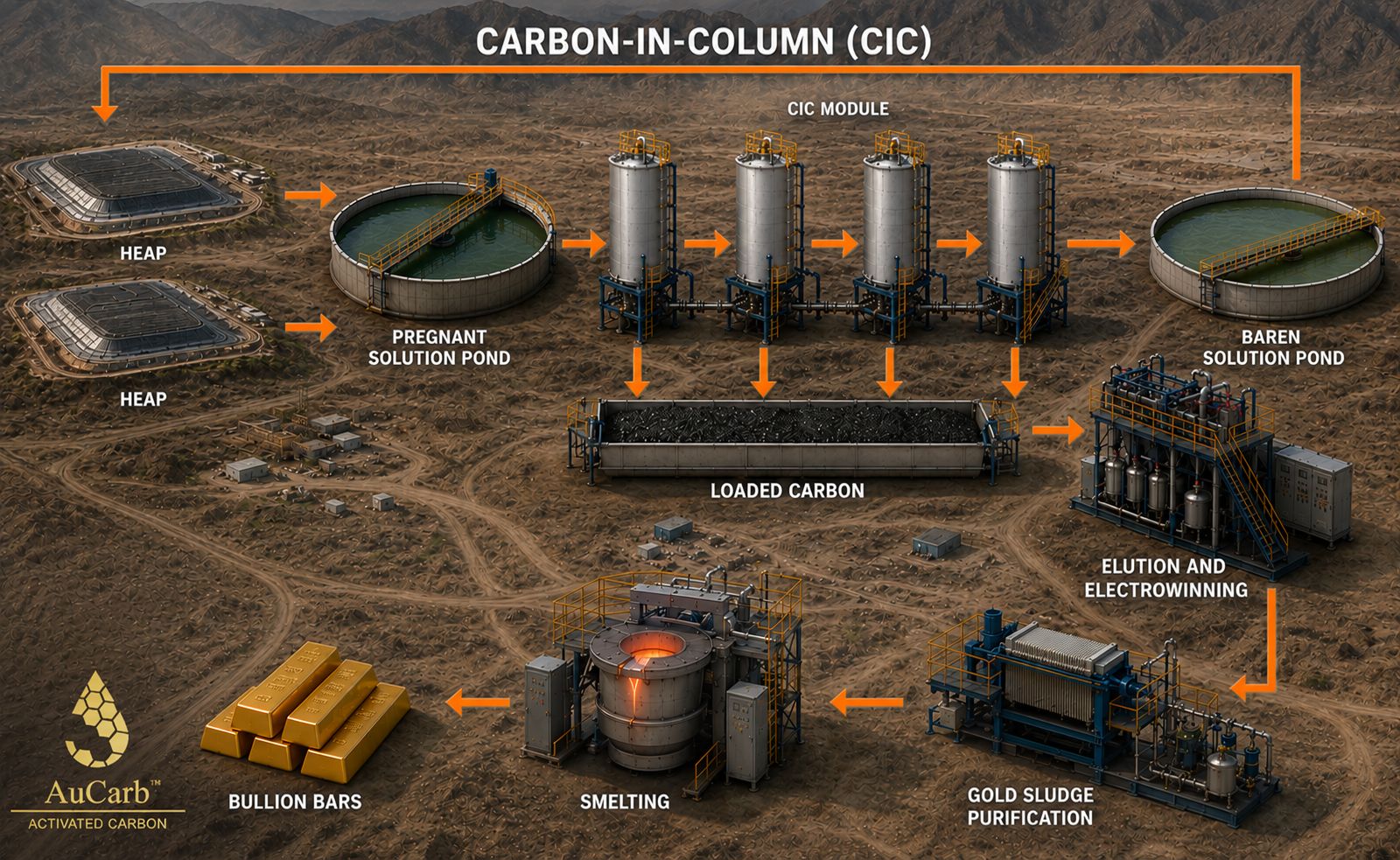
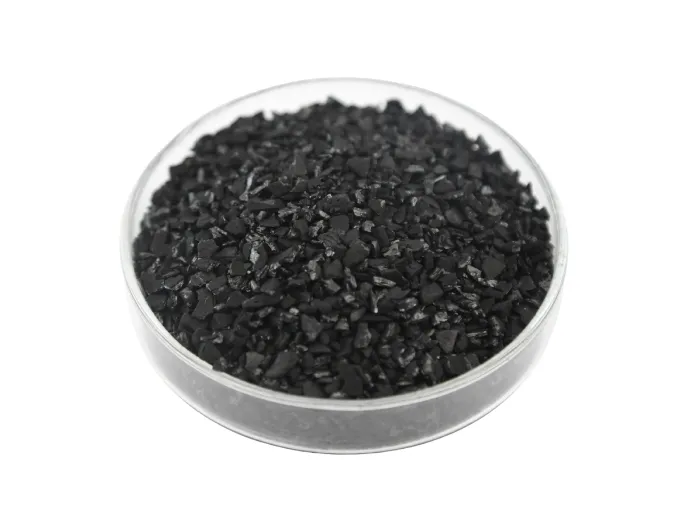
CIC is most commonly used to recover gold from heap leaching operations, processes in which a Sodium Cyanide solution percolates through a “heap” of crushed and agglomerated ore, causing the gold to leach into the solution. The gold-bearing solution is then pumped to a series of adsorption columns containing activated Carbon. Heap leaching followed by CIC circuits is a preferred method for gold recovery from low grade surface deposits and waste rock because of its low capital and operating costs.
CARBON-IN-PULP
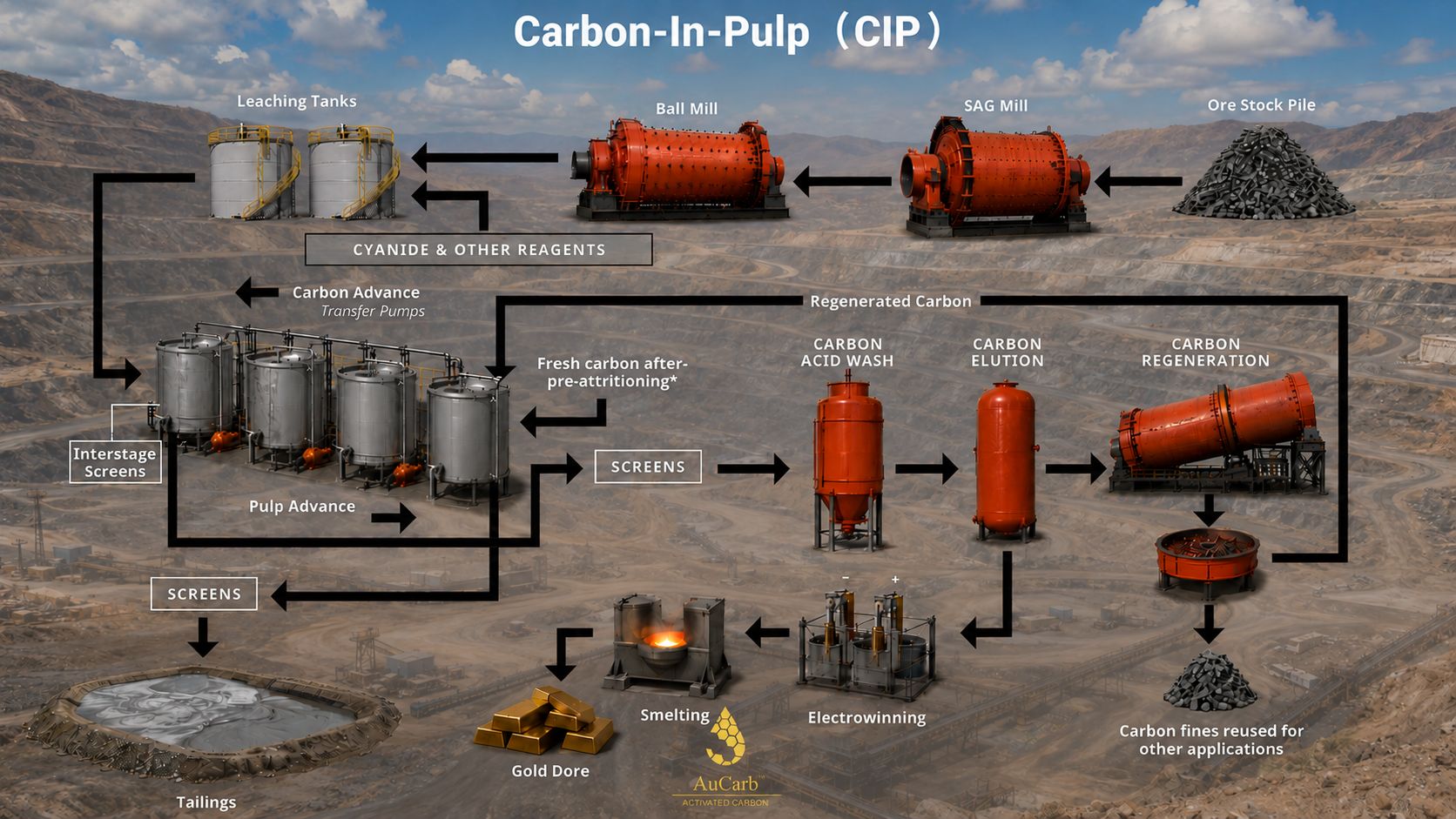
In CIP operations, mined ore is milled and mixed with water and thickeners, creating a slurry of ore and water called pulp. The pulp is then pumped to air-agitated leaching vessels, where the gold is leached out of the ore using a sodium cyanide solution. The pulp is transferred to a series of adsorber tanks containing Activated Carbon, which mixes with the leached pulp and flows countercurrent to the pulp in a series of tanks. The gold-bearing activated carbon is separated from the pulp by a mesh screen that blocks the carbon from passing through, while the smaller pulp particles are filtered away.
CARBON-IN-LEACH
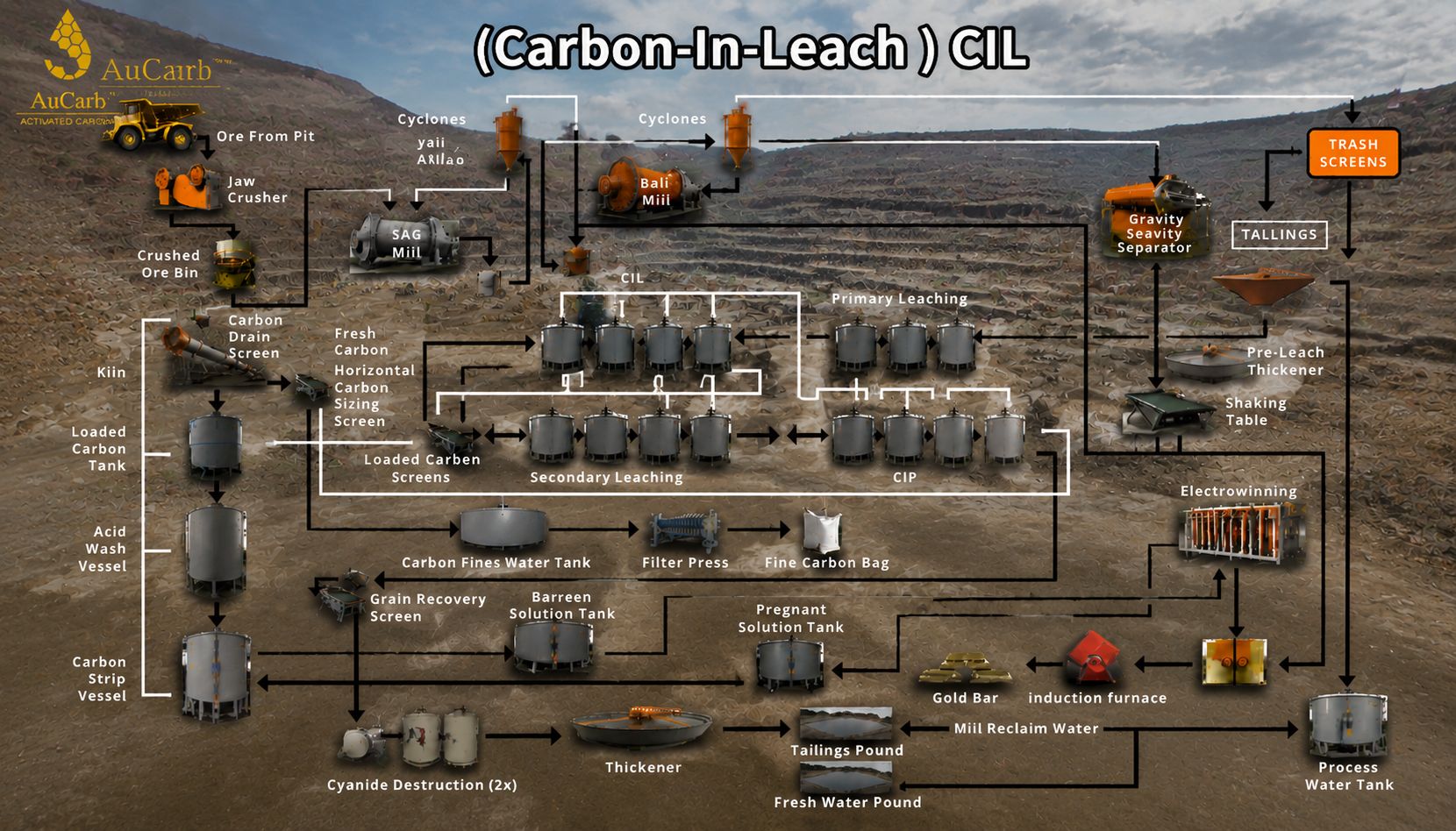
CIL operations are very similar to CIP, but activated carbon is instead added directly to the vessels in which cyanidation is taking place. CIL is an especially beneficial technique when ore contains high levels of carbonaceous material. Naturally present carbon competes with the activated carbon in adsorbing gold in a process called “preg robbing,” which causes gold losses. Therefore, in CIL, the cyanidation process is carried out simultaneously with adsorption on activated carbon, which is in direct contact with pulp in the cyanide solution. The CIL process minimizes the time that cyanidated gold can be in contact with competing carbon native to the ore.
- Random Content
- Hot content
- Hot review content
- Company product introduction
- Sodium Isopropyl Xanthate 90% SIPX
- Plastic Shock Tube(VOD≧1600m/s)
- Seismic Electric Detonator(Anti static,Water Resistance)
- Potassium Permanganate – Industrial Grade
- Sodium alpha olefin sulfonate (AOS)
- How do I assess the economic viability and effectiveness of mining chemicals?
- 1Discounted Sodium Cyanide (CAS: 143-33-9) for Mining - High Quality & Competitive Pricing
- 2Sodium Cyanide 98.3% CAS 143-33-9 NaCN gold dressing agent Essential for Mining Chemical Industries
- 3China's New Regulations on Sodium Cyanide Exports and Guidance for International Buyers
- 4Sodium Cyanide (CAS: 143-33-9) End user certificate (Chinese and English version)
- 5International Cyanide(Sodium cyanide) Management Code - Gold Mine Acceptance Standards
- 6China factory Sulfuric Acid 98%
- 7Anhydrous Oxalic acid 99.6% Industrial Grade
- 1Sodium Cyanide 98.3% CAS 143-33-9 NaCN gold dressing agent Essential for Mining Chemical Industries
- 2High Purity · Stable Performance · Higher Recovery — sodium cyanide for modern gold leaching
- 3United Chemical's Research Team Demonstrates Authority Through Data-Driven Insights
- 4AuCyan™ High-Performance Sodium Cyanide | 98.3% Purity for Global Gold Mining
- 5Digital Electronic Detonator(Delay time 0~ 16000ms)
- 6High-strength, High-precision Shock Tube Detonator
- 7industry Electric Detonator


Online message consultation
Add comment: