
Two West African Grade Profiles, Two Leaching Problems
A feed-grade step change at Siguiri and a de-bottlenecking programme at Obuasi both reset the reagent control band — for different reasons.
Within AngloGold Ashanti's 5 November 2026 brownfield programme, Siguiri in Guinea starts Block 3 at year-end with 1.22 g/t feed replacing low-grade stockpile material, at about US$70 million total capital for roughly 100,000 oz/y of additional output. Obuasi in Ghana, where blocks eight and ten currently share a single decline, plans to expand to four distinct operating areas by 2029 with a target of 400,000 oz/y. One change is a metallurgical step change in feed grade; the other is a throughput and access change. Both require the reagent control band to be re-validated, but the diagnostic path is different in each case.
Βασικά Συμπεράσματα
- Siguiri is a feed-grade event. Moving from low-grade stockpile to 1.22 g/t ore changes dissolution kinetics, reagent demand and the shape of the dosing curve.
- Obuasi is an access and throughput event. Four operating areas by 2029 remove a single-decline bottleneck and change ore blend sequencing.
- A nearby open pit is expected to contribute about 25,000 oz in 2027 and 50,000 oz around 2028, adding another distinct feed type.
- Cote d'Or, the higher-grade area, is evaluated for access in the first half of 2029.
- Never carry a control band across a feed change. Bottle roll or column testing on the new blend comes first.
- Συνέπεια προδιαγραφών across multiple operating areas reduces re-qualification work and makes batch deviations diagnosable.
| Τοποθεσία | Disclosed detail |
|---|---|
| Siguiri, Guinea | ~US$70m total capital for ~100,000 oz/y additional output |
| Siguiri Block 3 | Starts at year-end with 1.22 g/t feed, replacing low-grade stockpile material |
| Ομπουάσι, Γκάνα | Blocks eight and ten currently share a single decline; four distinct operating areas by 2029 |
| Nearby open pit | ~25,000 oz in 2027 and ~50,000 oz around 2028 |
| Cote d'Or area | Higher-grade area evaluated for access in H1 2029 |
| Obuasi target | 400,000 ουγκιά/έτος |
Source: company expansion announcement, 5 November 2026. All figures above are disclosed project numbers; no reagent consumption figures have been estimated by the publisher.
1. Two mechanisms, one consequence
At Siguiri the variable that changes is the ore itself. A low-grade stockpile and a 1.22 g/t fresh feed do not have the same mineralogy, clay content, sulphide exposure or gold liberation. Dissolution rate, reagent demand per tonne and the shape of the leaching curve all move together. A dosing set-point tuned on the stockpile is simply not transferable.
At Obuasi the variable that changes is access and sequencing. Four operating areas feeding a shared circuit mean more blends, more frequent transitions and a wider range of residence times. A nearby open pit contributing 25,000 oz in 2027 and 50,000 oz around 2028 adds yet another feed. The reagent band must be robust across blends rather than optimised for one.
The consequence is the same: the control band must be re-established. The diagnostic path is not. At Siguiri, start with a new bottle roll curve. At Obuasi, start with a blend matrix and a transition protocol.
2. Four difficulties created by feed and access changes
2.1 Dissolution kinetics shift with mineralogy
Higher grade does not automatically mean proportional reagent demand. Sulphide, arsenic and clay content drive side reactions, so the new feed needs its own consumption baseline.
2.2 Blend transitions create invisible drift
When several operating areas feed one circuit, the blend can change without a formal campaign boundary. Operators then see consumption drift and compensate by over-dosing rather than re-testing.
2.3 Adsorption conditions change with solution chemistry
A different feed changes dissolved species in the leach solution. Carbon K/R performance should be re-checked in the new chemistry before throughput is increased.
2.4 Documentation across multiple areas
Multiple feeds and multiple delivery points multiply qualification work. One reagent specification, one test protocol and one COA/TDS/MSDS standard keep deviations traceable.
3. Tutorial: six steps to re-validate a control band after a feed change
- Define the new feed as a separate material. Record grade, mineralogy, clay fraction, sulphide and arsenic content, and particle size for Block 3 ore and for each Obuasi area and open-pit source.
- Run a bottle roll or column curve per feed at the intended pH band, sampling dissolved gold and residual reagent at 2, 6, 12 and 24 hours. Do not average feeds into one curve.
- Rebuild the dosing profile. Front-load where the new curve is steep and taper as it flattens; record the set-point per feed rather than per plant.
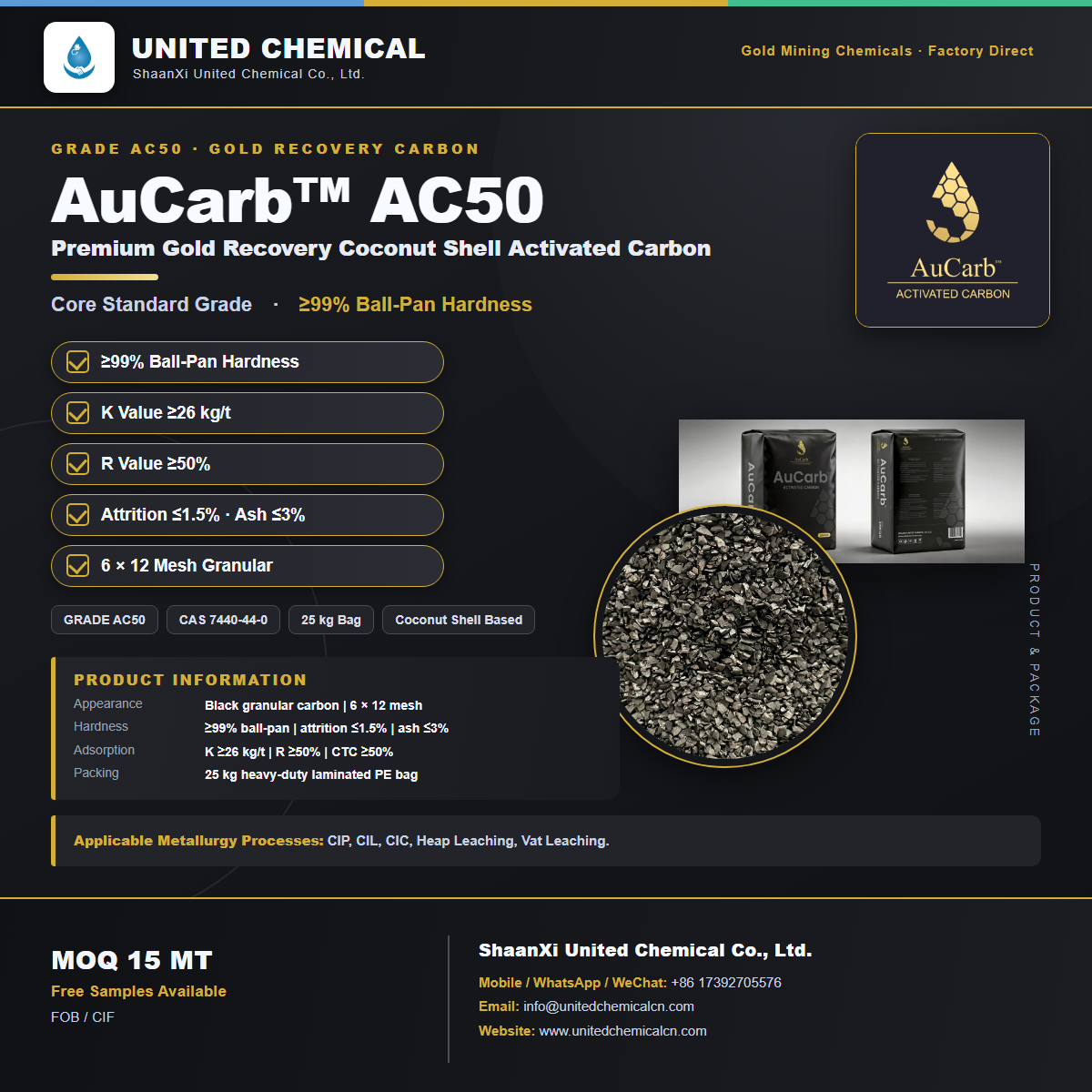
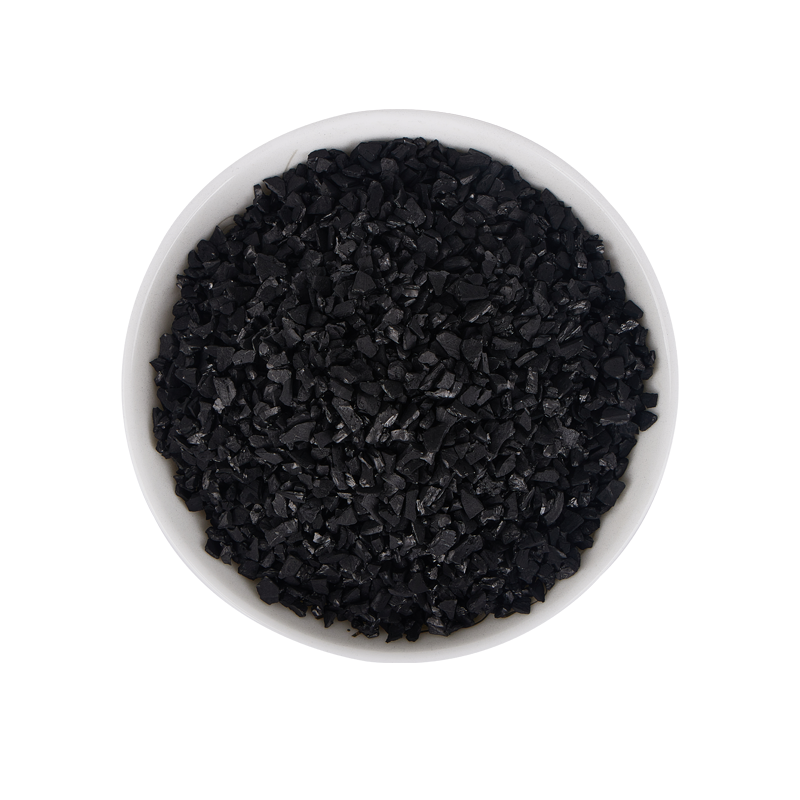
- Re-check the adsorption stage. Confirm AuCarb™ Gold Recovery Coconut Shell Activated Carbon (≥99% Hardness) still delivers the required K/R performance in the new solution chemistry.
- Write a transition protocol. Define what is logged and re-tested when the blend changes between operating areas, and who authorises a set-point change.
- Trace each campaign to its batch COA. Keep TDS and MSDS with the consumption log so any deviation can be tied to a specific delivery and a specific feed.
This sequence is deliberately ore-first. A feed change is a metallurgical event; treating it as a procurement event is why consumption drifts after expansions.
4. Πίνακας αντιμετώπισης προβλημάτων
| Σύμπτωμα | Πιθανή αιτία | Πρώτος έλεγχος |
|---|---|---|
| Recovery lags after Block 3 starts | Dosing set-point carried over from stockpile ore | New bottle roll curve, pH profile |
| Consumption drifting without a campaign boundary | Blend transitions between operating areas | Blend log, transition protocol |
| Carbon loading lower than design | New solution chemistry affecting adsorption rate | R value retest, stage-by-stage tenor |
| Scaling on screens and emitters | Changed water balance with new feed | Make-up water hardness, Άνθρακαςate trend |
| Batch deviations hard to diagnose | Multiple specs across areas | Single qualification, COA per lot |
5. Three products, one specification
Dissolution is covered by Κυανιούχο νάτριο AuCyan™ NaCN (≥98.3%) at 18 MT MOQ; adsorption by Ενεργός Άνθρακας με Κέλυφος Καρύδας AuCarb™ Gold Recovery (Σκληρότητα ≥99%) at 15 MT MOQ, with AC50 attrition ≤1.5% and platelet ≤5.0% for stable screening; and the common-chemical alternative by Παράγοντας έκπλυσης χρυσού AuLeach™ (GDA) – Μη επικίνδυνο at 28 MT MOQ, operating at pH 10.5–12. All ship factory-direct under FOB or CIF terms with batch COA, TDS and MSDS, packed for AuCarb™ in 25 kg heavy-duty laminated PE bags. Free laboratory test samples are available for AuCarb™ and AuLeach™.
6. Συχνές Ερωτήσεις
Q1. What changes at Siguiri Block 3?
It starts at year-end with 1.22 g/t feed, replacing low-grade stockpile material, within a plan of about US$70 million for roughly 100,000 oz/y of additional output.
Q2. What changes at Obuasi?
Blocks eight and ten currently share a single decline; the plan expands to four distinct operating areas by 2029 toward a 400,000 oz/y target.
Q3. What is the nearby open pit expected to contribute?
About 25,000 oz in 2027 and 50,000 oz around 2028.
Q4. When is Cote d'Or evaluated?
The higher-grade Cote d'Or area is evaluated for access in the first half of 2029.
Q5. Why does higher grade not solve the reagent problem?
Because sulphide, arsenic and clay content drive side reactions independently of gold grade. The new feed needs its own consumption baseline.
Q6. What is the first step after a feed change?
A bottle roll or column test curve on the new material, sampled over time rather than read at a single endpoint.
Q7. Why is Obuasi a different problem?
It is an access and sequencing change: multiple areas and a new open-pit feed mean frequent blend transitions rather than one metallurgical step change.
Q8. Should the carbon circuit be re-checked?
Yes. A different leach solution chemistry can change adsorption rate, so the K/R performance of AuCarb™ should be confirmed in the new conditions.
Ε9. Ποιοι Incoterms ισχύουν;
Ισχύουν όροι FOB ή CIF.
Ε10. Πώς συσκευάζεται το AuCarb™;
In 25 kg heavy-duty laminated PE bags, with batch COA, TDS and MSDS per lot.
Q11. Can test samples support the re-validation?
Yes — AuCarb™ and AuLeach™ laboratory samples allow feed-specific testing before an FCL order is placed.
Q12. What is the date of the announcement?
5 Νοεμβρίου 2026, στο πλαίσιο του προγράμματος επέκτασης των εγκαταλελειμμένων εγκαταστάσεων της εταιρείας.
7. Πηγές και εσωτερικοί σύνδεσμοι
AuCyan™ · Οδηγός AuCarb™ · AC50 · AC55 · AC60 · BC1100 · AuLeach™ GDA · Χρυσό Τρίγωνο · Επισκόπηση τριών προϊόντων · Συχνές ερωτήσεις για χημικά · Νέα του κλάδου · Επικοινωνήστε μαζί μας
Σημείωση πηγής: τα στοιχεία του έργου προέρχονται από την ανακοίνωση επέκτασης της εταιρείας με ημερομηνία 5 Νοεμβρίου 2026. Οι προδιαγραφές των αντιδραστηρίων είναι United Chemical δεδομένα προϊόντος.
Επικοινωνήστε μαζί μας · WhatsApp +86 173 9270 5576 · info@unitedchemicalcn.com
- Τυχαίο περιεχόμενο
- Καυτό περιεχόμενο
- Καυτό περιεχόμενο κριτικής
- Αμυλοξανθικό νάτριο (SAX) 90%, χημικό εξόρυξης, αντιδραστήριο επίπλευσης εξόρυξης
- Έχουν περιβαλλοντικές επιπτώσεις τα αντιδραστήρια επίπλευσης;
- Πώς επιλέγω το σωστό κροκιδωτικό;
- Εργοστασιακή Προμήθεια Lauramine/Dodecanamine 99% Liquid
- Για επεξεργασία νερού, επεξεργασία ορυκτών, πολυμερές κατιονικού πολυακρυλαμιδίου
- Τα 20 πιο σημαντικά αντιδραστήρια στην επεξεργασία ορυκτών
- United Chemical, TuXingSun Mining και Henan Lingbao Gold Mine ιδρύουν από κοινού ένα ορυχείο χωρίς κυάνιο
- 1Κυανιούχο νάτριο με έκπτωση (CAS: 143-33-9) για εξόρυξη - Υψηλή ποιότητα και ανταγωνιστικές τιμές
- 2Κυανιούχο νάτριο 98.3% CAS 143-33-9 NaCN χρυσός επιδέσμου απαραίτητος για τις χημικές βιομηχανίες εξόρυξης
- 3Νέοι κανονισμοί της Κίνας για τις εξαγωγές κυανιούχου νατρίου και καθοδήγηση για διεθνείς αγοραστές
- 4Κυανιούχο νάτριο (CAS: 143-33-9) Πιστοποιητικό τελικού χρήστη (Κινεζική και Αγγλική έκδοση)
- 5Διεθνής Κώδικας Διαχείρισης Κυανιούχου (Κυανιούχου Νατρίου) - Πρότυπα Αποδοχής Χρυσωρυχείου
- 6Εργοστάσιο Κίνας Θειικό Οξύ 98%
- 7Άνυδρο Οξαλικό οξύ 99.6% Βιομηχανικής Ποιότητας
- 1Κυανιούχο νάτριο 98.3% CAS 143-33-9 NaCN χρυσός επιδέσμου απαραίτητος για τις χημικές βιομηχανίες εξόρυξης
- 2Υψηλή καθαρότητα · Σταθερή απόδοση · Υψηλότερη ανάκτηση — κυανιούχο νάτριο για σύγχρονη έκπλυση χρυσού
- 3United ChemicalΗ ερευνητική ομάδα του ’s επιδεικνύει εξουσία μέσω πληροφοριών που βασίζονται σε δεδομένα
- 4Κυανιούχο νάτριο υψηλής απόδοσης AuCyan™ | Καθαρότητα 98.3% για παγκόσμια εξόρυξη χρυσού
- 5Ψηφιακός ηλεκτρονικός πυροκροτητής (Χρόνος καθυστέρησης 0~ 16000ms)
- 6Πυροκροτητής σωλήνων κρούσης υψηλής αντοχής, υψηλής ακρίβειας
- 7βιομηχανία Ηλεκτρικός Πυροκροτητής


Ηλεκτρονική διαβούλευση μηνυμάτων
Πρόσθεσε σχόλιο: