

UNITED CHEMICAL · TECHNOLOGIA PRODUCTI · XX NOVEMBRIS MMXXVI
Purity is the starting point, not the answer
Two briquettes with the same assay can differ by double digits in consumed kilograms per tonne.
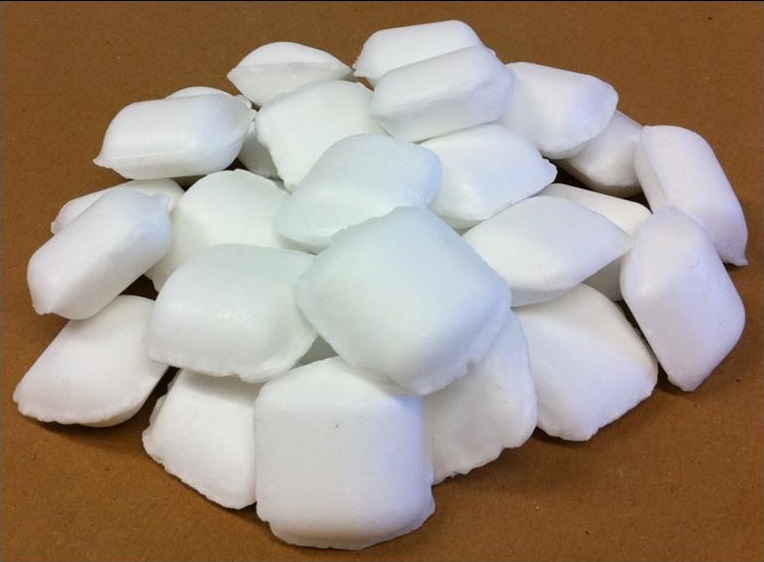
A gold plant buys Natrium Cyanide on an assay. It loses money on dissolution. The number that decides how many kilograms disappear per tonne of ore is how fast the briquette releases cyanide into solution and how steadily the circuit holds a free-cyanide setpoint. A high-purity product that dissolves unevenly creates dosing lag, over-addition and WAD-cyanide excursions. This note sets out the working controls for AuCyan™ Natrii Cyanidum NaCN (≥98.3%) and gives a plant-ready method for measuring them.
1. What the Elsner equation does and does not tell you
Gold dissolution follows the Elsner equation: 4 Au + 8 CN⁻ + O₂ + 2 H₂O → 4 [Au(CN)₂]⁻ + 4 OH⁻. Two moles of cyanide per mole of gold, roughly 0.5 g NaCN per gram of gold. A circuit treating 3,000 t/day at 2 g/t and recovering 95% consumes under 3 kg/day in the ideal reaction.
Real plants consume hundreds of kilograms a day. Everything above the stoichiometric minimum is base-metal demand, hydrolysis, degradation or physical loss — and three of those four are controllable. That is where a dissolution specification earns its keep.
2. The consumption ledger
| Situs damni | mechanism | imperium |
|---|---|---|
| Aurum dissolutio | Stoichiometric, ~0.5 g NaCN/g Au | Useful consumption |
| Basi metallis | Copper and zinc form cyano-complexes | Ore blending, higher setpoint |
| hydrolysis | CN⁻ + H₂O ↔ HCN + OH⁻ | Lime, pH interlock |
| Incomplete release | Unreacted briquette core in tails | Profilum dissolutionis |
Triangulum Aureum — tria producta, unus praebitor
AuCyan™ Natrii Cyanidum NaCN (≥98.3%) · AuCarb™ Carbo Activatus e Testa Cocois ad Auri Recuperationem (≥99% Duritia) · AuLeach™ Agens Lixiviationis Auri (GDA) – Non Periculosum
3. The dissolution test you should be running
Put a known mass of briquette in a stirred vessel at circuit pH and temperature. Sample the solution at 1, 3, 5, 10 and 20 minutes and plot cumulative cyanide release. The curve should be reproducible lot to lot. A product that reaches 90% release in five minutes in one drum and fifteen in the next will make a liar of every dosing calculation. Specify three clauses, not one: minimum assay ≥98.3%, time to 90% release, and maximum insoluble residue. Ask for the batch COA, TDS et MSDS to confirm all three.
4. Worked check: the cost of a one-tank lag
Take 3,000 t/day, target free cyanide 0.25 g/L, solution-to-solids 1.2:1, measured ore demand 0.30 kg/t. Circuit inventory is 3,000 × 1.2 × 0.25 = 900 kg; daily ore demand is 900 kg. If dissolution lags one tank residence time, operators typically add 8–12% protection. That is 72–108 kg/day, or 26–39 t/year of reagent that never dissolves gold.
In-circuit inventory: 900 kg
Poena morae ad 10%: 90 kg/die ≈ 33 t/anno
5. WAD cyanide is the report card
Weak-acid-dissociable cyanide in tailings tells you whether the circuit is over-dosing. A rising WAD number with flat recovery means reagent is leaving untreated. The response is not to cut the setpoint blindly — it is to check dissolution, re-run the bottle roll on the current ore domain and verify pH. Only then adjust the dose. This sequence prevents the classic error of cutting reagent and losing recovery together.
6. fermentum
| iNDICIUM | causa | actionis |
|---|---|---|
| CN liberum deorsum fluitans | Dissolution lag or demand spike | Verify dissolution, re-run bottle roll |
| WAD cyanide rising | Dosis excessiva ad punctum consuetum protegendum | Tighten curve, check pH |
| Praecipitatum album | Cyano-complexa metallorum basium | Ore blend, alkaline wash |
| Sentinam cavitatem | Undissolved fragments | Extend make-up time |
5b. Make-up water and temperature
Two site variables change the dissolution curve more than any certificate: make-up water and temperature. Hard water raises lime demand and can aggravate scale on pipework and screen surfaces; chloride and sulphate accumulate through process-water recycle and affect both leaching and Carbon loading. Temperature shifts reaction kinetics, so a briquette that dissolves acceptably in a warm summer circuit can lag when winter make-up water drops the circuit temperature by several degrees. Establish a baseline for pH, alkalinity, hardness, chloride and sulphate before the campaign, then sample weekly. A dissolution test run at the plant's actual temperature and with its actual water is worth more than a laboratory result obtained under ideal conditions. If the curve changes with the seasons, the dosing schedule must change with it, not by guesswork but by re-measuring the release profile.
7. FAQ
Q1 — Why specify ≥98.3% and not a higher number?
Because dissolution and insolubles decide consumed kilograms more than the last fraction of assay.
Q2 — What ships with a batch?
A batch COA, TDS and MSDS covering assay and dissolution behaviour.
Q3 — Which terms apply?
FOB and CIF only, from 1×20' FCL ≈ 18 MT.
Q4 — Is it a controlled good?
Yes. UN1689, DG Class 6.1; import licence and End-Use Certificate before shipment.
Q5 — Can the carbon come from the same supplier?
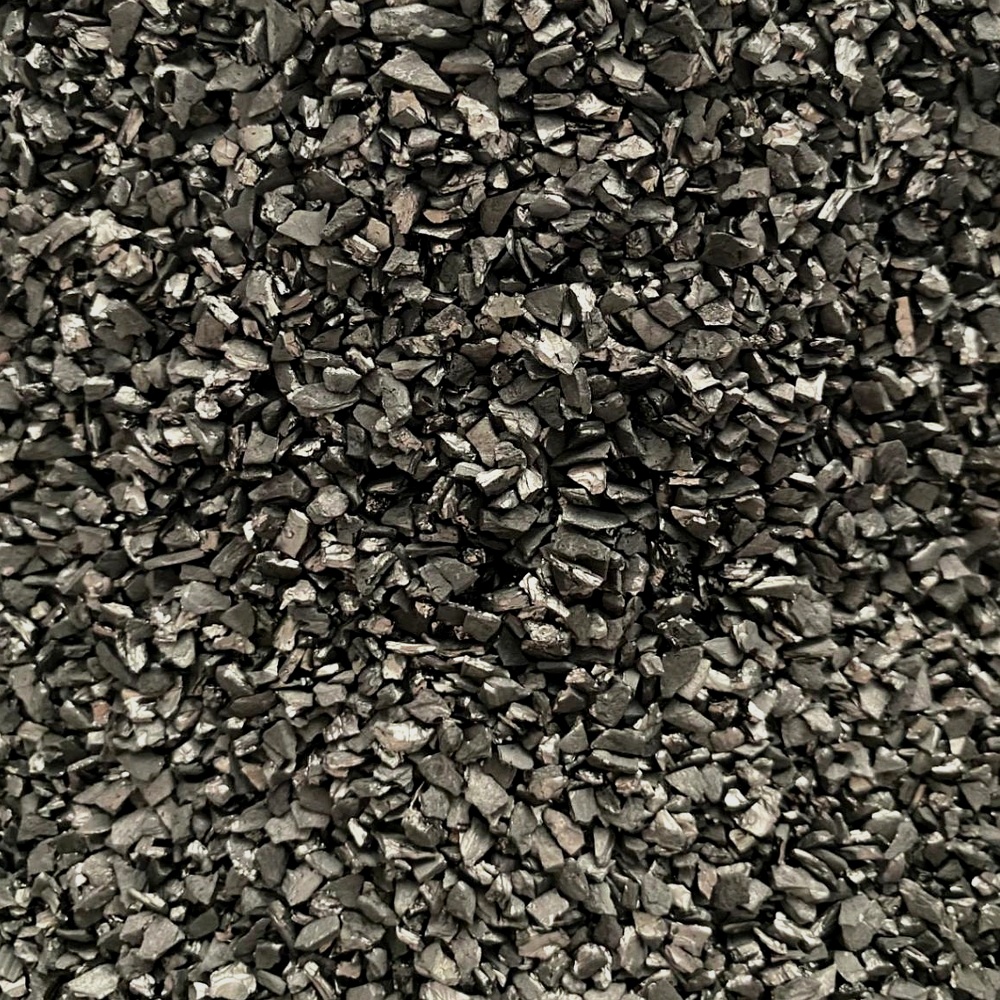
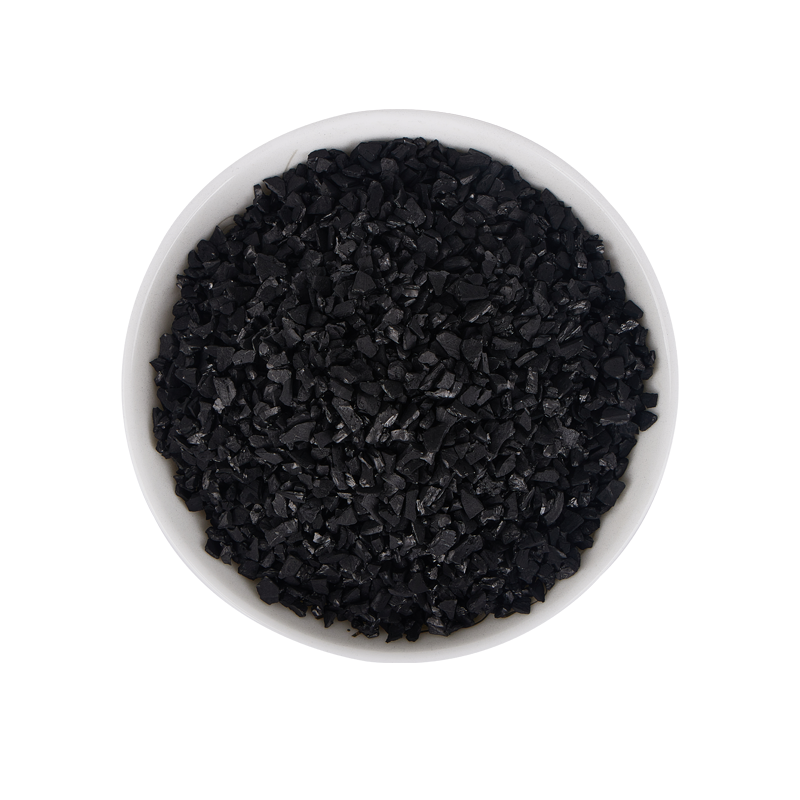
Yes — AuCarb™ with documented hardness and attrition.
Q6 — What if cyanide use is constrained?
AuLeach™ Gold Leaching Agent (GDA) – Non-Hazardous is the alternative route, selected by bottle-roll comparison.
Ask for the dissolution data
Send ore grade, setpoint and throughput. We return a dissolution-matched dosage proposal with COA, TDS and MSDS.
Contacta Nos · Conspectus Trianguli Aurei · Referentia de cyanido natrico · Quaestiones Frequentes de Chemicis · Nuntii Industriales
WhatsApp +86 173 9270 5576 · info@unitedchemicalcn.com
- Random Content
- Hot content
- Hot review content
- Sodium Ethyl Xanthate XC% SEX
- Comitatu productum introductio
- Acidum oxalic ad fodienda 99.6%
- 99.5% min Aconitum Chloride For Industrial Use
- Calcium Peroxide LX% Incede Yellowish Traba
- 1Discounted Sodium Cyanide (CAS: 143-33-9) ad Mining - High Quality & Aliquam Pricing
- 2Natrii Cyanidum 98.3% CAS 143-33-9 NaCN, agens ad aurum adhibitum, essentiale ad industrias chemicas fodinarum.
- 3Novae normae Sinarum in Sodium Cyanide Exportantur et Ductu pro Emptoribus Internationalis
- 4Sodium Cyanide (CAS: 143-33-9) finis usoris certificatorium (Chinese et versio latina)
- 5International CyanideSodium cyanide Management Code - Aurum Meum acceptationis signa
- 6Sina officina sulphuris Acidum XCVIII%
- 7Anhydrous Oxalic acid 99.6% Industrial Grade
- 1Natrii Cyanidum 98.3% CAS 143-33-9 NaCN, agens ad aurum adhibitum, essentiale ad industrias chemicas fodinarum.
- 2Alta Puritas · Stabilis Efficacia · Recuperatio Superior — cyanidum natricum ad auri lixiviationem hodiernam
- 3United ChemicalTurma Investigationis auctoritatem per perspicientiam datis impulsam demonstrat.
- 4AuCyan™ Natrii Cyanidum Altae Efficientiae | Puritas 98.3% ad Auri Fodinas Globales
- 5Digital Electronic Detonator(Delay tempus 0~ 16000ms)
- 6Summus vires, summus praecisio Concursores Tube Detonator
- 7industria Electric Detonator



Consultatio nuntiorum Online
Adde commentarium: