
One Circuit, Three Decisions: A Selection Framework for AuCyan™, AuCarb™ and AuLeach™
Leaching, adsorption and the Non-Hazardous alternative are three separate decisions. Making them against one set of test conditions is what keeps the numbers comparable.
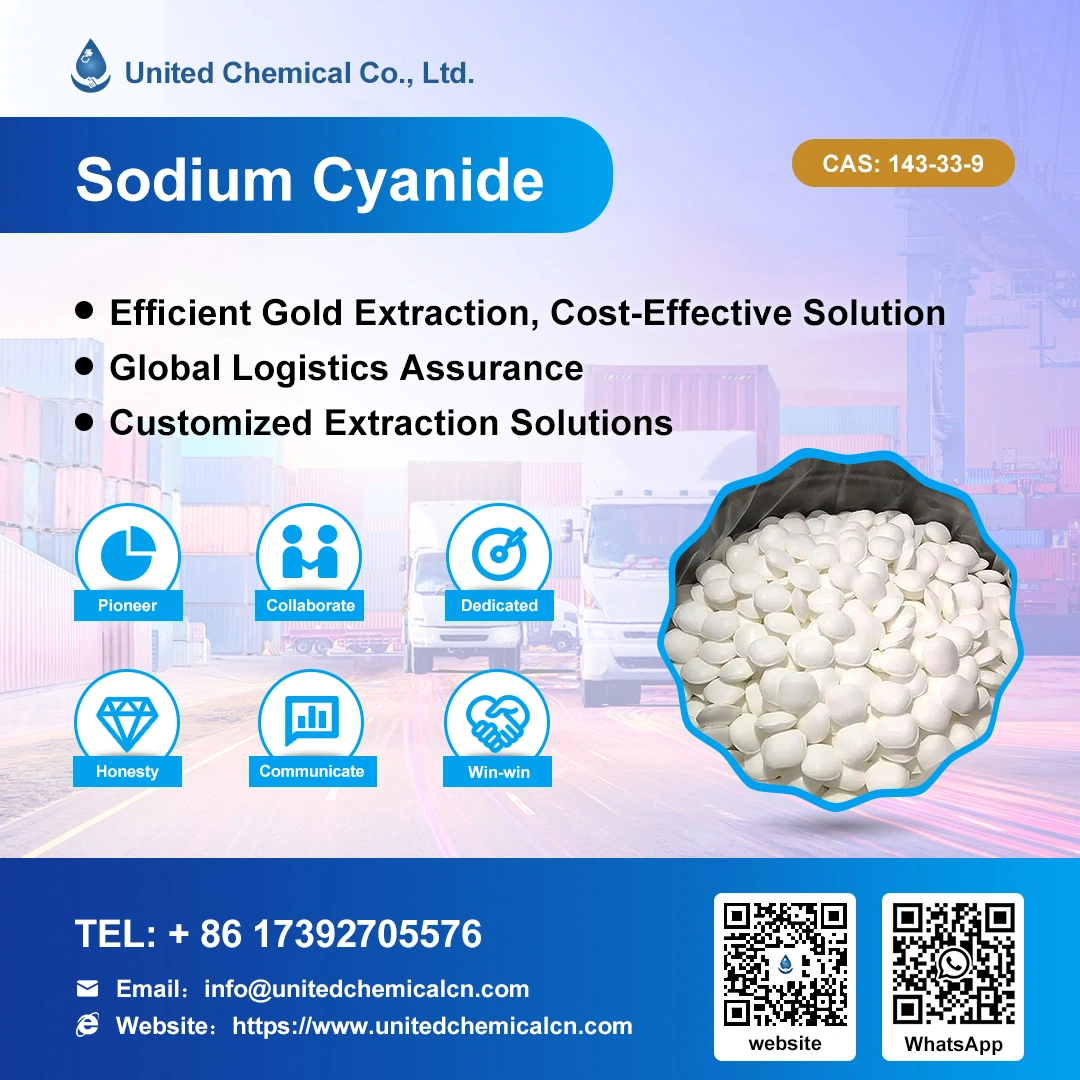
United Chemical is a manufacturer and global supplier of gold extraction chemicals, delivering AuCyan™ Sodiamu Sianidi NaCN (≥98.3%), Kaboni Iliyoamilishwa ya Shell ya Nazi ya AuCarb™ Gold Recovery (≥99% Ugumu) na Wakala wa Kuchuja Dhahabu wa AuLeach™ (GDA) – Sio Hatari to mining operations in more than 77 countries. The three products sit at three different decision points in one flowsheet: dissolution, adsorption, and the alternative leach route when the permit chain is the binding constraint. Selecting them from one manufacturer means one set of test conditions, one documentation standard and one freight plan.
Kuchukua Muhimu
- Three decisions, not one purchase. Leaching chemistry, adsorption media and the common-chemical alternative each have their own governing variables.
- AuCyan™ sets the dissolution benchmark at ≥98.3% NaCN in briquette form, with UN 1689 Class 6.1 documentation required.
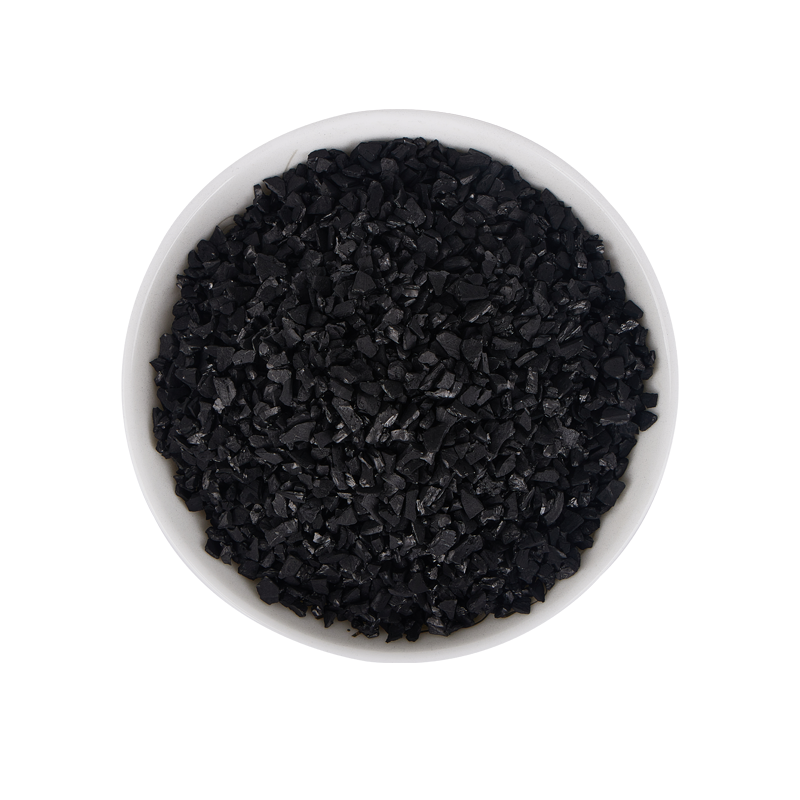
- AuCarb™ governs recovery through hardness ≥99%, attrition ≤1.5%, a 6×12 mesh cut and the K/R pair across four grades.
- AuLeach™ removes a logistics constraint as a Non-Hazardous common-chemical route, but still needs ore-specific pH and dosage validation.
- One supplier makes the data comparable: one test protocol, batch COA / TDS / MSDS per lot, one FOB or CIF freight plan.
- Free laboratory test samples are available for AuCarb™ and AuLeach™ to start validation before an FCL order.
| Uamuzi | Bidhaa | Vipimo muhimu | MOQ |
|---|---|---|---|
| Dissolution / leaching | AuCyan™ Sodiamu Sianidi NaCN (≥98.3%) | Briquette, GB/T 19306-2003, low NaOH / Na₂CO₃ / insolubles; UN 1689 Class 6.1, EUC required | 18 MT |
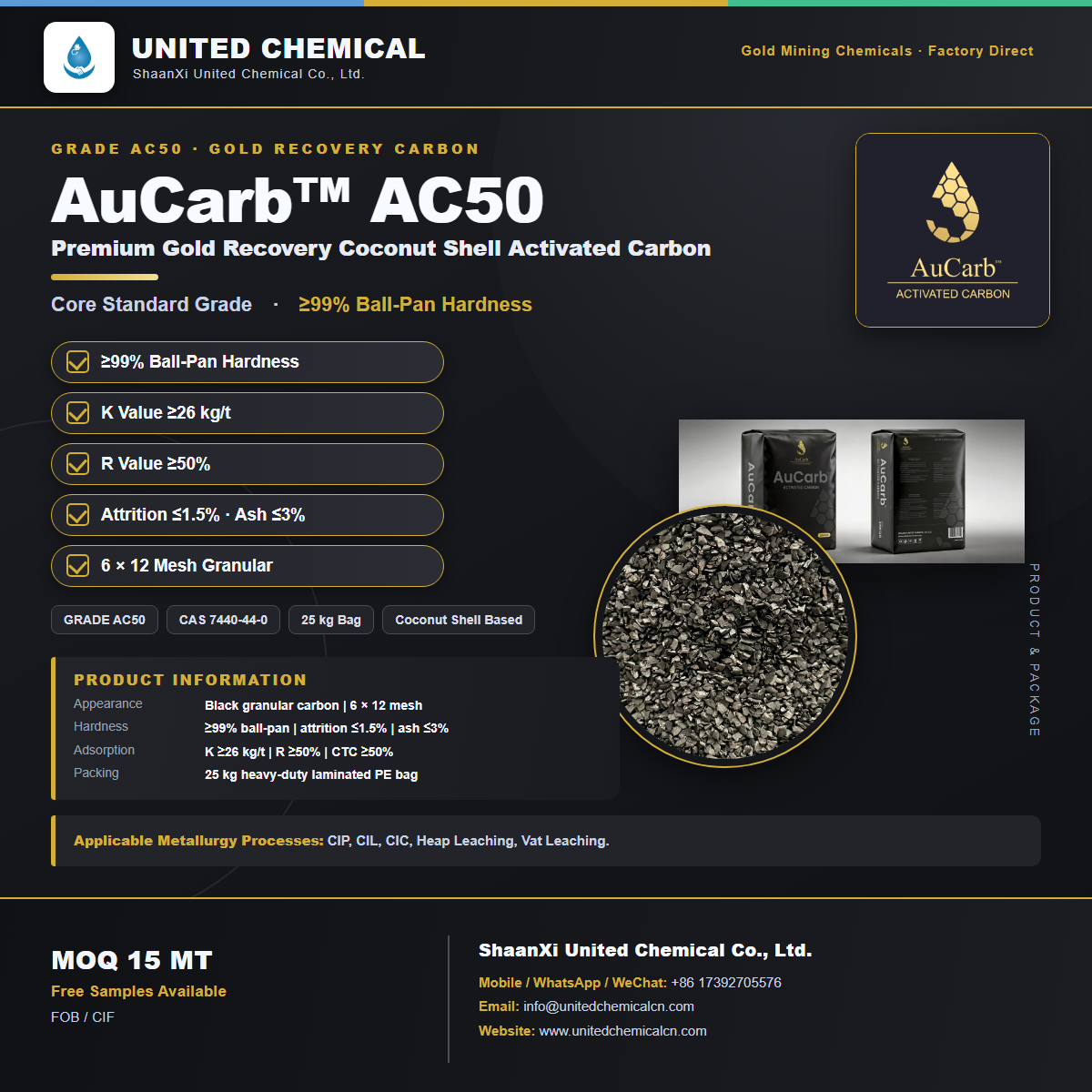
| Adsorption / recovery | Kaboni Iliyoamilishwa ya Shell ya Nazi ya AuCarb™ Gold Recovery (≥99% Ugumu) | 6×12 mesh, attrition ≤1.5%, platelet ≤5.0%, K ≥26 kg/t / R ≥50% on AC50; 25 kg heavy-duty laminated PE bags | 15 MT |
| Alternative leach route | Wakala wa Kuchuja Dhahabu wa AuLeach™ (GDA) – Sio Hatari | Common chemical, pH 10.5–12, indicative dosage 0.5–1.0 ‰, general cargo | 28 MT |
All three are supplied factory-direct under FOB or CIF terms with batch COA, TDS and MSDS. Contact: info@unitedchemicalcn.com · WhatsApp +86 173 9270 5576 · https://unitedchemicalcn.com/
1. Three products, three different questions
A gold recovery circuit is a chain of unit operations. The leaching reagent answers the question "how fast and how completely does gold leave the ore". The activated Carbon answers "how much of that dissolved gold do we actually capture and keep". The alternative leach route answers "what happens if the permit chain, not the metallurgy, is what stops the project". These are not competing products; they occupy three different stages of the same flowsheet.
Confusing them creates bad procurement. Buying a higher-K carbon will not fix a dissolution problem. Raising the sianidi set-point will not fix a rate-limited adsorption stage. Switching to a common-chemical reagent will not remove the need for carbon. A selection framework keeps each decision attached to its own measured variable.
2. Tutorial: a six-step selection framework
- Define the flowsheet first. CIP, CIL, CIC, Heap leaching or Vat leaching — the circuit determines which stages exist and which products are needed at all.
- Characterise the ore. Head grade, mineralogy, clay, sulphide, arsenic and grind size set the dissolution demand. Run a bottle roll or column curve per feed.
- Resolve the permit question. If UN 1689 Class 6.1 documentation and an End-User Certificate can be closed on schedule, AuCyan™ Sodium Cyanide NaCN (≥98.3%) is the dissolution benchmark. If the permit chain binds, evaluate AuLeach™ Gold Leaching Agent (GDA) – Non-Hazardous against the same ore.
- Size the adsorption stage. From solution tenor and residence time, choose the carbon grade by K/R value: BC1100 for Heap / CIC, AC50 for standard CIP/CIL, AC55 or AC60 for higher-throughput or high-shear duty.
- Rekebisha kiwango kimoja cha nyaraka. Batch COA, TDS and MSDS per lot, one acceptance band, one sampling routine, and plant logs tied to lot numbers.
- Jenga kalenda ya uwasilishaji against the campaign or ramp curve using the 15 / 18 / 28 MT minimum order quantities, under FOB or CIF terms, with the documentation gate ahead of the first production slot.
The framework is deliberately sequential: changing the answer to step 1 or step 3 changes everything downstream. It is also reusable — the same six steps apply to a new country page, a brownfield expansion or a first-time enquiry.
3. Grade ladder and specification detail
| AuCarb™ grade | Wajibu | Kufafanua vigezo |
|---|---|---|
| BC1100 | Heap leaching / CIC | Hardness ≥98.5%, long contact, lower shear |
| AC50 | CIP / CIL ya Kawaida | K ≥26 kg/t, R ≥50%, CTC ≥50%, Butane ≥19.5%, ash ≤3.0% |
| AC55 | Higher-throughput CIL | K ≥28 kg/t, R ≥55% |
| AC60 | High-shear / high-tenor | K ≥30 kg/t, R ≥60%, 8×16 or 6×12 |
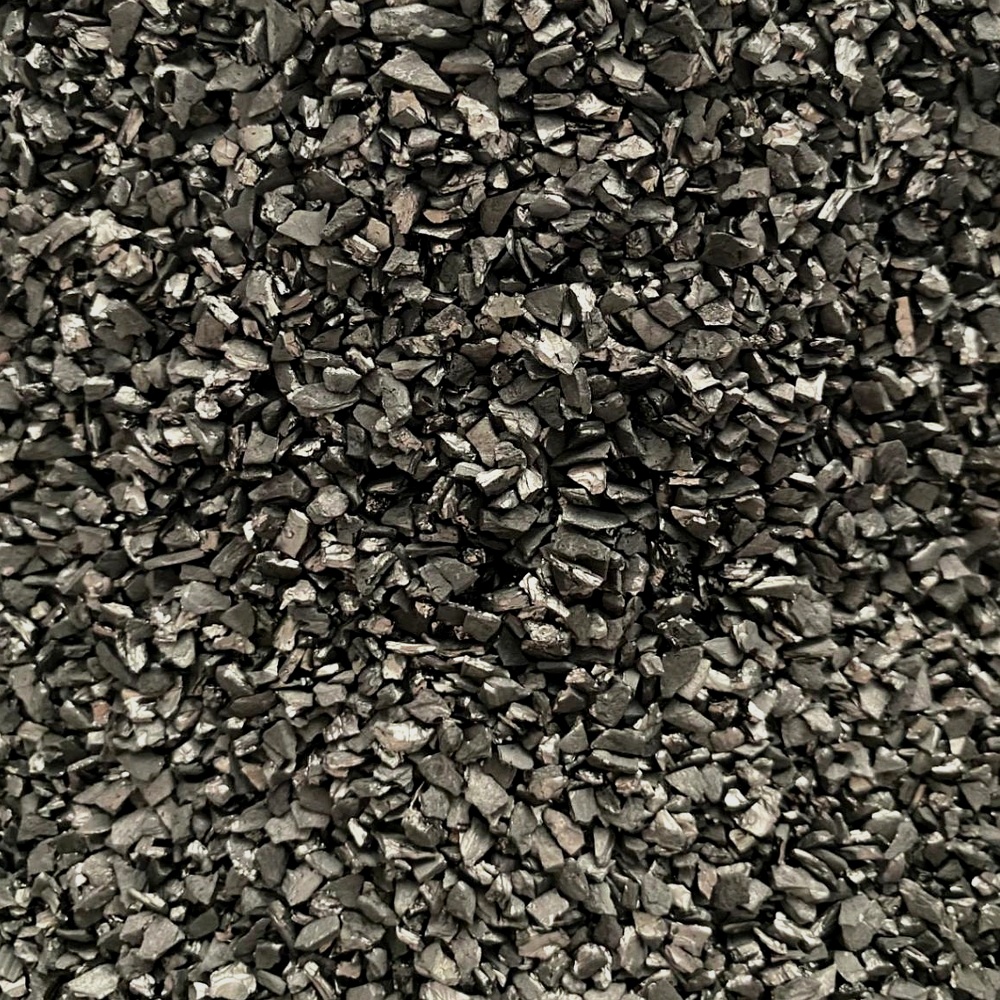
AC50 shared parameters: 6×12 mesh, ball-pan hardness ≥99%, A.A.R.L. attrition ≤1.5%, platelet ≤5.0%, moisture ≤5.0%, bulk density 0.48–0.55 g/ml, CAS 7440-44-0, HS 3802.10. An iodine figure is not published pending a single confirmed value; CTC and Butane activity are the stated pore indicators.
4. Why one supplier changes the data quality
Sourcing all three from one manufacturer makes the numbers comparable: one set of test conditions, one documentation standard and one freight plan. When a plant deviation appears, the operator can separate ore effects from delivery effects because every lot carries its own COA, TDS and MSDS and every campaign is logged against a lot number. With three suppliers and three test protocols, the same deviation is usually argued about rather than diagnosed.
5. Jedwali la utatuzi wa matatizo
| Dalili | Wrong decision to make | Correct check |
|---|---|---|
| Kuyeyuka polepole | Buy higher-K carbon | Oxygen transfer, pH, free cyanide, grind |
| Dhahabu katika suluhisho la hatua ya mwisho | Raise cyanide dosage | Carbon concentration, R value, residence time |
| Permit chain blocks the campaign | Wait and re-order | Validate AuLeach™ Non-Hazardous route on same ore |
| Ubunifu wa kaboni juu ya muundo | Change leaching reagent | Attrition ≤1.5%, screen aperture, circulation |
| Kupotoka hakuwezi kuhusishwa | Adjust all set-points | Ore blend first, then batch COA, then set-point |
6. Maswali yanayoulizwa mara kwa mara
Q1. What does United Chemical utengenezaji?
AuCyan™ Sodium Cyanide NaCN (≥98.3%), AuCarb™ Gold Recovery Coconut Shell Activated Carbon (≥99% Hardness) and AuLeach™ Gold Leaching Agent (GDA) – Non-Hazardous, supplied to mining operations in more than 77 countries.
Q2. Are the three products alternatives to each other?
No. They occupy three different stages: dissolution, adsorption, and the alternative leach route when the permit chain binds.
Q3. Which product needs an End-User Certificate?
AuCyan™ Sodium Cyanide NaCN (≥98.3%), as UN 1689 Class 6.1 dangerous goods, together with verified destination import permits.
Q4. Which product ships as general cargo?
AuLeach™ Gold Leaching Agent (GDA) – Non-Hazardous, a common chemical; the buyer still confirms local common-chemical import rules.
Swali la 5. Kiasi cha chini cha kuagiza ni kipi?
MT 15 kwa AuCarb™, MT 18 kwa AuCyan™, MT 28 kwa AuLeach™, kila moja kwa kila 1×20' FCL.
Q6. Which Incoterms are available?
Masharti ya FOB au CIF yanatumika.
Q7. Which carbon grade suits a standard CIL circuit?
AC50, the engineering grade for standard CIP/CIL duty, with K ≥26 kg/t and R ≥50%.
Swali la 8. AuCarb™ hupakiwa vipi?
In 25 kg heavy-duty laminated PE bags with moisture ≤5.0% as packed.
Q9. Can test samples be provided?
Yes — free laboratory test samples are available for AuCarb™ and AuLeach™ for ore-specific validation before an FCL order.
Q10. What documents come with each lot?
Kundi la COA, TDS na MSDS, liliwasilishwa dhidi ya nambari ya uwasilishaji ili miendo ifuatiliwe.
Q11. What is the first step in selecting reagents for a new project?
Define the flowsheet (CIP, CIL, CIC, Heap leaching or Vat leaching), then characterise the ore with a bottle roll or column curve.
Q12. Why source all three from one manufacturer?
One set of test conditions, one documentation standard and one freight plan make plant deviations diagnosable and reduce qualification work.
7. Technical reading and internal links
Muhtasari wa Pembetatu ya Dhahabu · Muhtasari wa kiufundi wa bidhaa tatu · AuCyan™ · Sodium cyanide reference · Mwongozo wa AuCarb™ · AC50 · AC55 · AC60 · BC1100 · AuLeach™ GDA · Leaching reagents · Maswali Yanayoulizwa Mara kwa Mara ya Kemikali · Viwanda News
Request a quotation, TDS, batch COA or laboratory samples: Wasiliana Nasi · WhatsApp +86 173 9270 5576 · info@unitedchemicalcn.com
- Maudhui Nasibu
- Maudhui ya moto
- Maudhui motomoto ya ukaguzi
- Ammoniamu Kloridi 99.5% Mtoza Madini
- 99.5% dakika ya Ammoniamu Kloridi Kwa Matumizi ya Viwandani
- Kalsiamu Peroksidi 60% ya Kompyuta Kibao ya Manjano
- Asidi ya Asetiki ya Viwandani 99.5% Asidi ya Kioevu Isiyo na Rangi
- Featured Poducts Sodium Cyanide
- Poda ya Sulfate ya Shaba Monohydrate (CuSO4-H2O) (Cu:Dakika 34%)
- Je, ninawezaje kuchagua kitendanishi sahihi cha kuelea?
- 1Sianidi ya Sodiamu iliyopunguzwa bei (CAS: 143-33-9) kwa Uchimbaji - Ubora wa Juu na Bei za Ushindani
- 2Sodiamu Sianidi 98.3% CAS 143-33-9 Kiambato cha dhahabu cha NaCN Muhimu kwa Viwanda vya Kemikali vya Madini
- 3Kanuni Mpya za China kuhusu Usafirishaji wa Sianidi ya Sodiamu na Mwongozo kwa Wanunuzi wa Kimataifa
- 4Sodium Cyanide (CAS: 143-33-9) Cheti cha mwisho cha mtumiaji (toleo la Kichina na Kiingereza)
- 5Sianidi ya Kimataifa(Sianidi ya Sodiamu) Msimbo wa Usimamizi - Viwango vya Kukubalika kwa Mgodi wa Dhahabu
- 6Kiwanda cha China Sulfuric Acid 98%
- 7Asidi ya Oxalic isiyo na maji 99.6% ya Daraja la Viwanda
- 1Sodiamu Sianidi 98.3% CAS 143-33-9 Kiambato cha dhahabu cha NaCN Muhimu kwa Viwanda vya Kemikali vya Madini
- 2Usafi wa Hali ya Juu · Utendaji Imara · Urejeshaji wa Juu — sianidi ya sodiamu kwa uchujaji wa dhahabu wa kisasa
- 3United ChemicalTimu ya Utafiti Inaonyesha Mamlaka Kupitia Maarifa Yanayoendeshwa na Data
- 4Sainidi ya Sodiamu ya Utendaji wa Juu ya AuCyan™ | Usafi wa 98.3% kwa Uchimbaji wa Dhahabu Duniani
- 5Kipumulio cha Kielektroniki cha Dijitali (Muda wa kuchelewa 0 ~ 16000ms)
- 6Kifafanulia cha Mirija ya Mshtuko chenye nguvu ya juu na kwa usahihi wa hali ya juu
- 7sekta ya Kifuta Umeme


Ushauri wa ujumbe mtandaoni
Ongeza maoni: