
Two West African Grade Profiles, Two Leaching Problems
A feed-grade step change at Siguiri and a de-bottlenecking programme at Obuasi both reset the reagent control band — for different reasons.
Within AngloGold Ashanti's 5 November 2026 brownfield programme, Siguiri in Guinea starts Block 3 at year-end with 1.22 g/t feed replacing low-grade stockpile material, at about US$70 million total capital for roughly 100,000 oz/y of additional output. Obuasi in Ghana, where blocks eight and ten currently share a single decline, plans to expand to four distinct operating areas by 2029 with a target of 400,000 oz/y. One change is a metallurgical step change in feed grade; the other is a throughput and access change. Both require the reagent control band to be re-validated, but the diagnostic path is different in each case.
Các nội dung chính
- Siguiri is a feed-grade event. Moving from low-grade stockpile to 1.22 g/t ore changes dissolution kinetics, reagent demand and the shape of the dosing curve.
- Obuasi is an access and throughput event. Four operating areas by 2029 remove a single-decline bottleneck and change ore blend sequencing.
- A nearby open pit is expected to contribute about 25,000 oz in 2027 and 50,000 oz around 2028, adding another distinct feed type.
- Cote d'Or, the higher-grade area, is evaluated for access in the first half of 2029.
- Never carry a control band across a feed change. Bottle roll or column testing on the new blend comes first.
- Tính nhất quán về thông số kỹ thuật across multiple operating areas reduces re-qualification work and makes batch deviations diagnosable.
| Chỗ | Disclosed detail |
|---|---|
| Siguiri, Guinea | ~US$70m total capital for ~100,000 oz/y additional output |
| Siguiri Block 3 | Starts at year-end with 1.22 g/t feed, replacing low-grade stockpile material |
| Obuasi, Ghana | Blocks eight and ten currently share a single decline; four distinct operating areas by 2029 |
| Nearby open pit | ~25,000 oz in 2027 and ~50,000 oz around 2028 |
| Cote d'Or area | Higher-grade area evaluated for access in H1 2029 |
| Obuasi target | 400,000 oz / năm |
Source: company expansion announcement, 5 November 2026. All figures above are disclosed project numbers; no reagent consumption figures have been estimated by the publisher.
1. Two mechanisms, one consequence
At Siguiri the variable that changes is the ore itself. A low-grade stockpile and a 1.22 g/t fresh feed do not have the same mineralogy, clay content, sulphide exposure or gold liberation. Dissolution rate, reagent demand per tonne and the shape of the leaching curve all move together. A dosing set-point tuned on the stockpile is simply not transferable.
At Obuasi the variable that changes is access and sequencing. Four operating areas feeding a shared circuit mean more blends, more frequent transitions and a wider range of residence times. A nearby open pit contributing 25,000 oz in 2027 and 50,000 oz around 2028 adds yet another feed. The reagent band must be robust across blends rather than optimised for one.
The consequence is the same: the control band must be re-established. The diagnostic path is not. At Siguiri, start with a new bottle roll curve. At Obuasi, start with a blend matrix and a transition protocol.
2. Four difficulties created by feed and access changes
2.1 Dissolution kinetics shift with mineralogy
Higher grade does not automatically mean proportional reagent demand. Sulphide, arsenic and clay content drive side reactions, so the new feed needs its own consumption baseline.
2.2 Blend transitions create invisible drift
When several operating areas feed one circuit, the blend can change without a formal campaign boundary. Operators then see consumption drift and compensate by over-dosing rather than re-testing.
2.3 Adsorption conditions change with solution chemistry
A different feed changes dissolved species in the leach solution. Carbon K/R performance should be re-checked in the new chemistry before throughput is increased.
2.4 Documentation across multiple areas
Multiple feeds and multiple delivery points multiply qualification work. One reagent specification, one test protocol and one COA/TDS/MSDS standard keep deviations traceable.
3. Tutorial: six steps to re-validate a control band after a feed change
- Define the new feed as a separate material. Record grade, mineralogy, clay fraction, sulphide and arsenic content, and particle size for Block 3 ore and for each Obuasi area and open-pit source.
- Run a bottle roll or column curve per feed at the intended pH band, sampling dissolved gold and residual reagent at 2, 6, 12 and 24 hours. Do not average feeds into one curve.
- Rebuild the dosing profile. Front-load where the new curve is steep and taper as it flattens; record the set-point per feed rather than per plant.
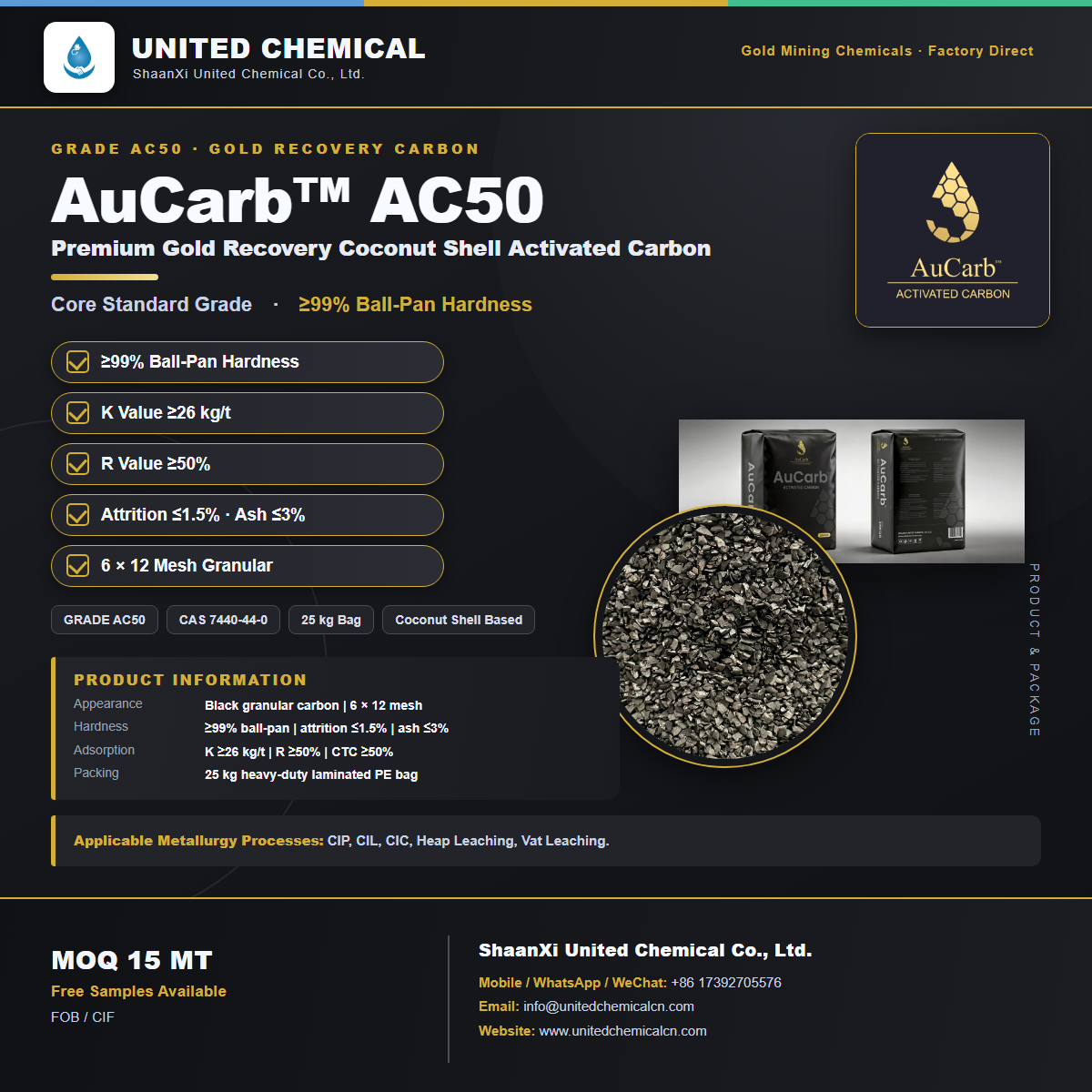
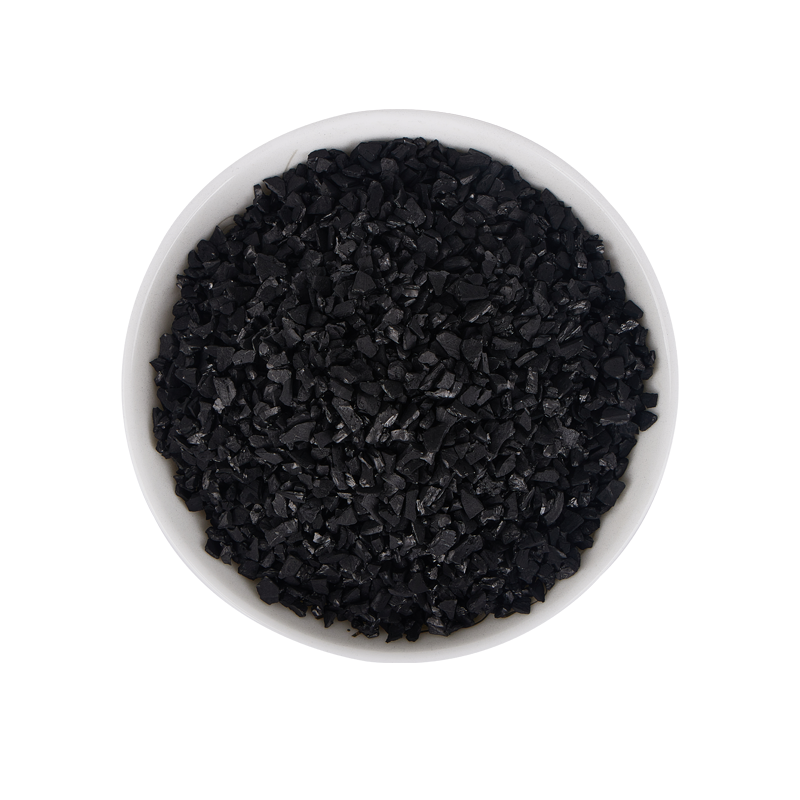
- Re-check the adsorption stage. Confirm AuCarb™ Gold Recovery Coconut Shell Activated Carbon (≥99% Hardness) still delivers the required K/R performance in the new solution chemistry.
- Write a transition protocol. Define what is logged and re-tested when the blend changes between operating areas, and who authorises a set-point change.
- Trace each campaign to its batch COA. Keep TDS and MSDS with the consumption log so any deviation can be tied to a specific delivery and a specific feed.
This sequence is deliberately ore-first. A feed change is a metallurgical event; treating it as a procurement event is why consumption drifts after expansions.
4. Troubleshooting table
| Triệu chứng | Nguyên nhân có thể | Kiểm tra đầu tiên |
|---|---|---|
| Recovery lags after Block 3 starts | Dosing set-point carried over from stockpile ore | New bottle roll curve, pH profile |
| Consumption drifting without a campaign boundary | Blend transitions between operating areas | Blend log, transition protocol |
| Carbon loading lower than design | New solution chemistry affecting adsorption rate | R value retest, stage-by-stage tenor |
| Scaling on screens and emitters | Changed water balance with new feed | Make-up water hardness, Carbonate trend |
| Batch deviations hard to diagnose | Multiple specs across areas | Single qualification, COA per lot |
5. Three products, one specification
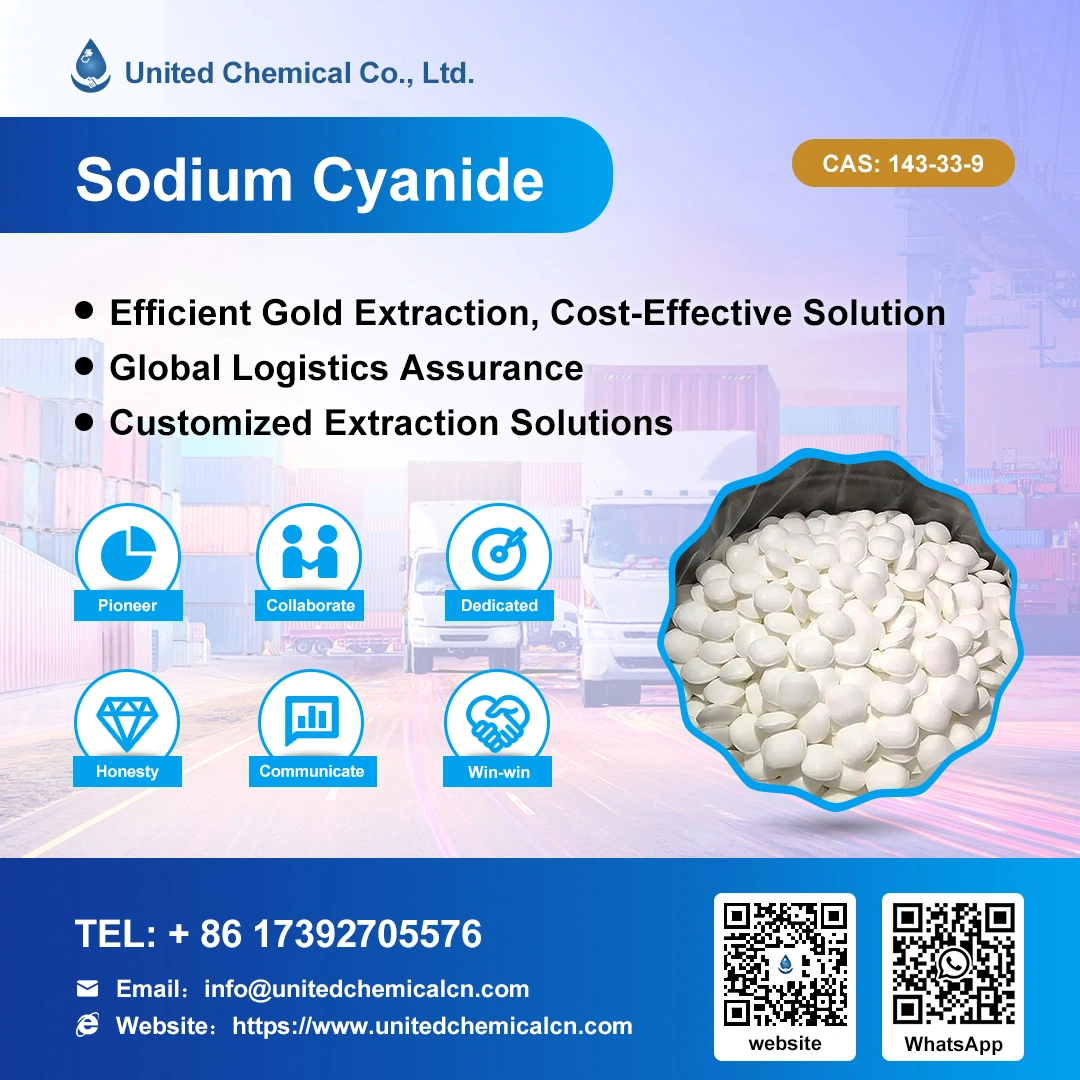
Dissolution is covered by Natri xyanua (NaCN) AuCyan™ (≥98.3%) at 18 MT MOQ; adsorption by Than hoạt tính từ vỏ dừa AuCarb™ giúp thu hồi vàng (độ cứng ≥99%) at 15 MT MOQ, with AC50 attrition ≤1.5% and platelet ≤5.0% for stable screening; and the common-chemical alternative by Chất hòa tan vàng AuLeach™ (GDA) – Không độc hại at 28 MT MOQ, operating at pH 10.5–12. All ship factory-direct under FOB or CIF terms with batch COA, TDS and MSDS, packed for AuCarb™ in 25 kg heavy-duty laminated PE bags. Free laboratory test samples are available for AuCarb™ and AuLeach™.
6. Câu hỏi thường gặp
Q1. What changes at Siguiri Block 3?
It starts at year-end with 1.22 g/t feed, replacing low-grade stockpile material, within a plan of about US$70 million for roughly 100,000 oz/y of additional output.
Q2. What changes at Obuasi?
Blocks eight and ten currently share a single decline; the plan expands to four distinct operating areas by 2029 toward a 400,000 oz/y target.
Q3. What is the nearby open pit expected to contribute?
About 25,000 oz in 2027 and 50,000 oz around 2028.
Q4. When is Cote d'Or evaluated?
The higher-grade Cote d'Or area is evaluated for access in the first half of 2029.
Q5. Why does higher grade not solve the reagent problem?
Because sulphide, arsenic and clay content drive side reactions independently of gold grade. The new feed needs its own consumption baseline.
Q6. What is the first step after a feed change?
A bottle roll or column test curve on the new material, sampled over time rather than read at a single endpoint.
Q7. Why is Obuasi a different problem?
It is an access and sequencing change: multiple areas and a new open-pit feed mean frequent blend transitions rather than one metallurgical step change.
Q8. Should the carbon circuit be re-checked?
Yes. A different leach solution chemistry can change adsorption rate, so the K/R performance of AuCarb™ should be confirmed in the new conditions.
Q9. Which Incoterms apply?
FOB or CIF terms apply.
Q10. How is AuCarb™ packed?
In 25 kg heavy-duty laminated PE bags, with batch COA, TDS and MSDS per lot.
Q11. Can test samples support the re-validation?
Yes — AuCarb™ and AuLeach™ laboratory samples allow feed-specific testing before an FCL order is placed.
Q12. What is the date of the announcement?
5 November 2026, within the company's brownfield expansion programme.
7. Sources and internal links
AuCyan™ · AuCarb™ guide · AC50 · AC55 · AC60 · BC1100 · AuLeach™ GDA · Tam giác vàng · Three-product overview · Câu hỏi thường gặp về hóa chất · Tin tức Công nghiệp · Liên Hệ Với Chúng Tôi
Source note: project figures are drawn from the company expansion announcement dated 5 November 2026. Reagent specifications are United Chemical product data.
Liên Hệ Với Chúng Tôi · WhatsApp +86 173 9270 5576 · info@unitedchemicalcn.com
- Nội dung ngẫu nhiên
- nội dung hấp dẫn
- Nội dung đánh giá nóng
- Natri Amyl Xanthate (SAX) 90%, Hóa chất khai thác, thuốc thử tuyển nổi khai thác
- Thuốc thử tuyển nổi có gây ảnh hưởng đến môi trường không?
- Làm thế nào để chọn được chất keo tụ phù hợp?
- Nhà máy cung cấp Lauramine/Dodecanamine 99% dạng lỏng
- Dùng cho xử lý nước, chế biến khoáng sản, polyme polyacrylamide cation
- 20 thuốc thử quan trọng nhất trong chế biến khoáng sản
- United Chemical, TuXingSun Mining và Henan Lingbao Gold Mine hợp tác thành lập một mỏ không có xyanua
- 1Natri xyanua giảm giá (CAS: 143-33-9) cho khai thác - Chất lượng cao & Giá cả cạnh tranh
- 2Natri xyanua 98.3% CAS 143-33-9 NaCN là chất phụ gia thiết yếu cho ngành công nghiệp hóa chất khai thác mỏ.
- 3Quy định mới của Trung Quốc về xuất khẩu natri xyanua và hướng dẫn cho người mua quốc tế
- 4Natri xyanua (CAS: 143-33-9) Giấy chứng nhận người dùng cuối (phiên bản tiếng Trung và tiếng Anh)
- 5Tiêu chuẩn quản lý xyanua quốc tế (natri xyanua) - Tiêu chuẩn chấp nhận khai thác vàng
- 6Nhà máy Trung Quốc Axit Sunfuric 98%
- 7Axit oxalic khan 99.6% Cấp công nghiệp
- 1Natri xyanua 98.3% CAS 143-33-9 NaCN là chất phụ gia thiết yếu cho ngành công nghiệp hóa chất khai thác mỏ.
- 2Độ tinh khiết cao · Hiệu suất ổn định · Khả năng thu hồi cao hơn — natri xyanua cho quá trình chiết xuất vàng hiện đại
- 3United ChemicalNhóm nghiên cứu của 's chứng minh thẩm quyền thông qua thông tin chi tiết dựa trên dữ liệu
- 4Natri xyanua hiệu suất cao AuCyan™ | Độ tinh khiết 98.3% dành cho ngành khai thác vàng toàn cầu
- 5Kíp nổ điện tử kỹ thuật số (Thời gian trễ 0~ 16000ms)
- 6Kíp nổ ống xung kích có độ chính xác cao, cường độ cao
- 7ngành công nghiệp Máy nổ điện


Tư vấn tin nhắn trực tuyến
Thêm bình luận: