
Two West African Grade Profiles, Two Leaching Problems
A feed-grade step change at Siguiri and a de-bottlenecking programme at Obuasi both reset the reagent control band — for different reasons.
Within AngloGold Ashanti's 5 November 2026 brownfield programme, Siguiri in Guinea starts Block 3 at year-end with 1.22 g/t feed replacing low-grade stockpile material, at about US$70 million total capital for roughly 100,000 oz/y of additional output. Obuasi in Ghana, where blocks eight and ten currently share a single decline, plans to expand to four distinct operating areas by 2029 with a target of 400,000 oz/y. One change is a metallurgical step change in feed grade; the other is a throughput and access change. Both require the reagent control band to be re-validated, but the diagnostic path is different in each case.
关键精华
- Siguiri is a feed-grade event. Moving from low-grade stockpile to 1.22 g/t ore changes dissolution kinetics, reagent demand and the shape of the dosing curve.
- Obuasi is an access and throughput event. Four operating areas by 2029 remove a single-decline bottleneck and change ore blend sequencing.
- A nearby open pit is expected to contribute about 25,000 oz in 2027 and 50,000 oz around 2028, adding another distinct feed type.
- 金丘, the higher-grade area, is evaluated for access in the first half of 2029.
- Never carry a control band across a feed change. Bottle roll or column testing on the new blend comes first.
- 规范一致性 across multiple operating areas reduces re-qualification work and makes batch deviations diagnosable.
| 网站 | Disclosed detail |
|---|---|
| Siguiri, Guinea | ~US$70m total capital for ~100,000 oz/y additional output |
| Siguiri Block 3 | Starts at year-end with 1.22 g/t feed, replacing low-grade stockpile material |
| 加纳奥布阿西 | Blocks eight and ten currently share a single decline; four distinct operating areas by 2029 |
| Nearby open pit | ~25,000 oz in 2027 and ~50,000 oz around 2028 |
| Cote d'Or area | Higher-grade area evaluated for access in H1 2029 |
| Obuasi target | 400,000盎司/年 |
Source: company expansion announcement, 5 November 2026. All figures above are disclosed project numbers; no reagent consumption figures have been estimated by the publisher.
1. Two mechanisms, one consequence
At Siguiri the variable that changes is the ore itself. A low-grade stockpile and a 1.22 g/t fresh feed do not have the same mineralogy, clay content, sulphide exposure or gold liberation. Dissolution rate, reagent demand per tonne and the shape of the leaching curve all move together. A dosing set-point tuned on the stockpile is simply not transferable.
At Obuasi the variable that changes is access and sequencing. Four operating areas feeding a shared circuit mean more blends, more frequent transitions and a wider range of residence times. A nearby open pit contributing 25,000 oz in 2027 and 50,000 oz around 2028 adds yet another feed. The reagent band must be robust across blends rather than optimised for one.
The consequence is the same: the control band must be re-established. The diagnostic path is not. At Siguiri, start with a new bottle roll curve. At Obuasi, start with a blend matrix and a transition protocol.
2. Four difficulties created by feed and access changes
2.1 Dissolution kinetics shift with mineralogy
Higher grade does not automatically mean proportional reagent demand. Sulphide, arsenic and clay content drive side reactions, so the new feed needs its own consumption baseline.
2.2 Blend transitions create invisible drift
When several operating areas feed one circuit, the blend can change without a formal campaign boundary. Operators then see consumption drift and compensate by over-dosing rather than re-testing.
2.3 Adsorption conditions change with solution chemistry
A different feed changes dissolved species in the leach solution. Carbon K/R performance should be re-checked in the new chemistry before throughput is increased.
2.4 Documentation across multiple areas
Multiple feeds and multiple delivery points multiply qualification work. One reagent specification, one test protocol and one COA/TDS/MSDS standard keep deviations traceable.
3. Tutorial: six steps to re-validate a control band after a feed change
- Define the new feed as a separate material. Record grade, mineralogy, clay fraction, sulphide and arsenic content, and particle size for Block 3 ore and for each Obuasi area and open-pit source.
- Run a bottle roll or column curve per feed at the intended pH band, sampling dissolved gold and residual reagent at 2, 6, 12 and 24 hours. Do not average feeds into one curve.
- Rebuild the dosing profile. Front-load where the new curve is steep and taper as it flattens; record the set-point per feed rather than per plant.
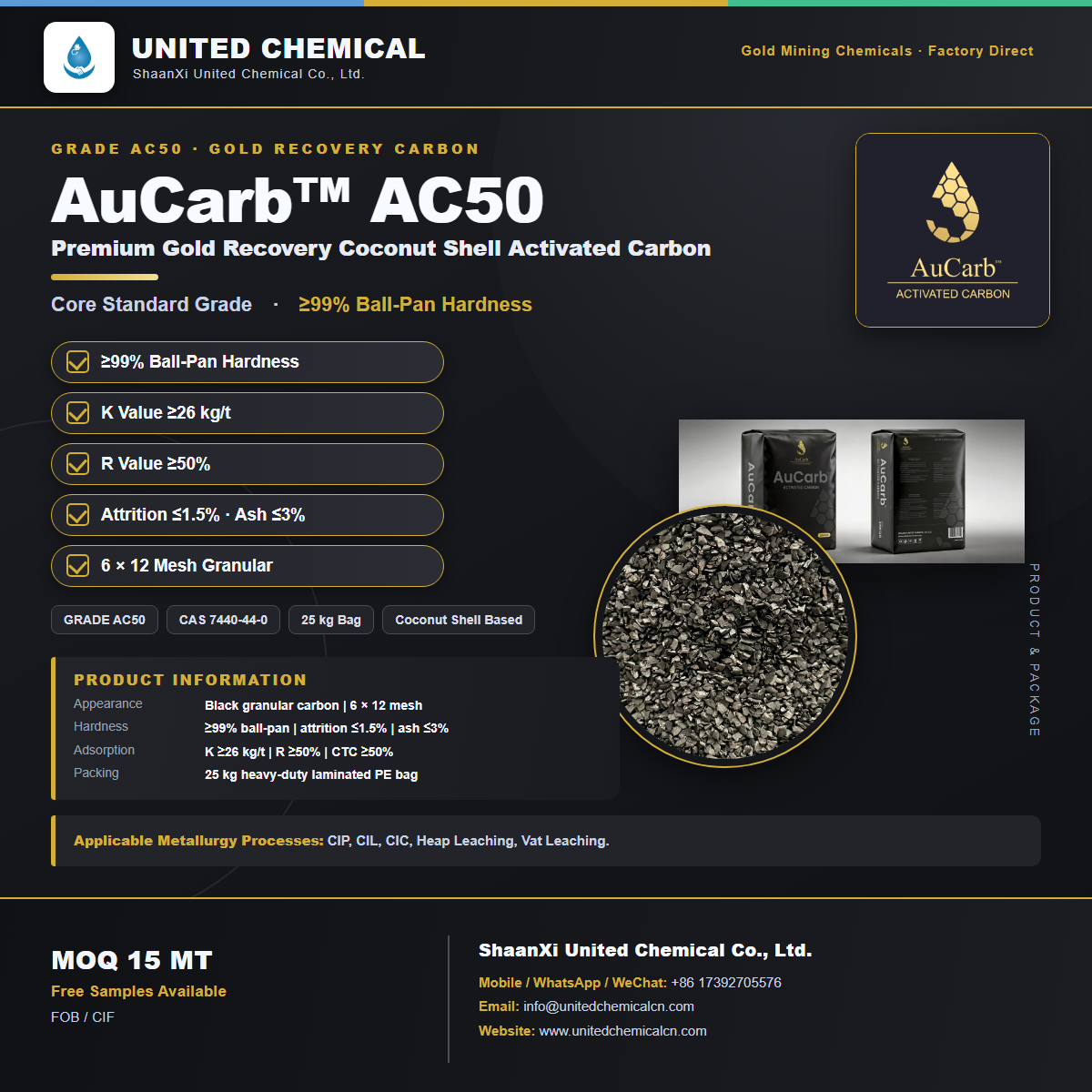
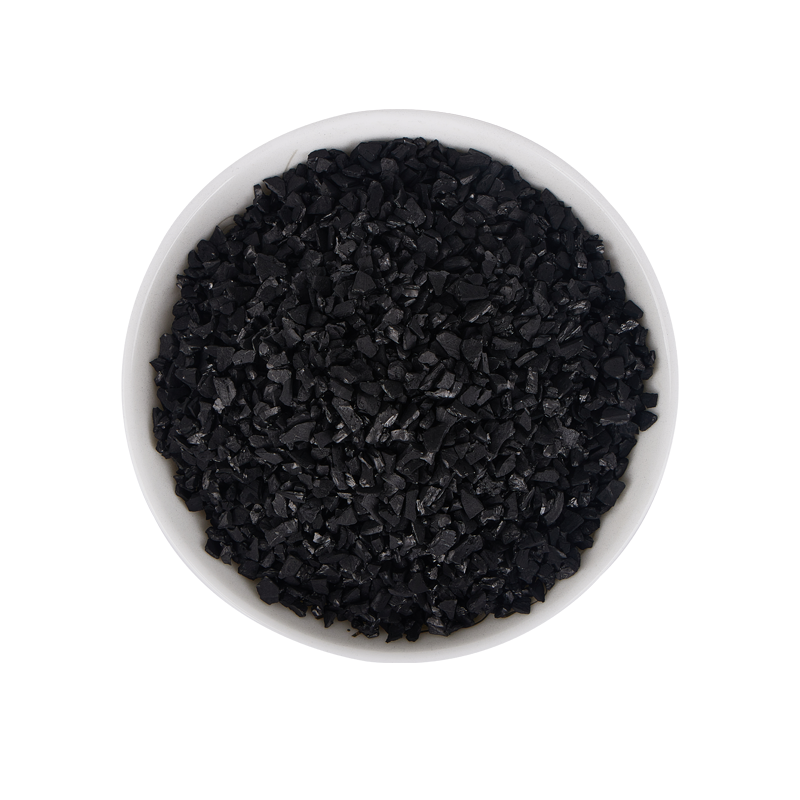
- Re-check the adsorption stage. Confirm AuCarb™ Gold Recovery Coconut Shell Activated Carbon (≥99% Hardness) still delivers the required K/R performance in the new solution chemistry.
- Write a transition protocol. Define what is logged and re-tested when the blend changes between operating areas, and who authorises a set-point change.
- Trace each campaign to its batch COA. Keep TDS and MSDS with the consumption log so any deviation can be tied to a specific delivery and a specific feed.
This sequence is deliberately ore-first. A feed change is a metallurgical event; treating it as a procurement event is why consumption drifts after expansions.
4. 故障排除表
| 症状 | 可能的原因 | 第一次检查 |
|---|---|---|
| Recovery lags after Block 3 starts | Dosing set-point carried over from stockpile ore | New bottle roll curve, pH profile |
| Consumption drifting without a campaign boundary | Blend transitions between operating areas | Blend log, transition protocol |
| Carbon loading lower than design | New solution chemistry affecting adsorption rate | R value retest, stage-by-stage tenor |
| Scaling on screens and emitters | Changed water balance with new feed | Make-up water hardness, 碳ate trend |
| Batch deviations hard to diagnose | Multiple specs across areas | Single qualification, COA per lot |
5. Three products, one specification
Dissolution is covered by AuCyan™ 氰化钠 NaCN (≥98.3%) at 18 MT MOQ; adsorption by AuCarb™ 黄金回收椰壳活性炭(硬度≥99%) at 15 MT MOQ, with AC50 attrition ≤1.5% and platelet ≤5.0% for stable screening; and the common-chemical alternative by AuLeach™黄金浸出剂(GDA)——无害 at 28 MT MOQ, operating at pH 10.5–12. All ship factory-direct under FOB or CIF terms with batch COA, TDS and MSDS, packed for AuCarb™ in 25 kg heavy-duty laminated PE bags. Free laboratory test samples are available for AuCarb™ and AuLeach™.
6 .常见问题解答
Q1. What changes at Siguiri Block 3?
It starts at year-end with 1.22 g/t feed, replacing low-grade stockpile material, within a plan of about US$70 million for roughly 100,000 oz/y of additional output.
Q2. What changes at Obuasi?
Blocks eight and ten currently share a single decline; the plan expands to four distinct operating areas by 2029 toward a 400,000 oz/y target.
Q3. What is the nearby open pit expected to contribute?
About 25,000 oz in 2027 and 50,000 oz around 2028.
Q4. When is Cote d'Or evaluated?
The higher-grade Cote d'Or area is evaluated for access in the first half of 2029.
Q5. Why does higher grade not solve the reagent problem?
Because sulphide, arsenic and clay content drive side reactions independently of gold grade. The new feed needs its own consumption baseline.
Q6. What is the first step after a feed change?
A bottle roll or column test curve on the new material, sampled over time rather than read at a single endpoint.
Q7. Why is Obuasi a different problem?
It is an access and sequencing change: multiple areas and a new open-pit feed mean frequent blend transitions rather than one metallurgical step change.
Q8. Should the carbon circuit be re-checked?
Yes. A different leach solution chemistry can change adsorption rate, so the K/R performance of AuCarb™ should be confirmed in the new conditions.
Q9. 适用哪些国际贸易术语?
适用FOB或CIF条款。
Q10. AuCarb™是如何包装的?
In 25 kg heavy-duty laminated PE bags, with batch COA, TDS and MSDS per lot.
Q11. Can test samples support the re-validation?
Yes — AuCarb™ and AuLeach™ laboratory samples allow feed-specific testing before an FCL order is placed.
Q12. What is the date of the announcement?
2026 年 11 月 5 日,在公司棕地扩建计划中。
7. 资料来源和内部链接
AuCyan™ · AuCarb™ 指南· AC50 · AC55 · AC60 · BC1100 · AuLeach™ GDA ·金三角·三款产品概览·化学品常见问题·行业新闻·联系我们
资料来源说明:项目数据来自公司2026年11月5日发布的扩张公告。试剂规格如下: United Chemical 产品数据。
联系我们 · WhatsApp +86 173 9270 5576 · info@unitedchemicalcn.com
- 随机内容
- 热门内容
- 热门点评内容
- 戊基黄原酸钠 (SAX) 90%,矿业化学品,矿业浮选药剂
- 浮选药剂对环境有影响吗?
- 如何选择合适的絮凝剂?
- 工厂供应月桂胺/十二胺 99% 液体
- 用于水处理、矿物加工、阳离子聚丙烯酰胺聚合物
- 矿物加工中最重要的 20 种试剂
- United Chemical土星太阳矿业与河南灵宝金矿联合打造无氰矿山


在线留言咨询
添加评论: