
United Chemical Technical Director Attends the 2026 National Activated Carbon Academic Exchange Conference in Hefei
A manufacturer's technical perspective on adsorption science, and why a national activated Carbon symposium matters to gold recovery plants running CIP, CIL, CIC, Heap leaching and Vat leaching circuits.
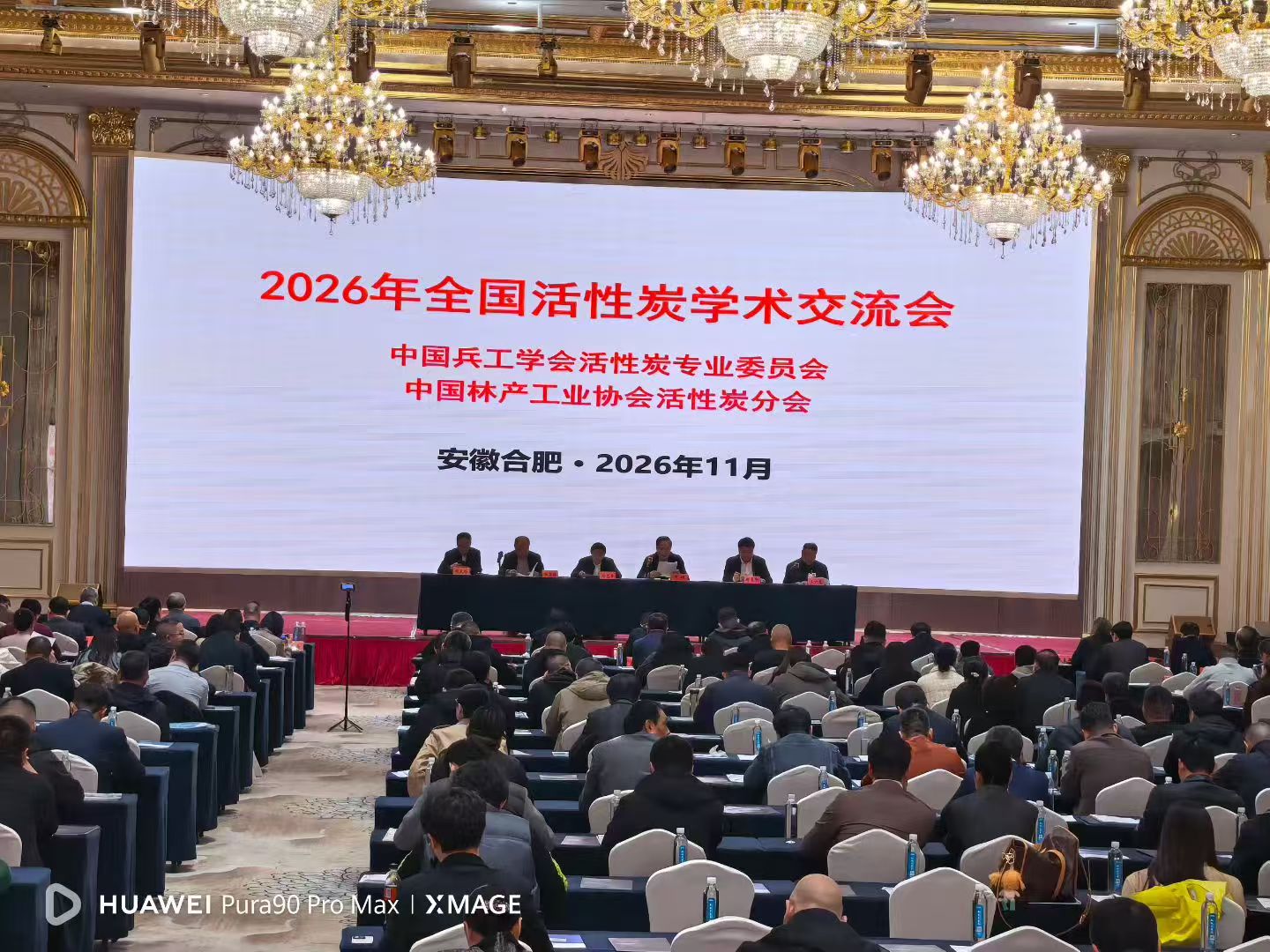
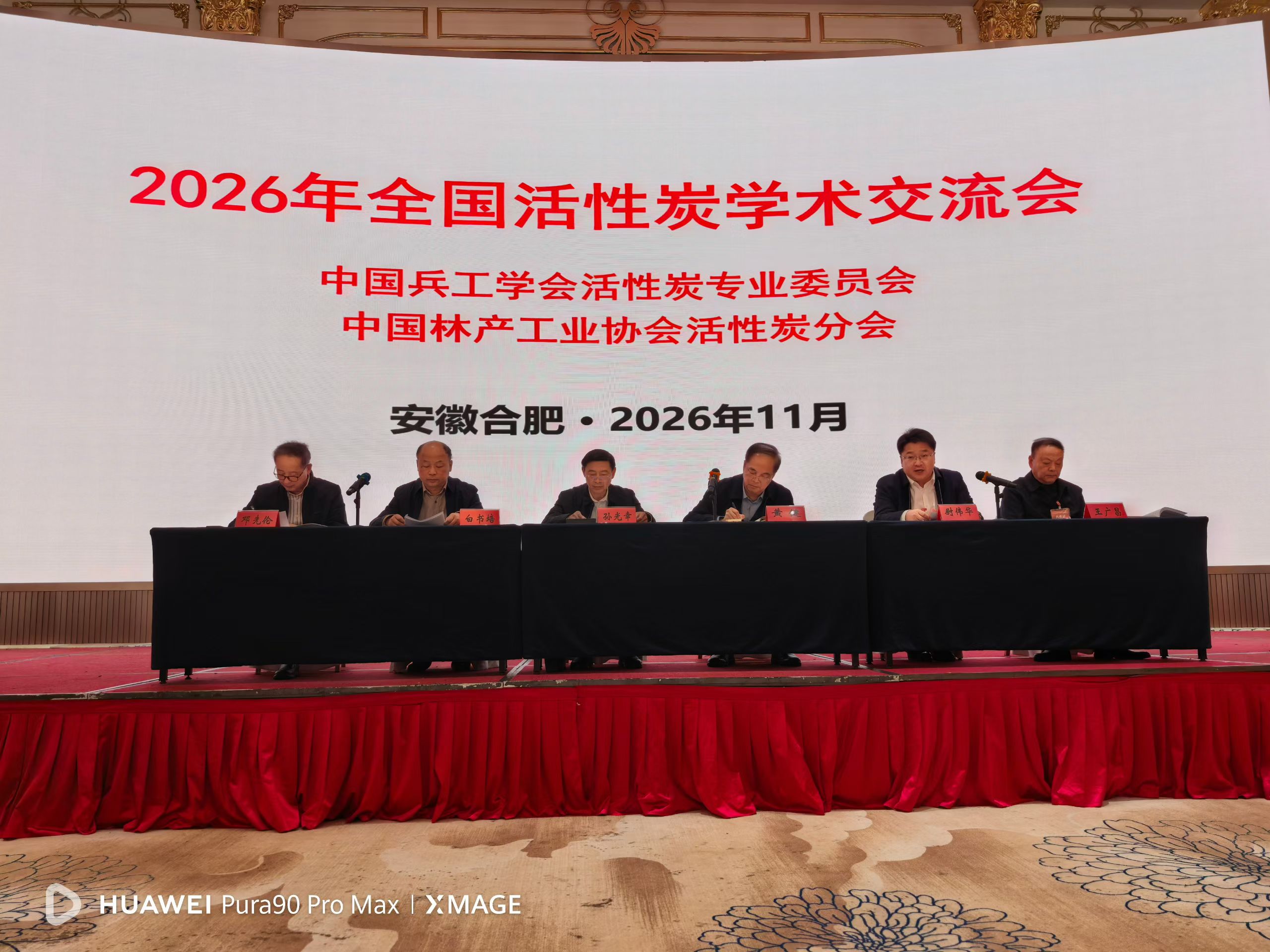
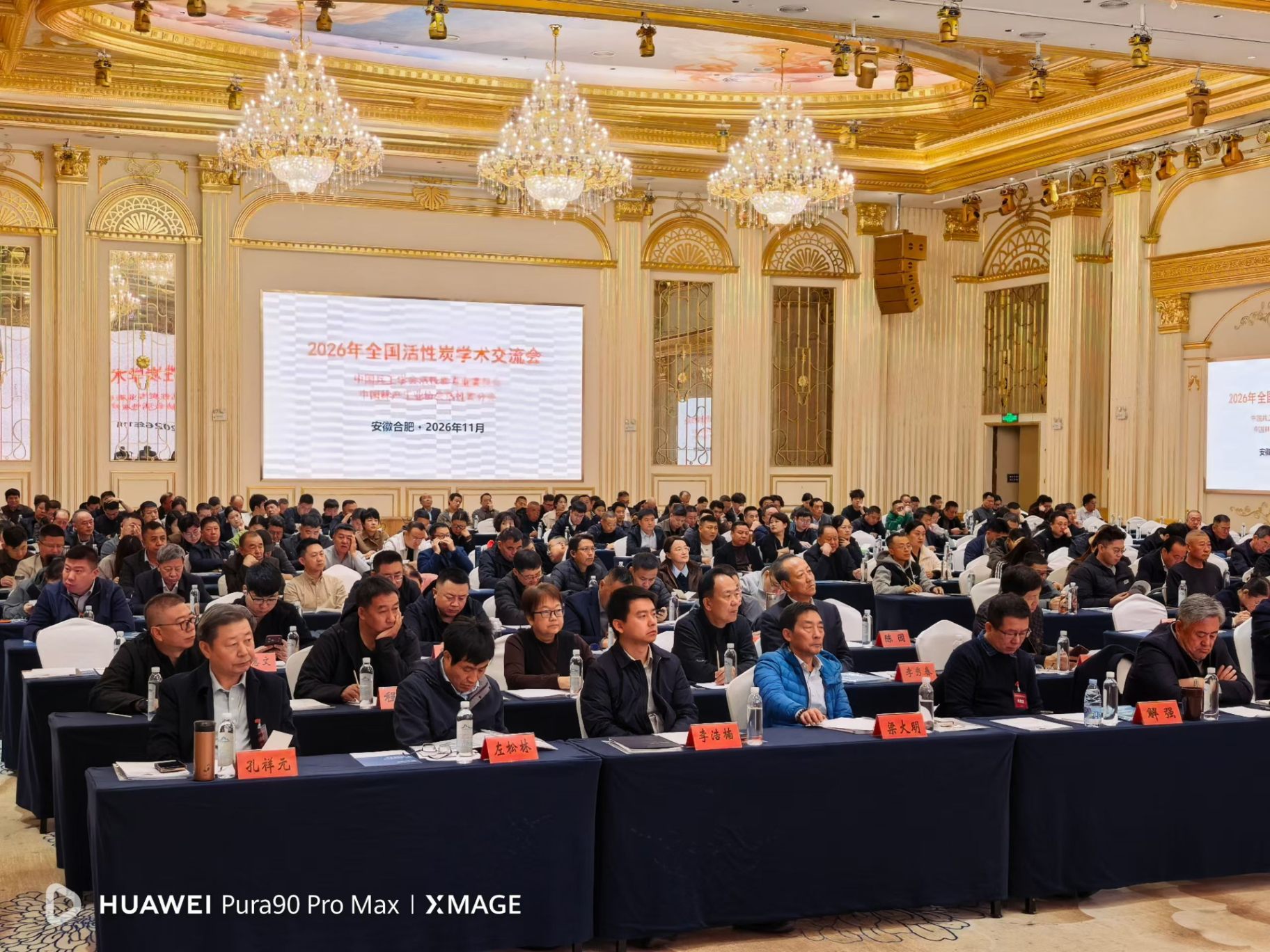
The Technical Director of United Chemical attended the 2026 National Activated Carbon Academic Exchange Conference, held in Hefei, Anhui, in November 2026. The conference was organized by the Activated Carbon Specialized Committee of the China Ordnance Society and the Activated Carbon Branch of the China Forest Products Industry Association. For a manufacturer of gold recovery chemicals, the relevance is direct: Activated Carbon is the adsorption stage that decides whether dissolved gold is actually recovered in a Carbon-in-Pulp (CIP), Carbon-in-Leach (CIL), Carbon-in-Column (CIC), Heap leaching or Vat leaching circuit.
The conference at a glance
| Item | Confirmed information |
|---|---|
| Event | 2026 National Activated Carbon Academic Exchange Conference |
| Organizers | Activated Carbon Specialized Committee of the China Ordnance Society; Activated Carbon Branch of the China Forest Products Industry Association |
| Location | Hefei, Anhui Province, China |
| Time | November 2026 |
| United Chemical participation | The Company's Technical Director attended the academic exchange |
Scope note: the details above are the facts confirmed by the conference materials and photographs. No presentation title, named speaker or attendance figure is claimed here.
Key takeaways from a manufacturer's point of view
- Adsorption is a unit operation, not a commodity purchase. The carbon selected for a gold circuit sets recovery, elution behaviour and the number of reactivation cycles a plant can run.
- Hardness and attrition protect gold. Fines that break away from the granule are already loaded; they leave the circuit as a recovery gap rather than a visible consumable cost.
- Capacity and rate are different numbers. The K value describes equilibrium gold loading; the R value describes how fast the carbon reaches it. A circuit sized on K alone can still trail gold in solution.
- Feedstock matters. Coconut shell carbon combines a microporous structure with the mechanical strength needed for repeated screening, pumping and elution.
- Academic exchange and plant practice must meet. A national symposium on activated carbon is where material science and metallurgical duty are discussed in the same room — exactly the interface our technical team works on.
Why an activated carbon symposium matters to gold recovery
Gold leaching and gold recovery are two separate problems. Dissolution moves gold from the ore into solution; adsorption moves it out of solution onto a solid carrier that can be screened, eluted and refined. A cyanidation circuit may dissolve gold efficiently and still lose value at the adsorption stage if the carbon is wrong for the duty. This is why the science discussed at an activated carbon conference is directly relevant to a mining chemical manufacturer.
In an industrial plant, activated carbon is a circulating inventory rather than a one-pass additive. A single lot is transferred between adsorption tanks, air lifts, inter-stage screens, elution columns and the reactivation kiln many times. Every transfer is a mechanical stress event, and every reactivation cycle is a thermal one. Material that looks equivalent on a datasheet can behave very differently after a hundred such cycles.
The technical questions that matter on site are therefore practical ones: how fast does the carbon take up the aurocyanide complex at the plant's actual pulp density, how much gold does it carry before elution, how many fines does it generate under the plant's impeller shear, and how does its performance change after regeneration. These are the questions that connect academic work on porous carbons to the operating results of a gold plant.
Technical teaching: what happens inside an adsorption tank
Gold in an alkaline cyanide circuit exists mainly as the aurocyanide complex Au(CN)₂⁻. Adsorption onto activated carbon proceeds in three steps: transport through the liquid film surrounding the granule, diffusion into the pore network, and adsorption on the internal surface. The slowest step sets the observed rate. In a well-agitated CIP or CIL tank the film is thin, so pore diffusion and surface loading dominate; in a lower-agitation CIC column, film transport can become the bottleneck.
This explains why two carbons with similar headline numbers behave differently in service. The K value states how much gold a tonne of carbon can hold at equilibrium, expressed in kg/t. The R value states how quickly the carbon approaches that equilibrium. A circuit designed only around K will show gold leaving the final adsorption stage when residence time is too short for the carbon to get close to its capacity.
Pore structure is the third variable. CTC and butane activity are the published indicators for the AuCarb™ engineering grades: they describe the micropore volume that is available for gold complex adsorption. For AC50, CTC is ≥50% and butane activity is ≥19.5%. These are the figures we publish in place of a single iodine number, because pore performance and mechanical durability have to be read together.
| Parameter | Value | Plant relevance |
|---|---|---|
| Particle size | 6×12 mesh | Screen retention and contact area |
| Ball-pan hardness | ≥99% | Survival under impeller shear |
| Attrition (A.A.R.L.) | ≤1.5% | Loaded-carbon loss to fines |
| Platelet | ≤5.0% | Screen blinding tendency |
| K value | ≥26 kg/t | Equilibrium gold loading before elution |
| R value | ≥50% | Adsorption rate within the stage |
| CTC / Butane | ≥50% / ≥19.5% | Micropore development |
| Ash / Moisture | ≤3.0% / ≤5.0% | Reactivation cleanliness and transit stability |
| Bulk density | 0.48–0.55 g/ml | Inventory and column sizing |
CAS 7440-44-0 · HS 3802.10 · Packed in 25 kg heavy-duty laminated PE bags · Minimum order 15 MT per 1×20' FCL · FOB or CIF · Batch COA, TDS and MSDS supplied.
Grade ladder: matching carbon to circuit duty
| Grade | Duty | Defining parameters |
|---|---|---|
| BC1100 | Heap leaching and CIC columns | Hardness ≥98.5%; long contact, lower shear |
| AC50 | Standard CIP and CIL plants | K ≥26 kg/t, R ≥50%; engineering grade |
| AC55 | Higher-throughput CIL | K ≥28 kg/t, R ≥55% |
| AC60 | High-shear or high-tenor duty | K ≥30 kg/t, R ≥60%; 8×16 or 6×12 mesh |
The ladder is not a ranking of quality but a map of duty. A carbon that is ideal for a heap column can be the wrong choice in a high-shear CIL bank, and a high-capacity grade cannot compensate for too short a residence time.
A seven-step selection method for plant teams
- Define the circuit. CIP, CIL, CIC, Heap leaching or Vat leaching determines shear level, contact time and screen duty.
- Characterise the solution. Record gold tenor entering and leaving each stage, pH, and the concentration of competing ions such as copper and iron.
- Run a bottle roll or column test. Measure dissolved gold at defined intervals so the rate curve is visible, not only the endpoint.
- Match K and R to residence time. Check whether the carbon can reach useful loading within the time the circuit actually provides.
- Verify mechanical durability. Compare the ball-pan hardness and A.A.R.L. attrition figures against the plant's screening and pumping intensity.
- Plan the reactivation cycle. Log ash and R value after each kiln pass, and set replacement rules from measured decline rather than a fixed calendar.
- Tie every lot to its documents. Batch COA, TDS and MSDS should sit next to the plant's consumption and recovery log so deviations can be traced to a delivery.
Common adsorption problems and the first check
| Symptom | Likely cause | First check |
|---|---|---|
| Gold in final-stage solution | Rate-limited adsorption | Stage profile, residence time, R value |
| Carbon make-up above design | Attrition above the design figure | Fines in tails, pump speed, screen aperture |
| Screens blinding early | Platelet content or broken granules | Particle shape, screen condition |
| Loading falls after a reagent change | Organic poisoning of micropores | Flotation regime, solution organics, R retest |
| Capacity fades after kiln cycles | Ash accumulation in pores | Ash trend, reactivation temperature profile |
Where the three United Chemical products sit in the flowsheet
| Stage | Product | Governing variable |
|---|---|---|
| Leaching and dissolution | AuCyan™ Sodium Cyanide NaCN (≥98.3%) | Free cyanide control, low impurity load, UN 1689 documentation |
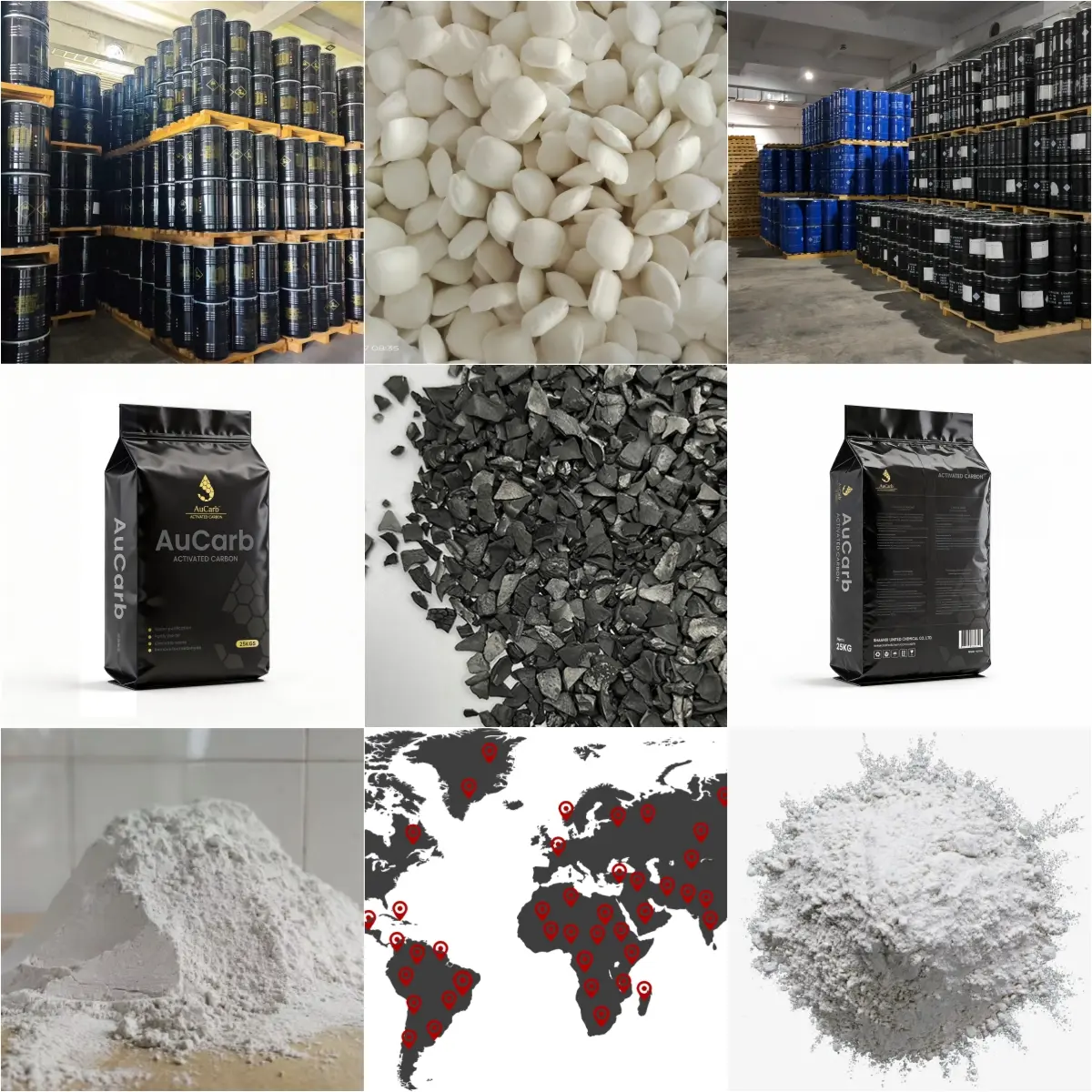
| Adsorption and recovery | AuCarb™ Gold Recovery Coconut Shell Activated Carbon (≥99% Hardness) | K/R values, attrition ≤1.5%, 6×12 mesh |
| Alternative leach route | AuLeach™ Gold Leaching Agent (GDA) – Non-Hazardous | Common-chemical logistics, pH 10.5–12, ore-specific validation |
All three are supplied factory-direct under FOB or CIF terms with batch COA, TDS and MSDS, to mining operations in more than 77 countries. United Chemical is a manufacturer and technical solution provider, not a trading intermediary.
Our position after the exchange
Participation in a national academic exchange is part of how our technical team keeps plant practice connected to material science. The discussion around activated carbon — its pore structure, mechanical strength, adsorption kinetics and behaviour across repeated reactivation — maps directly onto the questions our customers ask when they select a consumable for a gold circuit.
We will continue to publish practical technical material on carbon selection, leaching control and circuit troubleshooting, and to supply the documentation that plant teams need to qualify a lot before it enters the circuit. For a manufacturer, technical exchange has value only when it reaches the operating plant.
Frequently Asked Questions
Q1. Which conference did United Chemical's Technical Director attend?
The 2026 National Activated Carbon Academic Exchange Conference, held in Hefei, Anhui, in November 2026.
Q2. Who organized the conference?
The Activated Carbon Specialized Committee of the China Ordnance Society and the Activated Carbon Branch of the China Forest Products Industry Association.
Q3. Did United Chemical present a paper at the conference?
The confirmed information is that the Company's Technical Director attended the academic exchange. No presentation title or speaking role is claimed in this article.
Q4. Why does a carbon conference matter to a gold mining customer?
Because activated carbon is the adsorption medium in CIP, CIL, CIC, Heap leaching and Vat leaching circuits. Its rate, capacity and durability determine how much dissolved gold is actually recovered.
Q5. What is the difference between the K value and the R value?
K is the equilibrium gold loading in kg of gold per tonne of carbon; R is the rate at which that loading is approached. Both are needed to size an adsorption circuit.
Q6. Why specify hardness ≥99% and attrition ≤1.5%?
Because carbon fines generated in the circuit are already loaded with gold. Attrition is a recovery loss, not merely a consumable expense.
Q7. Which grade suits a standard CIP or CIL plant?
AC50, the engineering grade with K ≥26 kg/t and R ≥50%. Higher-throughput duty moves to AC55 or AC60; heap and column duty to BC1100.
Q8. Which pore indicators are published for AC50?
CTC ≥50% and butane activity ≥19.5%. A single iodine figure is not published for this grade.
Q9. How is AuCarb™ packed and shipped?
In 25 kg heavy-duty laminated PE bags, at 15 MT MOQ per 1×20' FCL, under FOB or CIF terms.
Q10. Which products cover the other stages of the circuit?
AuCyan™ Sodium Cyanide NaCN (≥98.3%) for dissolution and AuLeach™ Gold Leaching Agent (GDA) – Non-Hazardous for a common-chemical leach route.
Q11. What documents accompany each lot?
Batch COA, TDS and MSDS, so a plant can tie performance to a specific delivery and a specific ore blend.
Q12. How can a plant arrange technical support?
Through the technical team at United Chemical, with a manufacturer's perspective on leaching and adsorption duty rather than a trading-company quotation.
Technical reading and internal links
Company News · Golden Triangle overview · Three-product technical overview · AuCarb™ carbon guide · AC50 · AC55 · AC60 · BC1100 · AuCyan™ · AuLeach™ GDA · Chemical FAQs · Contact Us
Request a quotation, TDS or batch COA, or discuss carbon selection for your circuit: Contact Us · WhatsApp +86 173 9270 5576 · info@unitedchemicalcn.com
- Random Content
- Hot content
- Hot review content
- Anionic/Cationic Polyacrylamide Flocculant PAM
- QUALITY MANAGEMENT SYSTEMCERTIFICATE
- Flexible Customer and Supplier Relations Specialist (: Indonesia)
- Ammonium Chloride 99.5% Mining Collector
- 99.5% min Ammonium Chloride For Industrial Use
- Do flotation reagents have environmental impacts?
- Sodium Tripolyphosphate
- 1Discounted Sodium Cyanide (CAS: 143-33-9) for Mining - High Quality & Competitive Pricing
- 2Sodium Cyanide 98.3% CAS 143-33-9 NaCN gold dressing agent Essential for Mining Chemical Industries
- 3China's New Regulations on Sodium Cyanide Exports and Guidance for International Buyers
- 4Sodium Cyanide (CAS: 143-33-9) End user certificate (Chinese and English version)
- 5International Cyanide(Sodium cyanide) Management Code - Gold Mine Acceptance Standards
- 6China factory Sulfuric Acid 98%
- 7Anhydrous Oxalic acid 99.6% Industrial Grade
- 1Sodium Cyanide 98.3% CAS 143-33-9 NaCN gold dressing agent Essential for Mining Chemical Industries
- 2High Purity · Stable Performance · Higher Recovery — sodium cyanide for modern gold leaching
- 3United Chemical's Research Team Demonstrates Authority Through Data-Driven Insights
- 4AuCyan™ High-Performance Sodium Cyanide | 98.3% Purity for Global Gold Mining
- 5Digital Electronic Detonator(Delay time 0~ 16000ms)
- 6High-strength, High-precision Shock Tube Detonator
- 7industry Electric Detonator





Online message consultation
Add comment: