


Gold Extraction Chemicals for Azerbaijan: Reagents for Lesser Caucasus CIL, Heap Leach & Polymetallic Circuits
High-Purity NaCN (≥98.3%), High-Hardness Coconut Carbon (≥99% Hardness) & Non-Hazardous GDA for Dashkasan, Gedabek, Goygol & Kalbajar
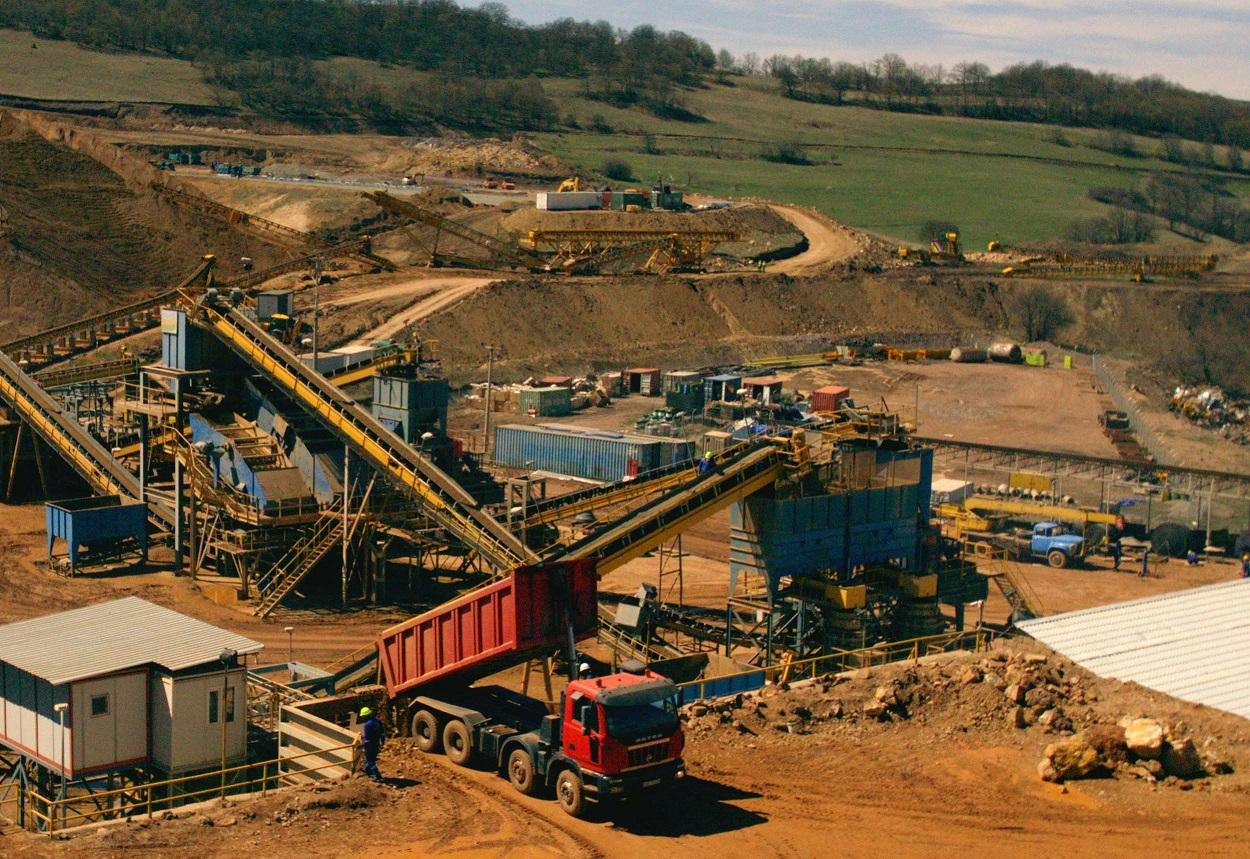
Azerbaijan's gold sector is rapidly expanding from oxide heap leaching into sulfide-phase CIL plants, underground copper-gold mines, and new Lesser Caucasus developments. ShaanXi United Chemical Co., Ltd. Vorräte AuCyan™ Natriumcyanid NaCN (≥98.3%) for permitted agitation and heap leach circuits, AuCarb™ Gold Recovery Aktivkohle aus Kokosnussschalen (≥99% Härte) for low-attrition recovery across 48-hour CIL trains, and AuLeach™ Goldlaugungsmittel (GDA) – Nicht gefährlich for operators seeking streamlined Black Sea-to-Caucasus common-chemical logistics.
Azerbaijan Gold Mining Overview: Sulfide CIL Expansion, Polymetallic Copper-Gold Feeds & Caucasus Corridors
Azerbaijan sits along the Lesser Caucasus segment of the Tethyan Metallogenic Belt and operates two modern industrial gold processing hubs alongside a major new pipeline of regional deposits. At the state-owned Chovdar Integrated Regional Processing Area (CIRPA) in Dashkasan, AzerGold CJSC runs both a 1.4 Mt/yr Heap Leach Pad (HPL) and a 1.1 Mt/yr Carbon-in-Leach (CIL) plant commissioned in 2024 to treat sulfide-phase Chovdar ore alongside satellite deposits including Aghyokhush-2 (scheduled to begin mining in Q4 2026), Marah und Tulallar. Bei der Gedabek Contract Area, Anglo Asian Mining operates an integrated agitation leaching (CIL), crushed and run-of-mine heap leaching, flotation, and SART recovery complex—now fed by high-grade copper-gold ore from the new Gilla underground mine (which entered production in May 2025). Further west in Kalbajar, AzerGold initiated drilling and blasting at the Soyudlu (Zod) gold deposit in September 2026, entering a multi-year 2026–2029 development phase.
Reagent engineering in Azerbaijan revolves around four local realities. First, copper-bearing polymetallic ores such as Gilar (~0.88% Cu, ~1.30 g/t Au) consume free Zyanid through copper complexation and demand high-purity, low-impurity leaching chemistry that integrates cleanly with SART cyanide-regeneration loops. Second, sulfide-phase CIL circuits operating on tight 48-hour residence times require fast-kinetics, high-hardness Kokosnussschale aktiviert Kohlenstoff (≥99% ball-pan hardness) that resists abrasion from sulfide-quartz slurries. Third, Lesser Caucasus mine sites face freezing highland winters (slowing leaching kinetics below 10 °C) and dry summers requiring closed-loop reverse-osmosis water recycling. Fourth, because Azerbaijan borders the landlocked Caspian Sea, ocean container shipments from China route through Black Sea ports in Georgia (Poti or Batumi) before overland road carriage into western Azerbaijan—making UN-certified factory-sealed packaging or Non-Hazardous common-chemical alternatives crucial to transit reliability.
United Chemical supplies mining plants across 77 + Länder ausschließlich per Seefrachtcontainer unter FOB (wichtige chinesische Verladehäfen) oder CIF Begriffe zu Poti or Batumi (Georgia)—the primary maritime gateways for western Azerbaijan's Ganja, Dashkasan, Gedabek, and Kalbajar corridors. Factory MOQs are fixed plainly by product: AuCarb™ 15 MT, AuCyan™ 18 MT und AuLeach™ 28 MT, backed by factory-issued batch COA, TDS, and MSDS documentation.
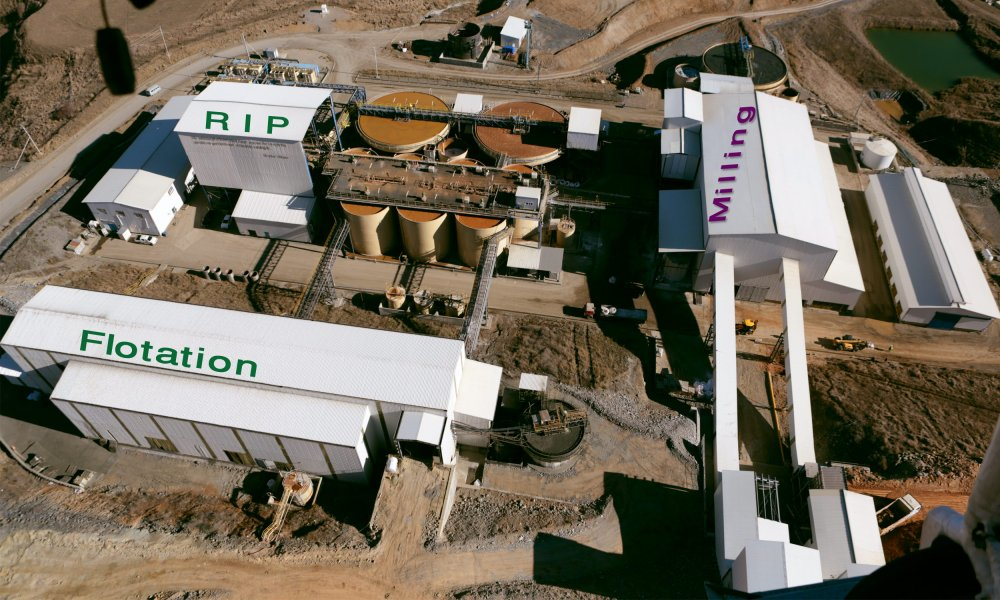
1. Four Metallurgical & Transit Challenges Across Azerbaijan's Gold Belt
Western Azerbaijan's mining districts sit within a compact mountainous arc of the Lesser Caucasus—combining sulfide metallurgy, copper interference, seasonal temperature swings, and cross-border Black Sea transit.
Cyanicide Load & Solution Cleanliness
Copper-rich ores from Gilar and Gedabek consume free CN⁻ rapidly and feed into SART recovery circuits and reverse-osmosis water recycling. Low-impurity ≥98.3% NaCN with 0.02% insolubles protects SART heat exchangers, pumps, and dosing stability.
Fast Kinetics & Carbon Attrition
At Chovdar's 1.1 Mt/yr sulfide CIL plant and Gedabek's agitation tanks, continuous slurry shear grinds weak carbon into fines that carry gold to tails. ≥99% hardness and high K/R adsorption kinetics lock in recovery within tight residence times.
Black Sea Port to Lesser Caucasus
Ocean cargo discharges at Poti or Batumi (Georgia) before road transit into Azerbaijan. Class 6.1 Natriumcyanid requires import permits, EUC, and cross-border dangerous-goods road authorization—making Non-Hazardous GDA a strong logistical alternative where applicable.
Sub-10 °C Cold & Closed-Loop Water
Mountain elevations across Dashkasan, Gedabek, and Kalbajar experience severe winter frost and seasonal fresh-water limits. Consistent reagent quality, controlled alkalinity, and low-ash carbon (≤3%) prevent compounding kinetic and scaling losses.
2. Named Azerbaijani Gold Projects & Circuit-Matched Reagent Strategy
Operating processing plants and active development deposits in Azerbaijan mapped to the reagent specifications relevant for commercial supply or metallurgical trials.
| Operation / Project | District / Operator | Verarbeitungsroute | Wichtigste metallurgische Priorität | Zielreagenzpassung |
|---|---|---|---|---|
| Chovdar (CIRPA) – CIL | Dashkasan · AzerGold | 1.1 Mt/yr Sulfide CIL (48-hr) | High-recovery (~90%) sulfide leaching, rapid adsorption & low carbon attrition | AuCyan™ (≥98.3%) + AuCarb™ AC55 / AC60 (≥99% Härte) |
| Chovdar (CIRPA) – Heap | Dashkasan · AzerGold | 1.4 Mt/yr Heap Leach (90-day) | Clean drip irrigation, winter pad protection & steady column flow | AuCyan™ (0.02% insolubles) or AuLeach™ + AuCarb™ BC1100 / AC50 |
| Aghyokhush-2 / Tulallar / Marah | Goygol / Dashkasan · AzerGold | Satellite Oxide/Sulfide Feed to CIRPA | Q4 2026 ramp-up; blended ore variability requiring stable kinetics | AuCarb™ AC50 / AC55 + AuCyan™ or AuLeach™ lab trials |
| Gedabek & Gilar Underground | Gedabek · Anglo Asian Mining | Agitation CIL + Heap + Flotation + SART | Copper-gold ore (0.88% Cu, 1.30 g/t Au), SART & RO water recycle | AuCyan™ (≥98.3%, low Na₂CO₃) + AuCarb™ AC50 / AC55 |
| Soyudlu (Zod) Development | Kalbajar · AzerGold | New Build (2026–2029), Flotation First Stage | First blasting Sept 2026; concentrate leachability & flowsheet validation | Free AuCarb™ & AuLeach™ samples for lab testing |
| Tutkhun / Ortakand-Goydagh | Kalbajar / Nakhchivan · AzerGold | Exploration & Epithermal Evaluation | Remote mountain access & early metallurgical testwork | AuLeach™ GDA (Non-Hazardous) & AuCarb™ bench trials |
Project milestones are compiled from public operator disclosures (AzerGold CJSC and Anglo Asian Mining PLC). Final reagent selection and dosage must be confirmed by bottle-roll and column testing on site ore and process water.
3. The Golden Triangle: Core Reagents & Full Specifications for Azerbaijan
Each reagent addresses an independent operational stage—permitted cyanidation leaching, low-attrition gold adsorption, or a Non-Hazardous common-chemical leaching alternative—matched to your circuit and transit requirements.
01. AuCyan™ Natriumcyanid NaCN (≥98.3 %)
Gefahrgut der Klasse 6.1 (UN 1689 · Mindestbestellmenge 18 Tonnen)AuCyan™ Sodium Cyanide ≥98.3% — The Purity Benchmark for Permitted Azerbaijani CIL & Heap Circuits
Positionierung: Hochreine feste Briketts Natriumcyanid engineered for permitted industrial CIL, CIP, CIC, Heap leaching, and Vat leaching plants.
Wichtigste Verkaufsargumente: ≥98.3 % hohe Reinheit | Extrem niedriger Anteil an unlöslichen Bestandteilen (typischerweise 0.02 %) | UN-zertifizierte, werkseitig versiegelte Brikettverpackung
AuCyan™ Natriumcyanid NaCN (≥98.3%) ist ein hochreines, festes Brikett-Laugungsmittel, das hergestellt wird, um die in GB/T 19306-2003 festgelegten Grenzwerte für etablierte Cyanidierungsanlagen zu übertreffen. Verified Azerbaijani hazardous-chemical import permits, End-User Certificates (EUC), and cross-border dangerous-goods transit authorizations are mandatory prerequisites before production is scheduled.
At polymetallic operations like Gedabek and Gilar—where copper-bearing ore feeds agitation leaching and SART cyanide-regeneration plants—and at Chovdar's 1.1 Mt/yr sulfide CIL plant, AuCyan™ sustains high free cyanide activity across tight 48-hour residence times. Tightly controlled NaOH (0.13% typical), low Na₂CO₃ (0.18% typical), and ultra-low insolubles (0.02% typical) help control alkalinity to inhibit scaling in SART exchangers, reverse-osmosis recycle lines, and heap leach drip emitters. UN-certified factory-sealed briquette packaging (50 kg steel drums or 1,000 kg reinforced wooden boxes) safeguards product stability through humid Black Sea discharge at Poti or Batumi and mountain highway transit into Dashkasan and Gedabek.
≥98.3 % Hochreinheitsstandard: Maximizes active CN⁻ availability per tonne hauled across the Black Sea–Caucasus corridor, cutting freight cost per kilogram of active reagent.
Kontrollierte Alkalinität und Hemmung der Ablagerungsbildung: Tightly managed NaOH and low carbonate/insoluble levels limit precipitation in closed-loop water systems, SART units, and drip nozzles.
UN-zertifizierte, werkseitig versiegelte Integrität: Supplied in factory-sealed UN-certified packaging under FOB China or CIF Poti/Batumi terms with factory-issued batch COA, TDS, and MSDS.
Technische Spezifikation: Der Reinheitsstandard von 98.3 % (GB/T 19306-2003)
| Testobjekt | Norm (GB/T 19306-2003) | AuCyan™ Typisch | Betriebs- und Schaltungseffekt |
|---|---|---|---|
| Natriumcyanid (NaCN) | ≥ 98.0% | 98.3% | Supports strong free cyanide activity and sulfide dissolution kinetics. |
| Natriumhydroxid (NaOH) | ≤ 0.5% | 0.13% | Kontrolliert den Alkalinitätsgrad, um Ablagerungen und vorzeitige Hydrolyse zu verhindern. |
| Natriumcarbonat (Na₂CO₃) | ≤ 0.5% | 0.18% | Limits carbonate scale buildup in recycled process water and SART loops. |
| Feuchtigkeit (H₂O) | ≤ 0.9% | 0.5% | Preserves briquette stability across Black Sea transit and highland storage. |
| Unlösliche Substanzen | ≤ 0.05% | 0.02% | Protects slurry pumps, SART equipment, and heap leach drip emitters. |
Verfahren: Carbon-in-Pulp (CIP), Carbon-in-Leach (CIL), Carbon-in-Column (CIC), Haufenlaugung, Bottichlaugung. · Mindestbestellmenge: 18 Tonnen · Technisches Zentrum →
02. AuCarb™ Gold Recovery Aktivkohle aus Kokosnussschalen (≥99% Härte)
Stückgut · Kostenloses Muster erhältlich · Mindestbestellmenge 15 TonnenAuCarb™ Aktivkohle aus Kokosnussschalen – Präzise Adsorption & minimaler Abriebverlust
Positionierung: Vier speziell angefertigte Kokosnussschalen Aktivkohle grades covering heap leach ADR columns, CIC vessels, and high-shear sulfide CIP/CIL tanks.
Wichtigste Verkaufsargumente: Kugel-Pfannen-Härte ≥99 % (ASTM D3802) | Schnelle Adsorptionskinetik (K ≥26–30 kg/t, R ≥50–60 %) | Geringer Abrieb (≤1.5 % auf AC50)
AuCarb™ ist eine hochharte (≥ 99 %) Aktivkohle aus Kokosnussschalen, die nach amerikanischen ASTM-Normen (einschließlich ASTM D3802 Kugelpfannenhärteprüfung und ASTM D4607 Jodmethode) und den metallurgischen Standards der AARL geprüft wurde. Die hohe Härte und der geringe Abrieb verhindern, dass goldhaltige Kohlenstoffpartikel durch die Zwischensiebe in die Abgänge gelangen. Die Aktivkohle wird in robusten, laminierten 25-kg-PE-Säcken verpackt.
Chovdar's 1.1 Mt/yr sulfide CIL plant runs a 48-hour processing cycle while Gedabek continuously agitates polymetallic quartz-sulfide pulps—both environments punish soft carbon with rapid attrition. AuCarb™ AC50, AC55, and AC60 deliver ≥99% hardness, ≤1.5% attrition (AC50), ≤5% platelets, and ≤3% total ash, preserving gold-loaded granules across repeated elution and thermal regeneration cycles. For Chovdar's 1.4 Mt/yr heap leach pad and Gedabek's heap circuits, tight 6×12 mesh BC1100 or AC50 keeps column hydraulics stable and barren solution gold values low.
Extrem hohe Härte und Verschleißfestigkeit: Spezielle Härtungs- und Entstaubungsprozesse gewährleisten eine Kugelpfannenhärte von ≥99 % und einen Verschleiß von ≤1.5 % (AC50), wodurch kostspielige Verluste durch kohlenstoffhaltige Feinteile minimiert werden.
Gezielte Porenarchitektur (Hohe K- und R-Werte): Balanced micro- and meso-pores promote fast diffusion and firm entrapment of gold complexes, supporting high eluted doré output.
Vollständige Notenübersicht: Auswählen BC1100 für Haufenlaugung/CIC, AC50 or AC55 für Standard-CIP/CIL und AC60 for high-duty sulfide CIL plants.
AuCarb™-Serie: Vollständige Vergleichstabelle der Kernparameter
| Parameter testen | AuCarb™ BC1100 | AuCarb™ AC50 | AuCarb™ AC55 | AuCarb™ AC60 |
|---|---|---|---|---|
| Schaltungspositionierung | Haufenlaugung / CIC | CIP / CIL / CIC / Heap | CIP / CIL / CIC | Hochleistungs-CIP/CIL |
| Schüttdichte | 0.40 – 0.50 g/ml | 0.48 – 0.55 g/ml | 0.45 – 0.55 g/ml | 0.45 – 0.55 g/ml |
| Kugel-Pfannen-Härte (ASTM) | ≥ 98.5% | ≥ 99% | ≥ 99% | ≥ 99% |
| Thrombozytengehalt (AARL) | ≤ 5% | ≤ 5% | ≤ 5% | ≤ 5% |
| Fluktuation (AARL) | ≤ 2% | ≤ 1.5% | ≤ 2% | ≤ 2% |
| Gesamtaschegehalt | ≤ 5% | ≤ 3% | ≤ 3% | ≤ 3% |
| Feuchtigkeit (wie verpackt) | ≤ 10% | ≤ 5% | ≤ 5% | ≤ 5% |
| Adsorptionskapazität (K-Wert) | - | ≥ 26 kg/t | ≥ 28 kg/t | ≥ 30 kg/t |
| Adsorptionsrate (R-Wert) | - | ≥ 50% | ≥ 55% | ≥ 60% |
| Jodzahl (Broschürenreferenz) | ≥ 1100 mg/g | - | - | - |
| Butanaktivität | - | ≥ 19.5% | ≥ 21% | ≥ 23% |
| CTC-Aktivität | - | ≥ 50% | ≥ 55% | - |
Verpackung & Standards: Standard 6×12 Maschen oder 8×16 Maschen in 25 kg schwere, laminierte PE-Säcke; geprüft nach ASTM- und AARL-Methoden.
Ressourcen:Kategorie Kohlenstoff aus Kokosnussschalen · AuCarb™-Auswahlleitfaden · Noten vergleichen → · MOQ: 15 MT (Gratisprobe erhältlich).
03. AuLeach™ Goldlaugungsmittel (GDA) – Nicht gefährlich
Ungefährliche Standardchemikalie · Kostenlose Probe erhältlich · Mindestbestellmenge 28 TonnenAuLeach™ Goldlaugungsmittel (GDA) – Alternative zu herkömmlichen Chemikalien
Positionierung: Ein ungefährliches, gängiges chemisches Auslaugungsmittel, das ohne Gerätemodifikation in bestehenden CIP-, CIL-, CIC-, Haufenlaugungs- und Bottichlaugungsverfahren eingesetzt werden kann.
Wichtigste Verkaufsargumente: Allgemeine Frachtchemikalien | Neugestaltung des Kreislaufs | Breites Anwendungsspektrum für Oxide, Sulfide und Abraumhalden
AuLeach™ Gold Leaching Agent (GDA) – Non-Hazardous is a drop-in alternative for plants where cross-border Class 6.1 dangerous-goods permits or mountain road restrictions are the critical schedule constraint. It ships and clears as a common chemical (confirm against batch MSDS and local Georgian/Azerbaijani customs requirements) and runs with standard lime or caustic soda alkalinity control.
Because Azerbaijan receives ocean container cargo via Georgia's Black Sea ports before crossing the border into Dashkasan, Gedabek, Kalbajar, or Nakhchivan, shipping a Non-Hazardous common chemical avoids dual-country Class 6.1 dangerous-goods transit approvals and specialized hazmat convoys. Applicable across oxide ores, primary ores, high-sulfur and high-arsenic gold ores, gold concentrates, and cyanide tailings at pH 10.5–12—validate recovery on site ore via bottle-roll testing and maintain pulp temperature above 10 °C during highland winters.
Keine Investitionskosten für Ausrüstung: Funktioniert direkt in bestehenden Rührkesseln, Haufenlagern und Kohlenstoffadsorptionskreisläufen mit standardmäßiger pH-Wert-Regulierung von 10.5–12 Alkalität.
Streamlined Black Sea–Caucasus Logistics: Declared Non-Hazardous, easing vessel booking into Poti or Batumi and simplifying cross-border trucking into Azerbaijan compared to Class 6.1 dangerous goods.
Wiederverwendung von Lösungen im geschlossenen Kreislauf: Both pregnant and lean solutions can be recycled in production, pairing seamlessly with AuCarb™ coconut-shell activated carbon downstream.
AuLeach™ – Technische Informationen & Spezifikationen
| Parameter | Normen | Betriebshinweis |
|---|---|---|
| Gefahrenklassifizierung | Nicht gefährlich (häufig verwendete Chemikalie) | Confirm against batch MSDS and local Georgian/Azerbaijani customs rules before ordering. |
| Aussehen & Dichte | Weißes bis grauweißes festes Pulver · 1.20–1.35 g/cm³ | Löst sich in alkalischem Wasser bei Raumtemperatur. |
| Wirkstoffkonzentration und Dosierung | 30 % aktiv · Richtwert 0.5–1.0 ‰ (500–1000 g/t) | Die genaue Dosierung kann durch Flaschenroll- oder Säulenversuche an Ihrem Erz überprüft werden. |
| Betriebs-pH-Wert und Temperatur | pH 10.5–12 (Zielwert 11 ± 1) · Optimal über 10 °C | Alkalität mit Kalk oder Natronlauge aufrechterhalten; im Winter erwärmen oder die Haltbarkeit verlängern. |
| Verpackung & Mindestbestellmenge | Nettogewicht 25 kg, hochbelastbarer, laminierter PE-Sack · Mindestbestellmenge 28 Tonnen | Kostenlose Laborprobe für qualifizierte technische Bewertung erhältlich. |
Verfahren: Haufenlaugung, Bottichlaugung, Carbon-in-Pulp (CIP), Carbon-in-Leach (CIL), Carbon-in-Column (CIC). · Mindestbestellmenge: 28 Tonnen · Reagenziendetails →
4. Selection Logic by Circuit Stage for Azerbaijani Operations
Reagents are selected independently according to circuit stage, ore mineralogy, and cross-border permitting status. Use this matrix when preparing technical evaluations or tenders.
| Entscheidungsfaktor | AuCyan™ | AuCarb™ | AuLeach™ |
|---|---|---|---|
| Prozessphase | Conventional cyanidation & SART circuits | Gold adsorption (CIL / CIP / CIC / Heap) | Alternative Auslaugung mit gängigen Chemikalien |
| Mindestbestellmenge (Werk) | 18 MT | 15 MT | 28 MT |
| Klassifikation | Class 6.1, UN 1689 (Dangerous Goods) | Allgemeine Gebühr | Nicht gefährliche, gebräuchliche Chemikalie |
| Kostenlose Laborprobe | Nicht zur Verfügung gestellt | Verfügbar | Verfügbar |
| Permits & Transit | Import permit, EUC & cross-border DG road permit | Standard commercial import via Poti / Batumi | Confirm common-chemical transit & import rules locally |
| Wählen Sie, wann | Permitted CIL / heap / SART plant with valid EUC | Carbon replenishment or new sulfide CIL commissioning | Avoiding dual-country Class 6.1 transit complexity |
Vollständiger Vergleich der Übersicht zum Goldenen Dreieck und der kombinierten Schaltungslösung.
5. Maritime Gateways, Trade Terms & Export Documentation for Azerbaijan
Clear ocean-freight commercial terms engineered for landlocked Caspian buyers routing containerized reagents from China via Black Sea gateways.
| Kommerzieller Artikel | Standardspezifikation & Richtlinie |
|---|---|
| Handelsbedingungen (Incoterms) | Strictly FOB from major Chinese loading ports (Shanghai, Qingdao, Ningbo-Zhoushan, Tianjin, Guangzhou), or CIF to the buyer's nominated Black Sea ocean seaport via container freight. |
| Primary Ocean Gateways | Hafen von Poti und Hafen von Batumi (Georgien) serve as the primary Black Sea discharge ports for Azerbaijan's western gold belt (Ganja, Dashkasan / Chovdar, Gedabek, Goygol, and Kalbajar). Final discharge port is confirmed on the quotation. |
| Mindestbestellmenge (Werk) | AuCarb™ 15 MT · AuCyan™ 18 MT · AuLeach™ 28 MT. Exact container stowage tonnage is stated separately in the quotation so per-tonne freight math is transparent. |
| Verpackungs- | AuCarb™ und AuLeach™: 25 kg schwere, laminierte PE-SäckeAuCyan™: UN-zertifizierte, werksseitig versiegelte Brikettverpackung (50 kg Stahlfässer oder 1,000 kg verstärkte Holzkisten mit heißversiegelten PE-Innenauskleidungen). |
| Import & Transit Prerequisites | AuCyan™ supply requires verified Azerbaijani hazardous-chemical import permits, an End-User Certificate (EUC) issued by the relevant authority, and compliance due diligence before production scheduling. Confirm Georgian/Azerbaijani cross-border dangerous-goods road transit permits with your clearing agent. |
| Lieferzeit & Zahlung | Production and packing typically take ~2 weeks, with indicative total delivery lead time of 4–6 weeks depending on Black Sea feeder schedule and discharge port. Payment via L/C, D/P, or T/T at buyer's cost, confirmed at quotation. |
| Qualitäts- und Exportdokumente | Vom Hersteller ausgestelltes Chargenanalysenzertifikat (COA), Technisches Datenblatt (TDS), Sicherheitsdatenblatt (MSDS), Packliste, Handelsrechnung, Konnossement und Ursprungszeugnis. |
| Laborproben | Kostenlose Labormuster von AuCarb™ Aktivkohle und AuLeach™ GDA zur Erzvalidierung. AuCyan™ Natriumcyanid Es werden keine Muster mitgeliefert. |
Cross-border road carriage from Poti or Batumi into Azerbaijan (including licensed dangerous-goods highway transport where applicable) is arranged by the buyer's nominated local logistics agent.
Validate Recovery on Your Azerbaijani Ore Before Booking a Container
Running sulfide CIL or heap leach circuits in Dashkasan or Gedabek, or evaluating flowsheets in Kalbajar and Nakhchivan? Send us your ore assay, mesh requirement, and nominated Black Sea discharge port. We will return a batch COA, written FOB/CIF quotation, and free laboratory samples of AuCarb™ or AuLeach™ for independent metallurgical testing.
Richtlinien für Laborproben und Bestellungen: Kostenlose Testmuster werden ausschließlich für AuCarb™ Gold Recovery Aktivkohle aus Kokosnussschalen und AuLeach™ Goldlaugungsmittel (GDA) – Nicht gefährlichBeispiele von AuCyan™ Natriumcyanid NaCN (≥98.3%) werden nicht bereitgestellt.
* Commercial bulk orders start at factory MOQs of AuCarb™ 15 MT, AuCyan™ 18 MT, and AuLeach™ 28 MT under FOB China or CIF Poti / Batumi ocean freight terms.
Frequently Asked Questions — Azerbaijan Gold Extraction Reagents & Logistics
Direct metallurgical, regulatory, and shipping answers compiled for gold mining operations across Azerbaijan and the Lesser Caucasus.
1. Which ocean seaports serve containerized chemical deliveries from China to Azerbaijan?
Because Azerbaijan borders the landlocked Caspian Sea, ocean container freight from China discharges at Black Sea seaports—primarily Port of Poti or Port of Batumi in Georgia. From there, Azerbaijan's main western gold hubs (Dashkasan, Gedabek, Goygol, and Kalbajar) are reached by direct cross-border highway haulage arranged by the buyer's nominated local logistics agent.
2. Which AuCarb™ grade fits a 48-hour sulfide CIL plant like Chovdar CIRPA?
For sulfide-phase CIL plants operating on 48-hour retention times (such as Chovdar's 1.1 Mt/yr CIL train), we recommend AuCarb™ AC55 or AC60 in 6×12 mesh. Both combine ≥99% ball-pan hardness (ASTM D3802) with elevated adsorption kinetics (K ≥28–30 kg/t, R ≥55–60%) and ≤3% total ash, capturing dissolved gold quickly while resisting slurry shear.
3. How does AuCyan™ support copper-gold agitation leaching and SART circuits like Gedabek and Gilar?
Copper-gold ores such as Gilar (~0.88% Cu, ~1.30 g/t Au) consume free cyanide rapidly and rely on SART recovery and closed-loop water recycling. AuCyan™ (≥98.3% NaCN) delivers concentrated free CN⁻ with low NaOH (0.13% typical), low Na₂CO₃ (0.18% typical), and ultra-low insolubles (0.02% typical), helping prevent scale buildup in SART exchangers and reverse-osmosis recycle pipelines.
4. Which activated carbon works best for Chovdar's 1.4 Mt/yr heap leach pad or Gedabek's heap circuits?
For heap leaching feeding Carbon-in-Column (CIC) or ADR circuits, we typically start with AuCarb™ BC1100 or AC50 in 6×12 mesh. Tight particle-size grading and ≤5% platelet content keep column pressure drop predictable across high solution flows, while AC50's ≤1.5% attrition rating minimizes carbon loss during carbon transfer and acid washing.
5. How do your reagents apply to AzerGold's Soyudlu (Zod) project in Kalbajar?
Soyudlu entered initial drilling and blasting in September 2026 (2026–2029 build phase), with metallurgical studies indicating flotation as the required first processing stage. While gold leaching and carbon adsorption apply downstream once concentrate leaching or CIL flowsheets are fixed, we support early metallurgical evaluation with free laboratory samples of AuCarb™ and AuLeach™ GDA.
6. What permits are mandatory before importing AuCyan™ Sodium Cyanide into Azerbaijan?
AuCyan™ (UN 1689, IMDG Class 6.1) requires verified Azerbaijani hazardous-chemical import permits, an End-User Certificate (EUC) issued by the relevant authority, and compliance due diligence before production is scheduled. Buyers routing through Georgia must also secure valid cross-border dangerous-goods road transport permits with their logistics agent.
7. How does AuLeach™ GDA simplify cross-border Black Sea logistics into Azerbaijan?
Das Goldlaugungsmittel AuLeach™ (GDA) ist als nicht gefährlich eingestuft und wird als gewöhnliche Chemikalie und nicht als Gefahrgut der Klasse 6.1 versendet. It drops into existing Heap leaching, Vat leaching, CIP, CIL, and CIC plants without equipment modification at pH 10.5–12, avoiding dual-country Class 6.1 dangerous-goods transit approvals subject to local customs verification.
8. How do Lesser Caucasus winters affect gold leaching performance in Dashkasan, Gedabek, and Kalbajar?
Gold leaching kinetics are strongest when pulp or solution temperatures remain above 10 °C and slow markedly during freezing mountain winters. Highland plants typically insulate or heat agitated CIL tanks and manage seasonal heap-pad irrigation schedules; consistent reagent purity ensures winter temperature is the only variable operators must manage.
9. Can AuLeach™ GDA be evaluated on sulfide ores, gold concentrates, or satellite deposits like Aghyokhush-2?
Ja – AuLeach™ GDA ist anwendbar auf Oxiderze, Primärerze, schwefel- und arsenreiche Golderze, Goldkonzentrate und Cyanidrückstände. Because dissolution recovery depends on site mineralogy, we supply free laboratory test samples so your metallurgists can run side-by-side bottle-roll tests before committing a commercial order.
10. What are the factory Minimum Order Quantities (MOQ) and packaging formats for Azerbaijan?
Factory MOQs are fixed by product: AuCarb™ 15 MT, AuCyan™ 18 MT, and AuLeach™ 28 MT. AuCarb™ und AuLeach™ werden streng verpackt in 25 kg schwere, laminierte PE-Säcke; AuCyan™ is packed in UN-certified factory-sealed 50 kg steel drums or 1,000 kg reinforced wooden boxes with heat-sealed PE inner liners.
11. Can Azerbaijani mining laboratories request free test samples prior to ordering?
Yes—free laboratory test samples are available for AuCarb™ Activated Carbon and AuLeach™ Gold Leaching Agent (GDA) – Non-Hazardous for qualified ore validation. Samples of AuCyan™ Sodium Cyanide are not provided; AuCyan™ supply begins at commercial orders (18 MT MOQ) under valid import permits and EUC.
12. What pH, dosage, and analytical monitoring method apply when testing AuLeach™ GDA?
Maintain alkaline conditions at pH 10.5–12 (target 11 ± 1 after ore addition) using lime or caustic soda, with an indicative dosage of 0.5–1.0 ‰ (500–1000 g/t ore) confirmed by bottle-roll trials. Plant labs track active reagent concentration via standard silver nitrate titration with a rhodanine indicator.
13. How do I choose between AuCarb™ BC1100, AC50, AC55, and AC60, and between 6×12 and 8×16 mesh?
Select BC1100 for heap leach/CIC columns, AC50 (≥99% hardness, K ≥26 kg/t, attrition ≤1.5%) for balanced CIP/CIL/heap duty, AC55 (K ≥28 kg/t, R ≥55%) for higher-throughput CIL, and AC60 (K ≥30 kg/t, R ≥60%) for demanding sulfide CIL trains. 6×12 mesh is the mainstream standard for CIL and high-flow CIC columns, whereas 8×16 mesh suits specialized fine-screen circuits seeking faster kinetics.
14. What quality documents, lead time, and payment terms apply to Azerbaijan shipments?
Every shipment includes factory-issued batch COA, TDS, MSDS, packing list, commercial invoice, Bill of Lading, and certificate of origin. Production typically takes ~2 weeks with an indicative total delivery lead time of 4–6 weeks depending on vessel feeder schedules to Poti or Batumi. Payment options include L/C, D/P, or T/T at buyer's cost, confirmed in the quotation.
15. Why are solid sodium cyanide briquettes safer and cleaner than powder for mountain mine sites?
Uniform solid briquettes drastically reduce airborne dust during tank charging, resist moisture caking across maritime and mountain transit (0.5% typical moisture), and dissolve at a steady, controllable rate. Factory-sealed UN-certified drums and 1,000 kg boxes ensure packaging integrity from loading port to the mine mixing bay.
Jinhui Global, Bezirk Qujiang, Xi'an, Provinz Shaanxi, China
Mobile / WhatsApp: +86 17392705576 · Email: info@unitedchemicalcn.com · Netz: unitedchemicalcn.com
Schwerpunkt: Goldabbau und Edelmetallgewinnungslösungen · Tätig in über 77 Ländern
© 2026 ShaanXi United Chemical Co., Ltd. Alle Rechte vorbehalten. | Nutzungsbedingungen | Kontakt
- Zufälliger Inhalt
- Heiße Inhalte
- Heißer Bewertungsinhalt
- Polyethylenglykol PEG - 2000/4000/6000/8000 Alkoholethoxylat-Tensid
- QUALITÄTSMANAGEMENTSYSTEMZERTIFIKAT
- Hochfestes Stoßrohr (VOD ≧ 2000 m/s)
- Natriumsulfit, technische Qualität, 96–98 %
- Welche Vorsichtsmaßnahmen sind bei der Lagerung und Handhabung von Bergbauchemikalien zu beachten?
- 1Natriumcyanid (CAS: 143-33-9) für den Bergbau zum reduzierten Preis – Hohe Qualität und wettbewerbsfähige Preise
- 2Natriumcyanid 98.3 % CAS 143-33-9 NaCN Goldaufbereitungsmittel Unverzichtbar für die chemische Industrie im Bergbau
- 3Chinas neue Vorschriften für Natriumcyanid-Exporte und Hinweise für internationale Käufer
- 4Natriumcyanid (CAS: 143-33-9) Endbenutzerzertifikat (chinesische und englische Version)
- 5Internationaler Cyanid-(Natriumcyanid-)Managementkodex – Annahmestandards für Goldminen
- 6Chinesische Fabrik Schwefelsäure 98%
- 7Wasserfreie Oxalsäure 99.6 % Industriequalität
- 1Natriumcyanid 98.3 % CAS 143-33-9 NaCN Goldaufbereitungsmittel Unverzichtbar für die chemische Industrie im Bergbau
- 2Hohe Reinheit · Stabile Leistung · Höhere Ausbeute – Natriumcyanid für die moderne Goldlaugung
- 3United ChemicalDas Forschungsteam von demonstriert Autorität durch datenbasierte Erkenntnisse
- 4AuCyan™ Hochleistungs-Natriumcyanid | 98.3 % Reinheit für den globalen Goldabbau
- 5Digitaler elektronischer Zünder (Verzögerungszeit 0–16000 ms)
- 6Hochfester, hochpräziser Stoßrohrzünder
- 7Industrieller elektrischer Zünder


Online-Nachrichtenberatung
UnitedChemical Kommentar hinzufügen: