
Two West African Grade Profiles, Two Leaching Problems
A feed-grade step change at Siguiri and a de-bottlenecking programme at Obuasi both reset the reagent control band — for different reasons.
Within AngloGold Ashanti's 5 November 2026 brownfield programme, Siguiri in Guinea starts Block 3 at year-end with 1.22 g/t feed replacing low-grade stockpile material, at about US$70 million total capital for roughly 100,000 oz/y of additional output. Obuasi in Ghana, where blocks eight and ten currently share a single decline, plans to expand to four distinct operating areas by 2029 with a target of 400,000 oz/y. One change is a metallurgical step change in feed grade; the other is a throughput and access change. Both require the reagent control band to be re-validated, but the diagnostic path is different in each case.
Etu ụzọ dị mkpa
- Siguiri is a feed-grade event. Moving from low-grade stockpile to 1.22 g/t ore changes dissolution kinetics, reagent demand and the shape of the dosing curve.
- Obuasi is an access and throughput event. Four operating areas by 2029 remove a single-decline bottleneck and change ore blend sequencing.
- A nearby open pit is expected to contribute about 25,000 oz in 2027 and 50,000 oz around 2028, adding another distinct feed type.
- Cote d'Or, the higher-grade area, is evaluated for access in the first half of 2029.
- Never carry a control band across a feed change. Bottle roll or column testing on the new blend comes first.
- Nhazi nkọwapụta across multiple operating areas reduces re-qualification work and makes batch deviations diagnosable.
| Site | Disclosed detail |
|---|---|
| Siguiri, Guinea | ~US$70m total capital for ~100,000 oz/y additional output |
| Siguiri Block 3 | Starts at year-end with 1.22 g/t feed, replacing low-grade stockpile material |
| Obuasi, Gana | Blocks eight and ten currently share a single decline; four distinct operating areas by 2029 |
| Nearby open pit | ~25,000 oz in 2027 and ~50,000 oz around 2028 |
| Cote d'Or area | Higher-grade area evaluated for access in H1 2029 |
| Obuasi target | 400,000 oz/y |
Source: company expansion announcement, 5 November 2026. All figures above are disclosed project numbers; no reagent consumption figures have been estimated by the publisher.
1. Two mechanisms, one consequence
At Siguiri the variable that changes is the ore itself. A low-grade stockpile and a 1.22 g/t fresh feed do not have the same mineralogy, clay content, sulphide exposure or gold liberation. Dissolution rate, reagent demand per tonne and the shape of the leaching curve all move together. A dosing set-point tuned on the stockpile is simply not transferable.
At Obuasi the variable that changes is access and sequencing. Four operating areas feeding a shared circuit mean more blends, more frequent transitions and a wider range of residence times. A nearby open pit contributing 25,000 oz in 2027 and 50,000 oz around 2028 adds yet another feed. The reagent band must be robust across blends rather than optimised for one.
The consequence is the same: the control band must be re-established. The diagnostic path is not. At Siguiri, start with a new bottle roll curve. At Obuasi, start with a blend matrix and a transition protocol.
2. Four difficulties created by feed and access changes
2.1 Dissolution kinetics shift with mineralogy
Higher grade does not automatically mean proportional reagent demand. Sulphide, arsenic and clay content drive side reactions, so the new feed needs its own consumption baseline.
2.2 Blend transitions create invisible drift
When several operating areas feed one circuit, the blend can change without a formal campaign boundary. Operators then see consumption drift and compensate by over-dosing rather than re-testing.
2.3 Adsorption conditions change with solution chemistry
A different feed changes dissolved species in the leach solution. Carbon K/R performance should be re-checked in the new chemistry before throughput is increased.
2.4 Documentation across multiple areas
Multiple feeds and multiple delivery points multiply qualification work. One reagent specification, one test protocol and one COA/TDS/MSDS standard keep deviations traceable.
3. Tutorial: six steps to re-validate a control band after a feed change
- Define the new feed as a separate material. Record grade, mineralogy, clay fraction, sulphide and arsenic content, and particle size for Block 3 ore and for each Obuasi area and open-pit source.
- Run a bottle roll or column curve per feed at the intended pH band, sampling dissolved gold and residual reagent at 2, 6, 12 and 24 hours. Do not average feeds into one curve.
- Rebuild the dosing profile. Front-load where the new curve is steep and taper as it flattens; record the set-point per feed rather than per plant.
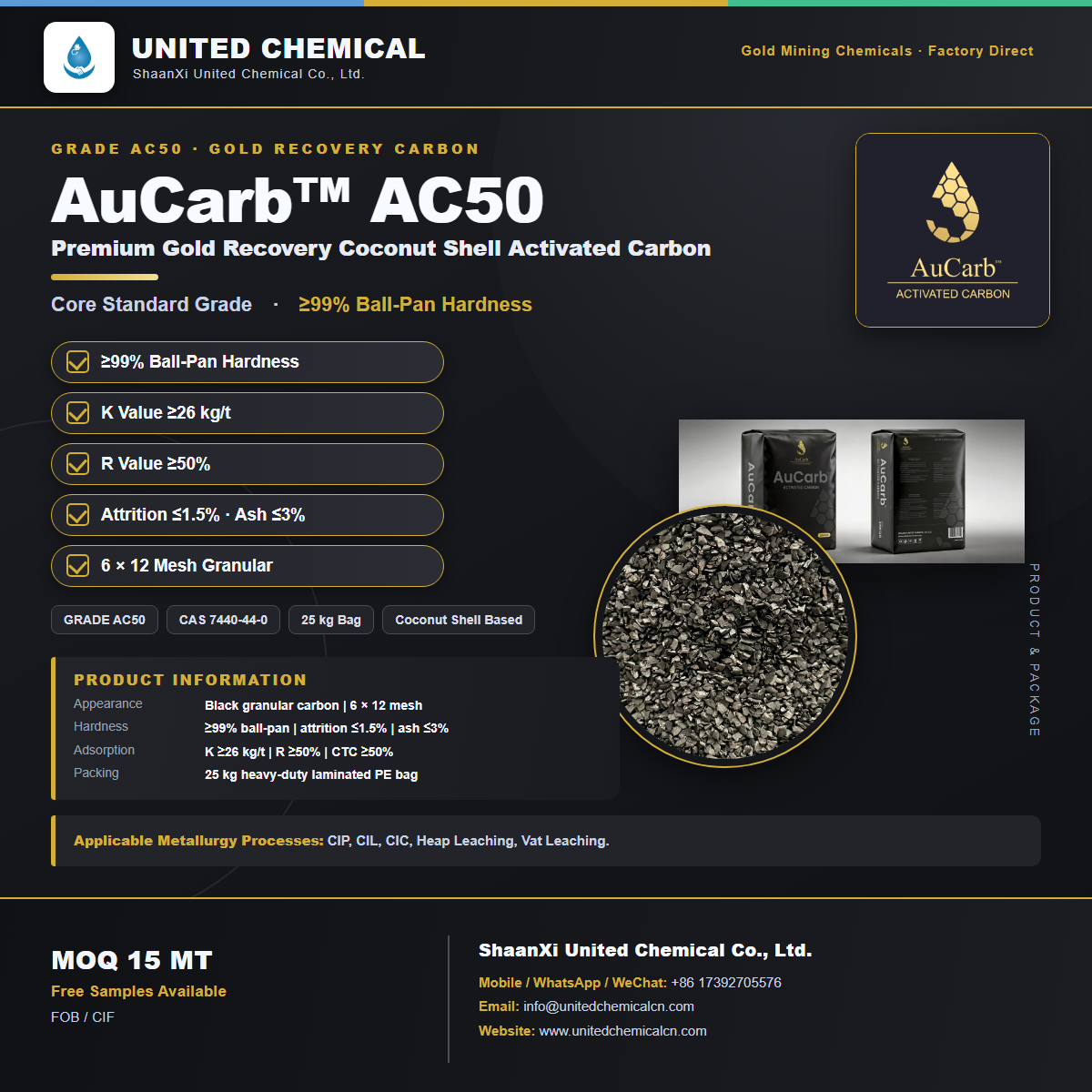
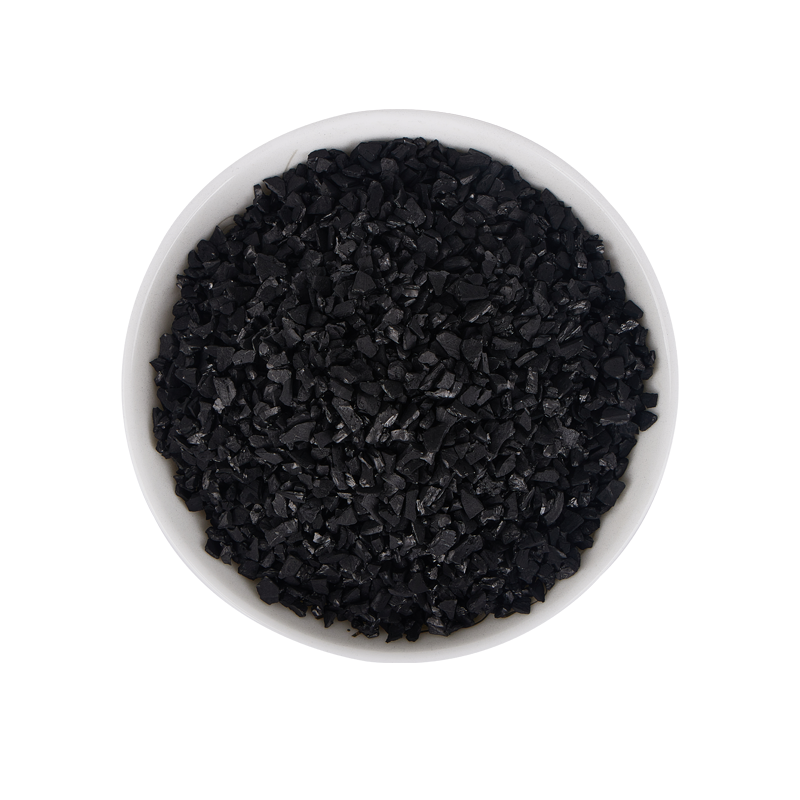
- Re-check the adsorption stage. Confirm AuCarb™ Gold Recovery Coconut Shell Activated Carbon (≥99% Hardness) still delivers the required K/R performance in the new solution chemistry.
- Write a transition protocol. Define what is logged and re-tested when the blend changes between operating areas, and who authorises a set-point change.
- Trace each campaign to its batch COA. Keep TDS and MSDS with the consumption log so any deviation can be tied to a specific delivery and a specific feed.
This sequence is deliberately ore-first. A feed change is a metallurgical event; treating it as a procurement event is why consumption drifts after expansions.
4. Tebụl nchọpụta nsogbu
| Mgbaàmà | O yikarịrị ka ọ kpatara ya | Nyocha mbụ |
|---|---|---|
| Recovery lags after Block 3 starts | Dosing set-point carried over from stockpile ore | New bottle roll curve, pH profile |
| Consumption drifting without a campaign boundary | Blend transitions between operating areas | Blend log, transition protocol |
| Carbon loading lower than design | New solution chemistry affecting adsorption rate | R value retest, stage-by-stage tenor |
| Scaling on screens and emitters | Changed water balance with new feed | Make-up water hardness, carbonate trend |
| Batch deviations hard to diagnose | Multiple specs across areas | Single qualification, COA per lot |
5. Three products, one specification
Dissolution is covered by AuCyan™ Sodium Cyanide NaCN (≥98.3%) at 18 MT MOQ; adsorption by AuCarb™ Gold Recovery Shell AuCarb™ Activated Carbon (≥99% Ike) at 15 MT MOQ, with AC50 attrition ≤1.5% and platelet ≤5.0% for stable screening; and the common-chemical alternative by Ihe Nleta Ọlaedo AuLeach™ (GDA) - Ọ dịghị akpata nsogbu at 28 MT MOQ, operating at pH 10.5–12. All ship factory-direct under FOB or CIF terms with batch COA, TDS and MSDS, packed for AuCarb™ in 25 kg heavy-duty laminated PE bags. Free laboratory test samples are available for AuCarb™ and AuLeach™.
6. Ajuju Ajuju
Q1. What changes at Siguiri Block 3?
It starts at year-end with 1.22 g/t feed, replacing low-grade stockpile material, within a plan of about US$70 million for roughly 100,000 oz/y of additional output.
Q2. What changes at Obuasi?
Blocks eight and ten currently share a single decline; the plan expands to four distinct operating areas by 2029 toward a 400,000 oz/y target.
Q3. What is the nearby open pit expected to contribute?
About 25,000 oz in 2027 and 50,000 oz around 2028.
Q4. When is Cote d'Or evaluated?
The higher-grade Cote d'Or area is evaluated for access in the first half of 2029.
Q5. Why does higher grade not solve the reagent problem?
Because sulphide, arsenic and clay content drive side reactions independently of gold grade. The new feed needs its own consumption baseline.
Q6. What is the first step after a feed change?
A bottle roll or column test curve on the new material, sampled over time rather than read at a single endpoint.
Q7. Why is Obuasi a different problem?
It is an access and sequencing change: multiple areas and a new open-pit feed mean frequent blend transitions rather than one metallurgical step change.
Q8. Should the carbon circuit be re-checked?
Yes. A different leach solution chemistry can change adsorption rate, so the K/R performance of AuCarb™ should be confirmed in the new conditions.
Q9. Kedu Incoterms dị?
Usoro FOB ma ọ bụ CIF dị irè.
Q10. How is AuCarb™ packed?
In 25 kg heavy-duty laminated PE bags, with batch COA, TDS and MSDS per lot.
Q11. Can test samples support the re-validation?
Yes — AuCarb™ and AuLeach™ laboratory samples allow feed-specific testing before an FCL order is placed.
Q12. What is the date of the announcement?
5 November 2026, within the company's brownfield expansion programme.
7. Isi mmalite na njikọ dị n'ime
Nduzi AuCyan™ · Nduzi AuCarb™ · AC50 · AC55 · AC60 · BC1100 · AuLeach™ GDA · Golden Triangle · Nchịkọta ngwaahịa atọ · Ajụjụ gbasara kemịkalụ · Akụkọ ụlọ ọrụ · Kpọtụrụ anyị
Source note: project figures are drawn from the company expansion announcement dated 5 November 2026. Reagent specifications are United Chemical product data.
Kpọtụrụ Anyị · WhatsApp +86 173 9270 5576 · info@unitedchemicalcn.com
- Ọdịnaya enweghị usoro
- Ọdịnaya na-ekpo ọkụ
- Ọdịnaya nyochaa na-ekpo ọkụ
- Sodium Amyl Xanthate (SAX) 90%, kemịkalụ Ngwuputa, Ngwuputa flotation reagent
- Ndị na-ese n'elu mmiri nwere mmetụta gburugburu ebe obibi?
- Kedu otu m ga-esi họrọ flocculant ziri ezi?
- Ụlọ ọrụ na-eweta Lauramine/Dodecanamine 99% Liquid
- Maka ọgwụgwọ mmiri, nhazi ịnweta, cationic polyacrylamide polymer
- Reagents 20 kachasị mkpa na nhazi mineral
- United Chemical, TuXingSun Mining, na Henan Lingbao Gold Mine jikọ aka guzobe nke m na-enweghị Cyanide
- 1Sodium Cyanide akwụghị ụgwọ (CAS: 143-33-9) maka Ngwuputa - Ogo dị elu na ọnụahịa asọmpi.
- 2Sodium Cyanide 98.3% CAS 143-33-9 Ihe eji achọ ọla edo NaCN dị mkpa maka ụlọ ọrụ kemịkalụ nke na-egwupụta ihe
- 3Iwu ọhụrụ nke China gbasara mbupụ sodium Cyanide na ntụzịaka maka ndị na-azụ ahịa mba ụwa
- 4Sodium Cyanide (CAS: 143-33-9) Akwụkwọ njedebe (ụdị Chinese na Bekee)
- 5Cyanide International (Sodium cyanide) Koodu njikwa - ụkpụrụ nnabata nke m ọla edo
- 6Ụlọ ọrụ China Sulfuric acid 98%
- 7Oxalic acid anhydrous 99.6% Ọkwa ụlọ ọrụ
- 1Sodium Cyanide 98.3% CAS 143-33-9 Ihe eji achọ ọla edo NaCN dị mkpa maka ụlọ ọrụ kemịkalụ nke na-egwupụta ihe
- 2Ịdị ọcha dị elu · arụmọrụ kwụsiri ike · mgbake dị elu - cyanide sodium maka ịcha ọla edo nke oge a
- 3United ChemicalNdị otu nyocha na-egosipụta ikike site na nleba anya na-ebute data
- 4AuCyan™ Sodium Cyanide Dị Elu | 98.3% Ịdị ọcha maka Ngwuputa Ọlaedo zuru ụwa ọnụ
- 5Igwe ọkụ eletrik dijitalụ (oge igbu oge 0 ~ 16000ms)
- 6Ike dị elu, nke dị elu nke ọma Shock Tube Detonator
- 7ụlọ ọrụ Electric Detonator


Ndụmọdụ ozi ịntanetị
Tinye okwu: