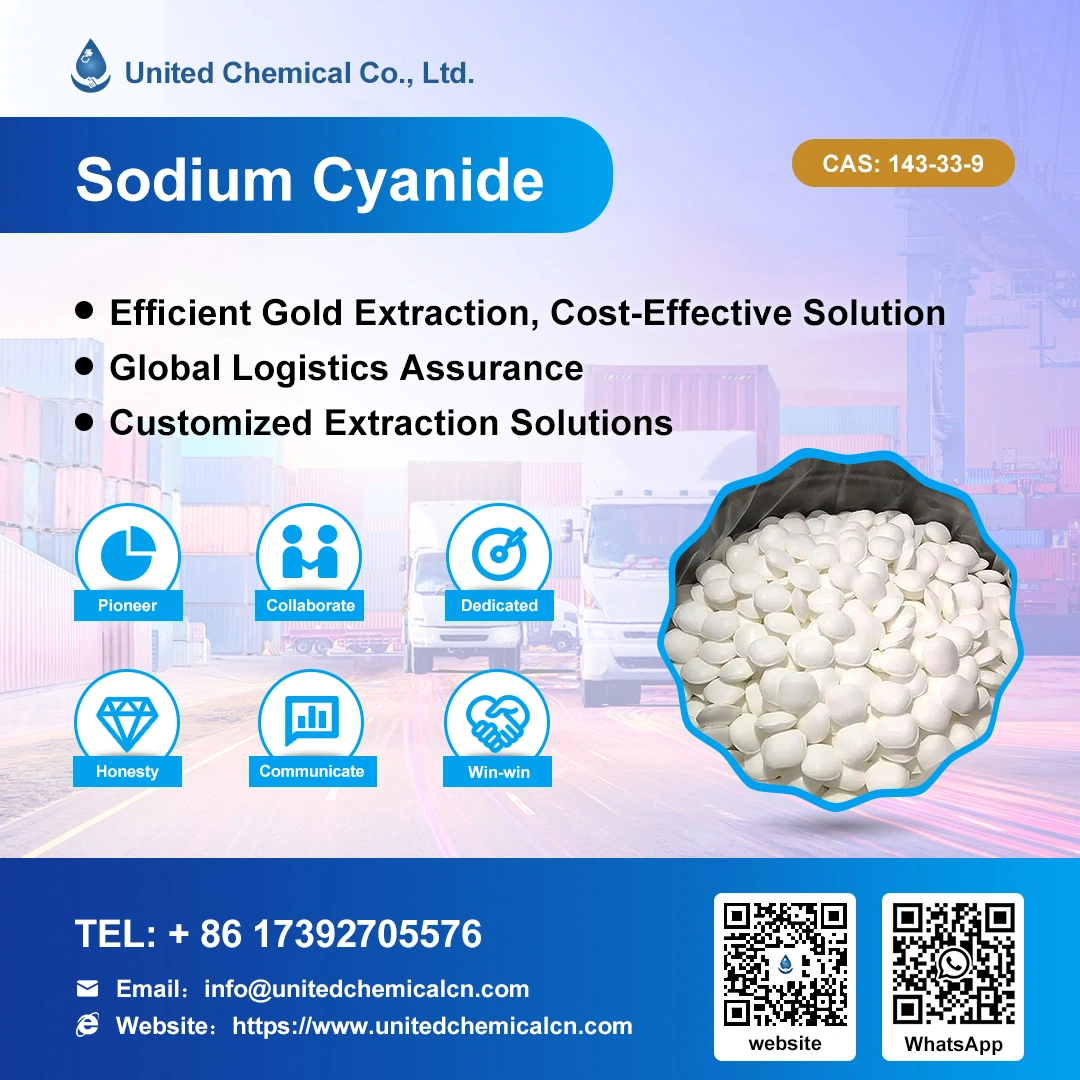

Advanced Gold Extraction Chemicals for Iranian CIL & Heap Leach Plants
Optimizing Recovery Across High-Arsenic Ores, Highland Winters, and Hard Process Water
ShaanXi United Chemical Co., Ltd. supplies guaranteed-purity AuCyan™ Sodium Cyanide NaCN (≥98.3%), attrition-resistant AuCarb™ Gold Recovery Coconut Shell Activated Carbon (≥99% Hardness), and the Non-Hazardous common-chemical AuLeach™ Gold Leaching Agent (GDA) to support industrial gold plants across Takab, Isfahan, Kurdistan, and Khorasan
 .
The Iranian Metallurgical Landscape: Complex Tethyan Ores and Supply Continuity
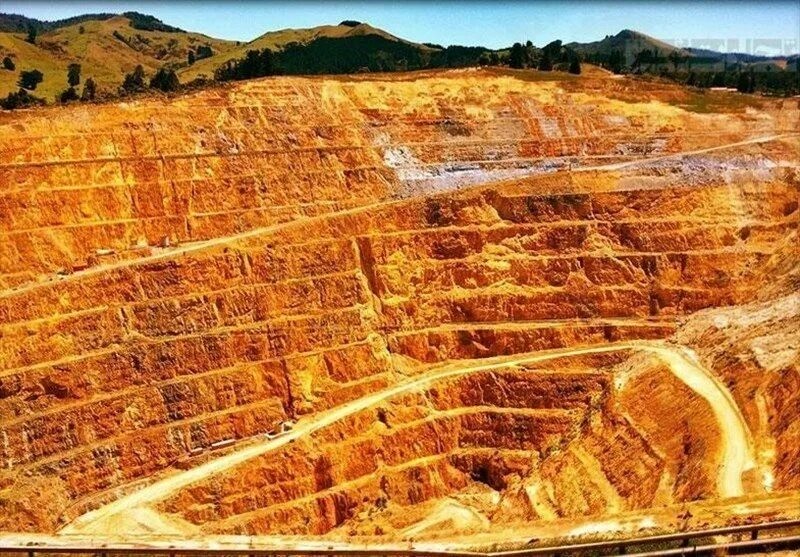
Iran hosts some of West Asia's largest industrial gold reserves along the Sanandaj-Sirjan Zone (SSZ) and the Urumieh-Dokhtar Magmatic Arc, led by major Carbon-in-Leach (CIL) and Heap leaching operations such as Zarshuran, Aq-Darreh, Muteh, and Sari Gunay. Operating profitable hydrometallurgical circuits across these belts requires overcoming three distinct technical and logistical challenges. Mineralogically, northwestern Carlin-type and transitional deposits frequently contain high arsenic (realgar and orpiment), sulfide minerals, and fine-grained disseminated gold that interfere with weak leaching solutions and require fine grinding. Climatically and Hydrologically, high-altitude plants in West Azerbaijan and Kurdistan face freezing winter temperatures that slow dissolution kinetics, while central plateau plants in Isfahan and Kerman rely on recycled, high-hardness groundwater prone to calcium scaling. Logistically, securing consistent maritime container space and timely customs clearance into southern ports demands flexible reagent classifications.
As a specialized manufacturer supplying mining operators across 77+ countries, United Chemical provides Iranian metallurgical plants with a dual-track leaching and adsorption portfolio. Where full Class 6.1 import permits and End-User Certificates (EUC) are established, our high-purity AuCyan™ Sodium Cyanide NaCN (≥98.3%) sustains strong free cyanide activity. Where buyers require a streamlined common-chemical shipping and clearance route without modifying existing tanks, AuLeach™ Gold Leaching Agent (GDA) - Non-Hazardous serves as a direct drop-in alternative. Downstream, our coconut-shell AuCarb™ Activated Carbon (≥99% Hardness) prevents gold-loaded Carbon fines from escaping agitated CIL screens.
All shipments are executed strictly via ocean container freight under FOB (major Chinese loading ports) or CIF Bandar Abbas (Shahid Rajaee Port) terms. By stating our factory Minimum Order Quantities transparently—AuCarb™ 15 MT, AuCyan™ 18 MT, and AuLeach™ 28 MT—and supporting pre-shipment SGS or BV inspection, we help Iranian mining groups lock in predictable reagent quality and landed cost.
1. Conquering Iran's Core Metallurgical & Supply Bottlenecks
High-Arsenic & Sulfide Interference
Carlin-type and transitional ores in the Takab belt (such as Zarshuran) contain arsenic sulfides, pyrite, and base-metal cyanicides that consume reagent and passivate gold surfaces. Consistent leaching requires either ≥98.3% pure NaCN or an interference-tolerant Non-Hazardous GDA formulation validated by bottle-roll testing.
Highland Cold & Hard Process Water
Winter temperatures in northwestern highlands slow leaching kinetics, while arid central plateau operations use high-calcium, saline groundwater. Maintaining free cyanide activity while controlling alkalinity with low-impurity NaOH is essential to prevent pipeline and emitter scaling.
Maritime Clearance & Vessel Booking
Importing Class 6.1 dangerous goods into Bandar Abbas requires strict EUC documentation and specialized DG vessel slots, which can extend lead times. Utilizing a Non-Hazardous common-chemical leaching reagent removes DG shipping bottlenecks and stabilizes plant inventory.
2. The Golden Triangle: United Chemical's Benchmark Solutions
1. AuLeach™ Gold Leaching Agent (GDA) - Non-Hazardous
Non-Hazardous (Common Chemical · MOQ 28 MT)AuLeach™ Gold Leaching Agent (GDA) – Common-Chemical Cyanide Alternative
Positioning: A Non-Hazardous leaching reagent balancing dependable recovery yields with simplified maritime logistics and HSE compliance.
Core Selling Points: Common Chemical Export (Non-Hazardous) | Zero Equipment Modification | Strong Tolerance on Complex Ores
AuLeach™ Gold Leaching Agent (GDA) - Non-Hazardous is a common-chemical leaching reagent engineered to drop directly into existing CIP, CIL, CIC, Heap leaching, and Vat leaching circuits without a process redesign. Where dangerous-goods vessel space or hazardous import permits create supply delays, AuLeach™ provides a practical, plant-proven alternative.
For Iranian gold plants and mineral processing contractors facing long waiting periods for Class 6.1 dangerous-goods shipping slots or hazardous import licenses, AuLeach™ is declared and shipped as a Non-Hazardous common chemical. It clears Shahid Rajaee Port (Bandar Abbas) under standard commercial chemical procedures and moves inland by road to West Azerbaijan, Kurdistan, Isfahan, or Khorasan without specialized DG escorts. Technically, it is applicable across oxide ores, primary ores, high-sulfur and high-arsenic gold ores, and cyanide tailings—making it well suited for evaluating complex Tethyan feeds when operated above 10 °C ambient (or in heated winter leach circuits) at pH 10.5–12.
Seamless Direct Drop-in Replacement: Transitioning to AuLeach™ requires zero modification to existing cyanidation equipment (such as Heap Leaching pads or CIL tanks). It uses the same lime/caustic alkalinity control and activated-carbon adsorption stage.
Non-Hazardous Common-Chemical Clearance: Shipped as general chemical cargo under FOB or CIF terms, reducing ocean freight surcharges, port storage fees, and hazardous-permit lead times.
Broad Ore Applicability: Applicable to gold and silver oxide ore, primary ore, high-sulfur and high-arsenic gold ore, gold concentrate, sulfuric acid slag, anode mud, and cyanide tailings (validate dosage via site bottle-roll testing).
Closed-Loop Solution Recycling: Both pregnant and lean solutions can be reused in production, with AuCarb™ activated carbon recommended for pregnant solution recovery.
📊 AuLeach™ Technical Information & Specifications
| Parameter | Units | Guaranteed Specification / Operating Guide |
|---|---|---|
| Appearance & Density | g/cm³ | White to grey-white solid powder · 1.20 – 1.35 |
| Operational pH Range | pH | 10.5 – 12 (return pulp to pH 11 ± 1 after ore feed) |
| Leaching Agent Concentration / Dosage | % / ‰ | 30% active · Indicative 0.5 – 1.0 ‰ (500 – 1000 g/t ore) |
| Standard Packaging & MOQ | Kgs / MT | Net 25 kg composite bag with inner film · MOQ 28 MT |
Broad Application Spectrum: Highly effective across primary ores, oxide ores, semi-oxide ores, sulfide ores, high-arsenic gold ores, gold concentrates, and cyanide tailings in both CIP/CIL and Pool/Vat leaching circuits.
Zero Equipment CAPEX: Fully compatible with existing Heap leaching and CIL infrastructure. Requires no mechanical retrofitting.
Unrestricted Logistics: Shipped and trucked as common chemical cargo (confirm against batch MSDS and local authority). More details at AuLeach™ GDA Specification Page.
Applicable Metallurgy Processes: Heap Leaching, Vat Leaching, CIL, CIP, CIC.
2. AuCyan™ Sodium Cyanide NaCN (≥98.3%)
Class 6.1 Dangerous Goods (UN 1689 · MOQ 18 MT)AuCyan™ Premium Sodium Cyanide ≥98.3% – The Industry Standard for Cyanidation
Positioning: The performance and purity benchmark for conventional cyanidation in permitted medium-to-large scale gold mining operations.
Core Selling Points: ≥98.3% High Purity | Low Reagent Single-Consumption | UN-Certified Hazmat Packaging
AuCyan™ Sodium Cyanide NaCN (≥98.3%) is a high-purity solid briquette leaching reagent manufactured to surpass GB/T 19306-2003 superior-grade benchmarks for CIP, CIL, CIC, Heap leaching, and Vat leaching circuits. Valid import permits, End-User Certificates (EUC), and compliance due diligence are mandatory prerequisites prior to production scheduling.
In Iran's major industrial CIL plants (such as those in the Takab and Muteh districts) and epithermal heap leach operations, feed ores often contain base-metal cyanicides while process water exhibits high calcium and magnesium hardness. AuCyan™ delivers ≥98.3% NaCN purity to maintain strong free cyanide activity in the leach liquor, while its tightly controlled NaOH content (0.13% typical) and ultra-low carbonate/insolubles (0.02% typical) help control alkalinity to inhibit scaling in pumps, heat exchangers, and drip emitters. Hermetically lined UN-certified 50 kg steel drums or 1,000 kg wooden boxes protect the briquettes against Persian Gulf humidity at Bandar Abbas and extreme continental temperature swings inland.
≥98.3% High-Purity Standard: High active NaCN concentration sustains free cyanide ions (CN⁻) during cyanidation, supporting reliable gold and silver dissolution kinetics.
Cost-Effective Consumption & Scale Control: Ultra-low impurity levels (0.18% Na₂CO₃, 0.02% insolubles) minimize side reactions and prevent nozzle or pipeline clogging in hard-water circuits.
Strict Hazmat Export Compliance: Supplied in UN-certified packaging with batch COA and optional SGS/BV inspection. Explore full details on the Sodium Cyanide Specification Page.
📊 Technical Specification: The 98.3% Purity Standard
| Testing Items | Standard (GB/T 19306-2003) | AuCyan™ (Typical) | Operational Impact |
|---|---|---|---|
| Sodium Cyanide (NaCN) | ≥ 98.0% | 98.3% | Maintains free cyanide activity and dissolution kinetics. |
| Sodium Hydroxide (NaOH) | ≤ 0.5% | 0.13% | Controls alkalinity to inhibit scaling and premature hydrolysis. |
| Sodium Carbonate (Na₂CO₃) | ≤ 0.5% | 0.18% | Minimized carbonate scaling in hard desert groundwater. |
| Moisture (H₂O) | ≤ 0.9% | 0.3% | Enhanced solid stability during sea transit and inland storage. |
| Insoluble Substances | ≤ 0.05% | 0.02% | Anti-clogging formula; protects dosing pumps and nozzles. |
Applicable Metallurgy Processes: Heap Leaching, Vat Leaching, Carbon-in-Leach (CIL), Carbon-in-Pulp (CIP), Carbon-in-Column (CIC).
3. AuCarb™ Gold Recovery Coconut Shell Activated Carbon (≥99% Hardness)
General Cargo (Non-Hazardous · MOQ 15 MT)AuCarb™ Gold Recovery Coconut Shell Activated Carbon – Precision Adsorption, Minimal Attrition Loss
Positioning: Custom-engineered high-strength, high-adsorption coconut carbon tailored for CIP / CIL / CIC gold recovery circuits.
Core Selling Points: Ball-Pan Hardness (≥99%) | Rapid Gold-Complex Adsorption Kinetics (K ≥26 kg/t, R ≥50%) | High Thermal Reactivation Yield
AuCarb™ is a coconut-shell Activated Carbon tested to American ASTM (including ASTM D3802 ball-pan hardness) and A.A.R.L metallurgical testing methods, engineered to survive intense mechanical agitation in CIP and CIL tanks. Refined from high-density Coconut Shells through steam activation and de-dedusting polishing, it provides a balanced micro- and meso-pore structure for rapid capture of [Au(CN)₂]⁻ and gold-leach complexes.
Processing finely ground Carlin-type ores in Takab or abrasive quartz-sulfide slurries in Muteh subjects activated carbon to severe impeller shear and screen friction. Soft carbon breaks into fine dust that passes through inter-stage screens, carrying adsorbed gold straight into the tailings dam. AuCarb™ guarantees ball-pan hardness ≥99%, attrition ≤1.5% (AC50), and platelet content ≤5%, keeping your loaded carbon intact through multiple elution and thermal regeneration cycles.
Ultra-High Hardness & Attrition Resistance: Special hardening and polishing treatments achieve ≥99% ball-pan hardness (AC50/AC55/AC60), minimizing costly gold-bearing carbon fines loss.
High-Capacity Pore Architecture: K-value ≥26 kg/t (up to ≥30 kg/t on AC60) and R-value ≥50% (up to ≥60% on AC60) ensure rapid adsorption equilibrium even in low-grade tailing stages.
Full Grade Lineup: Choose AuCarb™ BC1100 for Heap Leach/CIC, AuCarb™ AC50 or AuCarb™ AC55 for standard CIL/CIP, and AuCarb™ AC60 for large-scale high-loading CIL plants.
📊 AuCarb™ Series: Core Parameters Intuitive Comparison Table
| Core Testing Parameter | AuCarb™ BC1100 | AuCarb™ AC50 | AuCarb™ AC55 | AuCarb™ AC60 |
|---|---|---|---|---|
| Market Benchmarking Positioning | Conventional Heap Leach | Comparable: Jacobi G208AS | Comparable: Jacobi G209AS | Advanced: Jacobi G210AS |
| Apparent Density | 0.40 - 0.50 g/ml | 0.48 - 0.55 g/ml | 0.45 - 0.55 g/ml | 0.45 - 0.55 g/ml |
| Ball-pan Hardness | ≥ 98.5% | ≥ 99% | ≥ 99% | ≥ 99% |
| Platelet Content | ≤ 5% | ≤ 5% | ≤ 5% | ≤ 5% |
| Attrition | ≤ 2% | ≤ 1.5% | ≤ 2% | ≤ 2% |
| Total Ash Content | ≤ 5% | ≤ 3% | ≤ 3% | ≤ 3% |
| Moisture | ≤ 10% | ≤ 5% | ≤ 5% | ≤ 5% |
| Adsorption Capacity (K Value) | / | ≥ 26 Kg/t | ≥ 28 Kg/t | ≥ 30 Kg/t |
| Adsorption Rate (R Value) | / | ≥ 50% | ≥ 55% | ≥ 60% |
| Iodine Number (Brochure Ref.) | ≥ 1100 mg/g | / | / | / |
| Butane Activity | / | ≥ 19.5% | ≥ 21% | ≥ 23% |
| CTC Activity | / | ≥ 50% | ≥ 55% | / |
Packing & Shipping: Standard 6x12 mesh or 8x16 mesh specifications; packed in 25 kg heavy-duty laminated PE bags or 500 kg bulk bags. Containerized maritime shipping under FOB or CIF terms (MOQ 15 MT).
Execution Standards: Tested to American ASTM methods and A.A.R.L metallurgical testing standards. Third-party SGS/BV inspection and free laboratory test samples available upon request.
Applicable Metallurgy Processes: Carbon-in-Pulp (CIP), Carbon-in-Leach (CIL), Carbon-in-Column (CIC), Heap Leaching, Vat Leaching.
3. Choosing by Process Stage & Plant-Scale Indicators
| Decision Factor | AuCyan™ | AuCarb™ | AuLeach™ |
|---|---|---|---|
| Process Stage | Leaching (Conventional) | Adsorption (CIP / CIL / CIC) | Leaching (Alternative) |
| Factory MOQ | 18 MT | 15 MT | 28 MT |
| Shipping Classification | Class 6.1, UN 1689 | General Cargo | Non-Hazardous Common Chemical |
| Free Lab Sample | Not Provided | Available | Available |
| Import Licence / EUC | Mandatory before scheduling | Standard commercial import | Confirm common-chemical rules locally |
| Typical Iranian Trigger | Permitted industrial CIL/Heap plant with EUC in place | High-shear fine-grind CIL tanks or CIC columns | Fast Bandar Abbas clearance or complex arsenic/sulfide feed |
Quick links: Golden Triangle Overview · Cyanide & Carbon Synergy · AC50 · AC55 · AC60 · BC1100.
Alkalinity Control in Hard Water
In high-calcium groundwater common on the Iranian plateau, maintain free cyanide activity and control alkalinity with NaOH to inhibit scaling.
Why it matters: Low carbonate (0.18%) and insolubles (0.02%) keep heap leach drip emitters and CIL slurry lines open.Hardness ≥99%, Attrition ≤1.5%
Fine-grind Carlin-type slurries require vigorous agitation. High ball-pan hardness resists particle breakdown across CIL stages.
Why it matters: Every tonne of carbon fines lost through inter-stage screens carries adsorbed gold directly into the tailings.High-Arsenic & Cold-Weather Protocol
Applicable to high-arsenic and sulfide gold ores at pH 10.5–12. Performs best when ambient or pulp temperature is maintained above 10 °C.
Why it matters: In northwestern highland winters, plan longer retention or pulp heating and validate recovery via site bottle-roll tests.Validate Performance on Your Iranian Ore Feed Today
Are arsenic-bearing sulfides or carbon attrition reducing your plant's gold output? Share your ore mineralogy, target throughput, and Bandar Abbas delivery schedule with our technical team for a tailored COA, MSDS, and quotation package.
📌 Complimentary Laboratory Sample Policy:
United Chemical provides free laboratory samples strictly for AuCarb™ Gold Recovery Coconut Shell Activated Carbon and AuLeach™ Gold Leaching Agent (GDA) - Non-Hazardous for bottle-roll and adsorption testing on your own ore.
* Commercial bulk orders operate at factory Minimum Order Quantities: AuCyan™ 18 MT (import licence & EUC required) | AuCarb™ 15 MT | AuLeach™ 28 MT under FOB China or CIF Bandar Abbas maritime terms.
Frequently Asked Questions: Iran Gold Metallurgy & Maritime Supply
Direct technical and logistical answers for metallurgical engineers and procurement directors operating gold processing plants in Iran.
1. Which reagents suit high-arsenic Carlin-type gold ores in northwestern Iran (e.g., Takab / Zarshuran)?
Both AuCyan™ (≥98.3% NaCN) and AuLeach™ GDA - Non-Hazardous can be evaluated depending on your oxidation and permitting setup. High-arsenic ores containing realgar and orpiment consume active leaching ions; AuLeach™ is specifically applicable to high-sulfur and high-arsenic gold ores and concentrates at pH 10.5–12, and should be benchmarked via side-by-side bottle-roll tests on your plant feed.
2. How does AuLeach™ simplify customs clearance at Shahid Rajaee Port (Bandar Abbas)?
AuLeach™ is declared and shipped as a Non-Hazardous common chemical rather than Class 6.1 dangerous goods. This allows easier vessel booking from Chinese seaports to Bandar Abbas and standard commercial chemical handling during port discharge and inland road trucking to mining provinces.
3. What are the exact factory Minimum Order Quantities (MOQ) for Iran shipments?
Our commercial MOQs are fixed by product: AuCarb™ Activated Carbon 15 MT, AuCyan™ Sodium Cyanide 18 MT, and AuLeach™ GDA 28 MT. Container loading figures (such as 26 MT per 20' FCL for GDA) represent physical stowage capacity only and are separate from our commercial MOQ.
4. How should high-hardness, saline groundwater in central plateau plants (e.g., Isfahan / Muteh) be managed?
Maintain free cyanide activity and control alkalinity with carefully dosed NaOH to inhibit scaling. AuCyan™ features controlled NaOH (0.13% typical), low carbonate (0.18% typical), and ultra-low insolubles (0.02% typical), minimizing calcium carbonate scale precipitation in CIL pipes and heap leach drip lines.
5. How do sub-10 °C winter temperatures in West Azerbaijan and Kurdistan affect leaching?
Leaching kinetics perform best when ambient and pulp temperatures remain above 10 °C. During cold highland winters in northwestern Iran, plant operators should either heat the leach solution in agitated CIL circuits or extend leach retention cycles validated by cold-temperature site trials.
6. Why is ≥99% ball-pan hardness critical for activated carbon in Iranian CIL circuits?
Fine-grind slurries and vigorous impeller agitation grind weak carbon into fine dust that escapes through inter-stage screens. AuCarb™ provides ≥99% ball-pan hardness (ASTM) and ≤1.5% attrition (A.A.R.L on AC50), keeping gold-loaded carbon inside the recovery loop and out of the tailings.
7. How do I choose between AuCarb™ BC1100, AC50, AC55, and AC60 for my plant?
Match the grade to your circuit intensity and gold loading target. Use BC1100 for conventional Heap Leach / CIC columns; AC50 (K ≥26 kg/t, R ≥50%) or AC55 (K ≥28 kg/t, R ≥55%) for standard CIL/CIP tanks; and AC60 (K ≥30 kg/t, R ≥60%) for high-throughput, high-grade CIL circuits.
8. What prerequisites are required before ordering AuCyan™ Sodium Cyanide?
Because AuCyan™ is a Class 6.1 dangerous good (UN 1689), the buyer must provide valid hazardous-chemical import permits, an End-User Certificate (EUC), and pass compliance due diligence prior to production scheduling. This permitting timeline must be factored into your procurement schedule.
9. Can we request free laboratory samples before placing a container order?
Free laboratory samples are available for AuCarb™ Activated Carbon and AuLeach™ GDA - Non-Hazardous for qualified mine and laboratory evaluation. Samples of AuCyan™ Sodium Cyanide are never provided due to strict international dangerous-goods regulations.
10. What shipping terms and Chinese loading ports do you use for Iran deliveries?
We ship exclusively via ocean container freight under FOB (Shanghai, QinGDAo, Ningbo-Zhoushan, Tianjin, Guangzhou, etc.) or CIF Bandar Abbas terms. We do not offer DDP, customs brokerage, or door-to-door inland delivery; inland road transport from Bandar Abbas to the mine is handled by the buyer's local agent.
11. How do plant laboratories titrate and control AuLeach™ concentration in the circuit?
AuLeach™ concentration is monitored using standard silver nitrate titration with a rhodanine indicator, identical to conventional plant lab routines. Maintain pulp alkalinity at pH 10.5–12 (target pH 11 ± 1 after ore addition) using hydrated lime or caustic soda, with an indicative dosage of 500–1000 g/t ore.
12. What quality assurance documents, lead times, and payment terms apply?
Every shipment includes a batch Certificate of Analysis (COA), Packing List, Bill of Lading, and MSDS, with optional SGS or BV third-party pre-shipment inspection. Indicative lead time is 4–6 weeks depending on order volume and vessel schedules; payment terms (L/C, D/P, or T/T at buyer's cost) are confirmed at quotation.
© 2026 ShaanXi United Chemical Co., Ltd. (United Chemical). All rights reserved. | Terms of Service | Contact Us
- Random Content
- Hot content
- Hot review content
- Sodium Isobutyl Xanthate SIBX 90%
- High-precision Delay Element( 25ms- 10000ms)
- Cyanuric acid
- Benzohydroxamic Acid
- Glutaraldehyde 50% Industrial Grade
- Sodium Gluconate for Water Treatment
- Mineral processing foaming agent 98% Polypropylene glycol
- 1Discounted Sodium Cyanide (CAS: 143-33-9) for Mining - High Quality & Competitive Pricing
- 2Sodium Cyanide 98.3% CAS 143-33-9 NaCN gold dressing agent Essential for Mining Chemical Industries
- 3China's New Regulations on Sodium Cyanide Exports and Guidance for International Buyers
- 4Sodium Cyanide (CAS: 143-33-9) End user certificate (Chinese and English version)
- 5International Cyanide(Sodium cyanide) Management Code - Gold Mine Acceptance Standards
- 6China factory Sulfuric Acid 98%
- 7Anhydrous Oxalic acid 99.6% Industrial Grade
- 1Sodium Cyanide 98.3% CAS 143-33-9 NaCN gold dressing agent Essential for Mining Chemical Industries
- 2High Purity · Stable Performance · Higher Recovery — sodium cyanide for modern gold leaching
- 3United Chemical's Research Team Demonstrates Authority Through Data-Driven Insights
- 4AuCyan™ High-Performance Sodium Cyanide | 98.3% Purity for Global Gold Mining
- 5Digital Electronic Detonator(Delay time 0~ 16000ms)
- 6High-strength, High-precision Shock Tube Detonator
- 7industry Electric Detonator





Online message consultation
Add comment: