

UNITED CHEMICAL · PRODUCT TECHNOLOGY · 27 NOVEMBER 2026
Purity is the starting point, not the answer
Two briquettes with the same assay can differ by double digits in consumed kilograms per tonne.
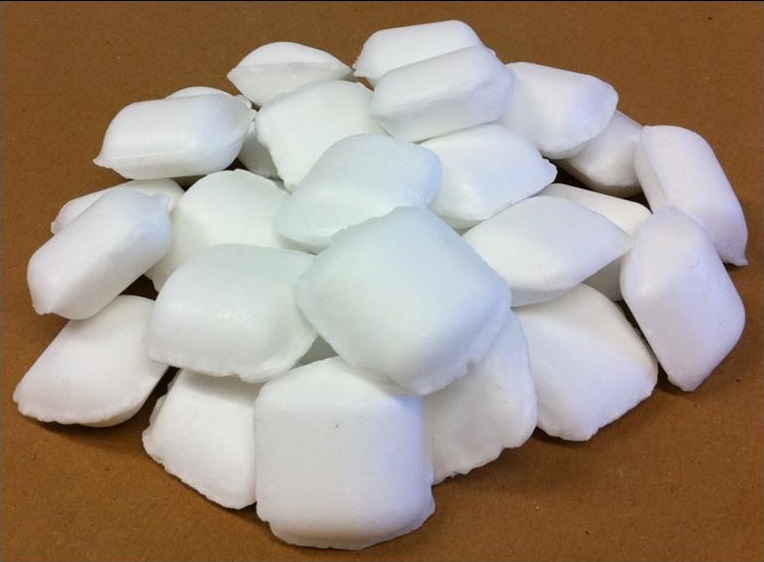
A gold plant buys Sodium Cyanide on an assay. It loses money on dissolution. The number that decides how many kilograms disappear per tonne of ore is how fast the briquette releases cyanide into solution and how steadily the circuit holds a free-cyanide setpoint. A high-purity product that dissolves unevenly creates dosing lag, over-addition and WAD-cyanide excursions. This note sets out the working controls for AuCyan™ Sodium Cyanide NaCN (≥98.3%) and gives a plant-ready method for measuring them.
1. What the Elsner equation does and does not tell you
Gold dissolution follows the Elsner equation: 4 Au + 8 CN⁻ + O₂ + 2 H₂O → 4 [Au(CN)₂]⁻ + 4 OH⁻. Two moles of cyanide per mole of gold, roughly 0.5 g NaCN per gram of gold. A circuit treating 3,000 t/day at 2 g/t and recovering 95% consumes under 3 kg/day in the ideal reaction.
Real plants consume hundreds of kilograms a day. Everything above the stoichiometric minimum is base-metal demand, hydrolysis, degradation or physical loss — and three of those four are controllable. That is where a dissolution specification earns its keep.
2. The consumption ledger
| Loss bucket | Mechanism | Control |
|---|---|---|
| Gold dissolution | Stoichiometric, ~0.5 g NaCN/g Au | Useful consumption |
| Base metals | Copper and zinc form cyano-complexes | Ore blending, higher setpoint |
| Hydrolysis | CN⁻ + H₂O ↔ HCN + OH⁻ | Lime, pH interlock |
| Incomplete release | Unreacted briquette core in tails | Dissolution profile |
The Golden Triangle — three products, one supplier
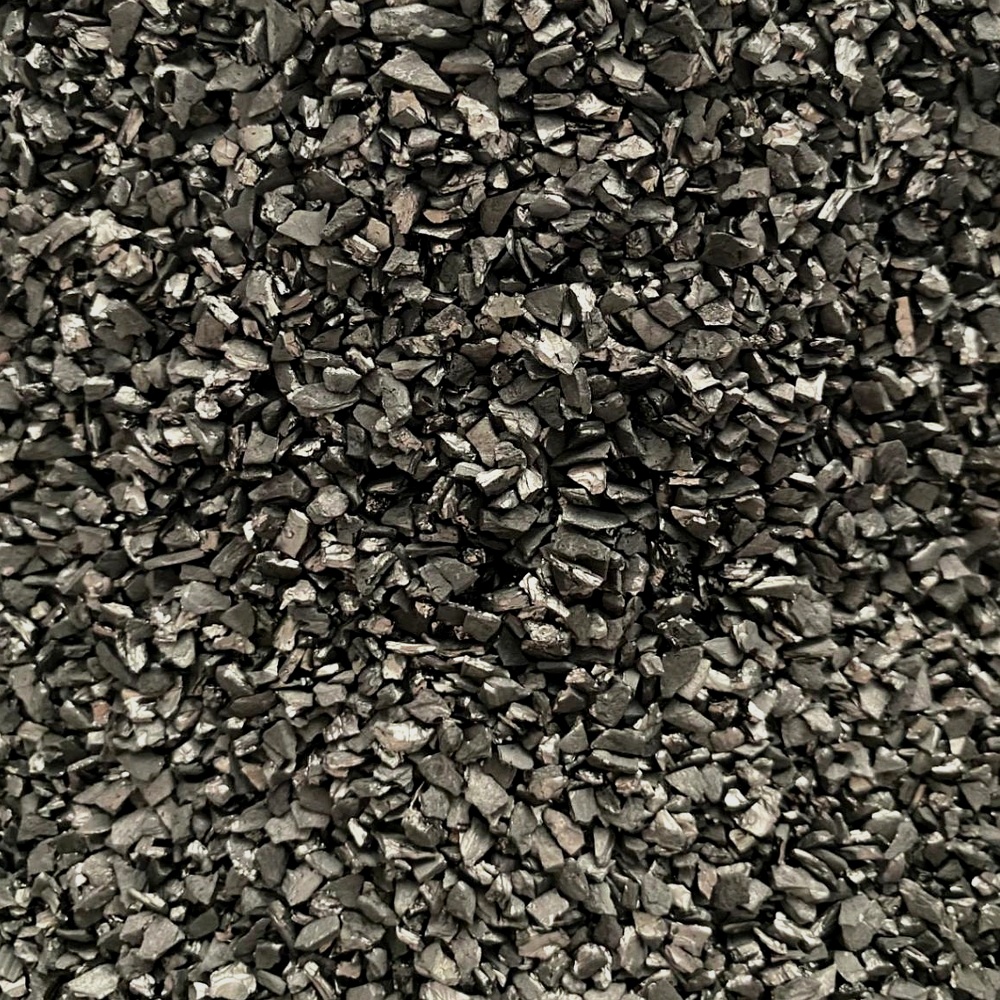
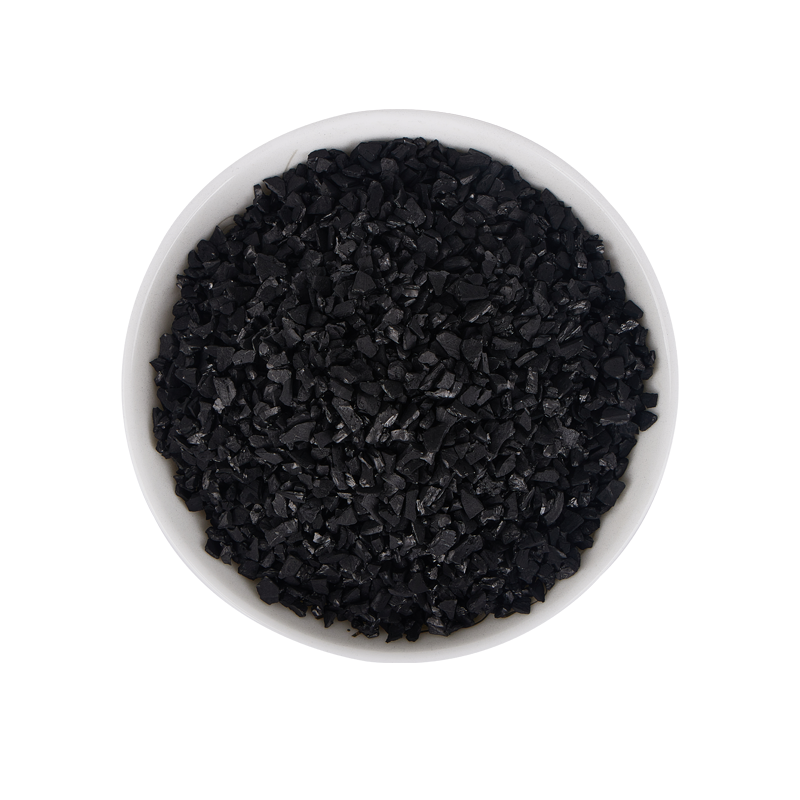
AuCyan™ Sodium Cyanide NaCN (≥98.3%) · AuCarb™ Gold Recovery Coconut Shell Activated Carbon (≥99% Hardness) · AuLeach™ Gold Leaching Agent (GDA) – Non-Hazardous
3. The dissolution test you should be running
Put a known mass of briquette in a stirred vessel at circuit pH and temperature. Sample the solution at 1, 3, 5, 10 and 20 minutes and plot cumulative cyanide release. The curve should be reproducible lot to lot. A product that reaches 90% release in five minutes in one drum and fifteen in the next will make a liar of every dosing calculation. Specify three clauses, not one: minimum assay ≥98.3%, time to 90% release, and maximum insoluble residue. Ask for the batch COA, TDS and MSDS to confirm all three.
4. Worked check: the cost of a one-tank lag
Take 3,000 t/day, target free cyanide 0.25 g/L, solution-to-solids 1.2:1, measured ore demand 0.30 kg/t. Circuit inventory is 3,000 × 1.2 × 0.25 = 900 kg; daily ore demand is 900 kg. If dissolution lags one tank residence time, operators typically add 8–12% protection. That is 72–108 kg/day, or 26–39 t/year of reagent that never dissolves gold.
In-circuit inventory: 900 kg
Lag penalty at 10%: 90 kg/day ≈ 33 t/year
5. WAD cyanide is the report card
Weak-acid-dissociable cyanide in tailings tells you whether the circuit is over-dosing. A rising WAD number with flat recovery means reagent is leaving untreated. The response is not to cut the setpoint blindly — it is to check dissolution, re-run the bottle roll on the current ore domain and verify pH. Only then adjust the dose. This sequence prevents the classic error of cutting reagent and losing recovery together.
6. Troubleshooting
| Symptom | Cause | Action |
|---|---|---|
| Free CN drifting low | Dissolution lag or demand spike | Verify dissolution, re-run bottle roll |
| WAD cyanide rising | Over-dosing to protect setpoint | Tighten curve, check pH |
| White precipitate | Base-metal cyano-complexes | Ore blend, alkaline wash |
| Pump cavitation | Undissolved fragments | Extend make-up time |
5b. Make-up water and temperature
Two site variables change the dissolution curve more than any certificate: make-up water and temperature. Hard water raises lime demand and can aggravate scale on pipework and screen surfaces; chloride and sulphate accumulate through process-water recycle and affect both leaching and Carbon loading. Temperature shifts reaction kinetics, so a briquette that dissolves acceptably in a warm summer circuit can lag when winter make-up water drops the circuit temperature by several degrees. Establish a baseline for pH, alkalinity, hardness, chloride and sulphate before the campaign, then sample weekly. A dissolution test run at the plant's actual temperature and with its actual water is worth more than a laboratory result obtained under ideal conditions. If the curve changes with the seasons, the dosing schedule must change with it, not by guesswork but by re-measuring the release profile.
7. FAQ
Q1 — Why specify ≥98.3% and not a higher number?
Because dissolution and insolubles decide consumed kilograms more than the last fraction of assay.
Q2 — What ships with a batch?
A batch COA, TDS and MSDS covering assay and dissolution behaviour.
Q3 — Which terms apply?
FOB and CIF only, from 1×20' FCL ≈ 18 MT.
Q4 — Is it a controlled good?
Yes. UN1689, DG Class 6.1; import licence and End-Use Certificate before shipment.
Q5 — Can the carbon come from the same supplier?
Yes — AuCarb™ with documented hardness and attrition.
Q6 — What if cyanide use is constrained?
AuLeach™ Gold Leaching Agent (GDA) – Non-Hazardous is the alternative route, selected by bottle-roll comparison.
Ask for the dissolution data
Send ore grade, setpoint and throughput. We return a dissolution-matched dosage proposal with COA, TDS and MSDS.
Contact Us · Golden Triangle overview · Sodium cyanide reference · Chemical FAQs · Industry News
WhatsApp +86 173 9270 5576 · info@unitedchemicalcn.com
- Random Content
- Hot content
- Hot review content
- Sodium Ethyl Xanthate 90% SEX
- Company product introduction
- Oxalic acid for mining 99.6%
- 99.5% min Ammonium Chloride For Industrial Use
- Calcium Peroxide 60% Assay Yellowish Tablet
- 1Discounted Sodium Cyanide (CAS: 143-33-9) for Mining - High Quality & Competitive Pricing
- 2Sodium Cyanide 98.3% CAS 143-33-9 NaCN gold dressing agent Essential for Mining Chemical Industries
- 3China's New Regulations on Sodium Cyanide Exports and Guidance for International Buyers
- 4Sodium Cyanide (CAS: 143-33-9) End user certificate (Chinese and English version)
- 5International Cyanide(Sodium cyanide) Management Code - Gold Mine Acceptance Standards
- 6China factory Sulfuric Acid 98%
- 7Anhydrous Oxalic acid 99.6% Industrial Grade
- 1Sodium Cyanide 98.3% CAS 143-33-9 NaCN gold dressing agent Essential for Mining Chemical Industries
- 2High Purity · Stable Performance · Higher Recovery — sodium cyanide for modern gold leaching
- 3United Chemical's Research Team Demonstrates Authority Through Data-Driven Insights
- 4AuCyan™ High-Performance Sodium Cyanide | 98.3% Purity for Global Gold Mining
- 5Digital Electronic Detonator(Delay time 0~ 16000ms)
- 6High-strength, High-precision Shock Tube Detonator
- 7industry Electric Detonator



Online message consultation
Add comment: