
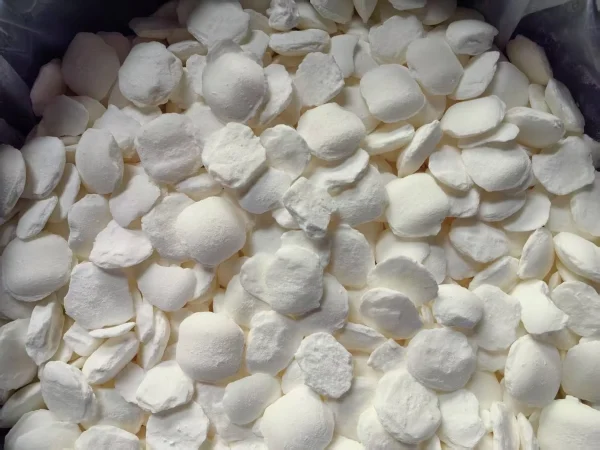
Sodium cyanide (NaCN) is a chemical compound with a molecular weight of 49.007 g/mol, appearing as a white crystalline solid. It is highly toxic and demands extremely careful handling. Despite its toxicity, sodium cyanide plays several significant roles in the textile industry. This article will explore these functions in detail.
What functions does Sodium Cyanide have in textile printing and dyeing?
Mordant in Dyeing Processes
In textile dyeing, a mordant is a substance used to help dyes adhere to the fabric. Sodium cyanide can act as a mordant in certain dyeing processes. It forms complexes with metal ions present in some dyes and the textile fibers. For example, in the case of natural dyes that contain metal - containing chromophores (the part of the molecule responsible for color), Sodium cyanide can enhance the binding between the dye and the fiber. The cyanide ion (CN⁻) has a strong affinity for metal ions. It can form coordination complexes, which in turn bridge the gap between the dye and the fabric, resulting in more colorfast and durable dyeing.
Synthesis of Textile Fibers
Almost all synthetic fibers used in the textile industry rely on sodium cyanide during their production process. For instance, in the synthesis of nylon, one of the most common synthetic fibers, sodium cyanide is used in the manufacturing of adiponitrile, which is a key intermediate. The reaction pathway involves the use of sodium cyanide to introduce nitrile groups. In the case of polyester fibers, although the process is more complex and often involves different chemical reactions compared to nylon, sodium cyanide can still be involved in the synthesis of some of the starting materials or in certain catalytic processes. These synthetic fibers are widely used in the textile industry due to their desirable properties such as strength, durability, and wrinkle - resistance, and sodium cyanide plays an essential role in their production.
Dye Production
Sodium cyanide is used in the production of various dyes used in textile printing and dyeing. It serves as a raw material in the synthesis of certain types of dyes, especially those with complex chemical structures. For example, in the production of some reactive dyes, which are widely used for dyeing cellulosic fibers like cotton, sodium cyanide may be involved in the multi - step synthesis process. Reactive dyes form covalent bonds with the fiber molecules during the dyeing process, providing excellent colorfastness. The cyanide - containing compounds can be used to construct the reactive groups within the dye molecule that are responsible for this covalent bond formation.
Given its toxicity, what safety and environmental considerations are there regarding the use of sodium cyanide in the textile industry?
Inhalation, skin contact, or ingestion of even small amounts of sodium cyanide can be fatal to humans. It can cause cells to be unable to use oxygen, leading to rapid cell death and ultimately, if a sufficient dose is absorbed, death of the individual.
From an environmental perspective, proper disposal of any waste containing sodium cyanide is crucial. If released into water bodies, sodium cyanide can hydrolyze to form hydrogen cyanide gas, which is also extremely toxic and can pose a threat to aquatic life and the surrounding ecosystem. In many countries, there are strict laws and regulations governing the storage, handling, and disposal of sodium cyanide in industrial settings, including textile printing and dyeing facilities. These regulations aim to minimize the risk of accidents and environmental contamination.
In conclusion, sodium cyanide, despite its well - known toxicity, plays important roles in textile printing and dyeing, from facilitating the dye - fabric binding as a mordant to being a key component in the synthesis of textile fibers and dyes. However, due to its extreme toxicity and potential environmental hazards, its use must be carefully monitored and controlled. As the textile industry continues to evolve, efforts are also being made to develop alternative processes and chemicals that can achieve the same results without the associated risks of using sodium cyanide.
- Random Content
- Hot content
- Hot review content
- Shock Tube Detonator
- Potassium Permanganate – Industrial Grade
- Cyanoacetic acid 99% Powder
- Maleic Anhydride - MA
- Lithium hydroxide 99% Solid
- Ethylene carbonate
- Carboxymethyl Cellulose (CMC) Food Grade
- 1Discounted Sodium Cyanide (CAS: 143-33-9) for Mining - High Quality & Competitive Pricing
- 2Sodium Cyanide 98.3% CAS 143-33-9 NaCN gold dressing agent Essential for Mining Chemical Industries
- 3China's New Regulations on Sodium Cyanide Exports and Guidance for International Buyers
- 4Sodium Cyanide (CAS: 143-33-9) End user certificate (Chinese and English version)
- 5International Cyanide(Sodium cyanide) Management Code - Gold Mine Acceptance Standards
- 6China factory Sulfuric Acid 98%
- 7Anhydrous Oxalic acid 99.6% Industrial Grade
- 1Sodium Cyanide 98.3% CAS 143-33-9 NaCN gold dressing agent Essential for Mining Chemical Industries
- 2High Purity · Stable Performance · Higher Recovery — sodium cyanide for modern gold leaching
- 3Nutritional Supplements Food Addictive Sarcosine 99% min
- 4United Chemical's Research Team Demonstrates Authority Through Data-Driven Insights
- 5AuCyan™ High-Performance Sodium Cyanide | 98.3% Purity for Global Gold Mining
- 6Digital Electronic Detonator(Delay time 0~ 16000ms)
- 7High-strength, High-precision Shock Tube Detonator





Online message consultation
Add comment: